

The Sendero Story: Building a Brand and Community in Waco
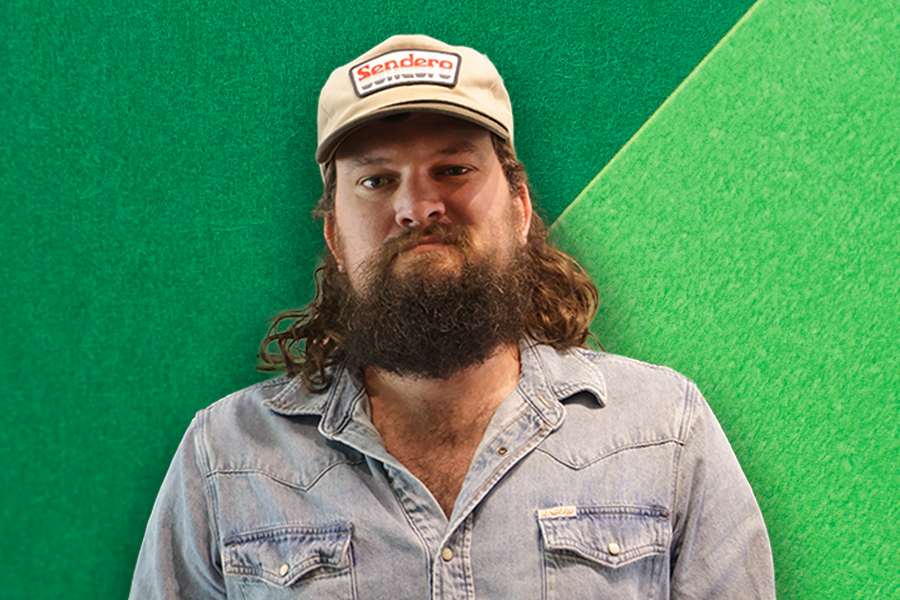
What happens when a Baylor geologist makes a career pivot to build an apparel and lifestyle brand? Hunter Harlow, a 2010 Baylor graduate did just that, shaping Sendero into a brand rooted in the culture, landscapes and stories of the American West.
Harlow shares how his Baylor experience shaped his approach to creativity, problem-solving, and leadership, and why Waco proved to be the ideal place to launch and grow Sendero. From its early days as a passion project to its emergence as a nationally recognized brand, the conversation explores how a love for the outdoors, authentic storytelling, and a strong sense of place helped turn an idea into a thriving business. Along the way, Harlow reflects on the unique culture of Baylor and Waco, and how both continue to influence the company's identity and success.
Show Notes
What happens when a Baylor geologist makes a career pivot to build an apparel and lifestyle brand? Hunter Harlow, a 2010 Baylor graduate did just that, shaping Sendero into a brand rooted in the culture, landscapes and stories of the American West.
Harlow shares how his Baylor experience shaped his approach to creativity, problem-solving, and leadership, and why Waco proved to be the ideal place to launch and grow Sendero. From its early days as a passion project to its emergence as a nationally recognized brand, the conversation explores how a love for the outdoors, authentic storytelling, and a strong sense of place helped turn an idea into a thriving business. Along the way, Harlow reflects on the unique culture of Baylor and Waco, and how both continue to influence the company's identity and success.
The conversation includes:
- Hunter Harlow's Baylor journey and the experiences that drew him to Waco
- why Baylor offered an opportunity to build community and forge his own path
- the unexpected transition from geology researcher to entrepreneur
- how Sendero Provisions Co. got its start and the meaning behind the company's name
- the people, places, and outdoor experiences that inspired the Sendero brand
- how his training in science helped shape his approach to business and leadership
- the role of creativity, storytelling, and authenticity in building a successful brand
- how Waco's growth and culture have influenced Sendero's evolution
- lessons learned from turning a passion project into a nationally recognized company
- why following an unexpected path can lead to opportunities you never imagined
Transcript
Derek Smith:
We're here inside Sendero Provision Store, less than a mile from the Baylor campus here in Downtown Waco. And we're visiting today with Hunter Harlow. He's the co-founder of the Sendero brand and a Baylor alum, and he has kindly welcomed us here into the store. And Hunter, thanks for having us in here. First of all, the Sendero brand is such a great brand. Well, a lot of us, including myself, have some of your clothes and hats, and to get to be here in the store and visit with you about your story as a business owner and as a Wacoan now is a lot of fun.
Hunter Harlow:
Oh yeah. So glad you guys are here. This is awesome. I don't think I've ever seen the store quite transformed like this. For everyone viewing at home, this is truly movie magic going on. Yeah, excited to be here. Excited to chat all things Waco and Sendero and all the above.
Derek Smith:
Our video team works some great magic here for sure. So here we are in your store, Hunter, and we got to go back now to when you were a Baylor student, a geology major.
Hunter Harlow:
Oh yeah.
Derek Smith:
Would you have ever envisioned this? If someone had told you, "Hey, in 2024, you're going to open a western brand store in Downtown Waco," what would you have said?
Hunter Harlow:
I think the question might actually be, did my dad ever think I was going to do this? Certainly I didn't. No, no, not at all. I think this was the furthest thing from my mind. And I grew up, I mentioned my dad, I grew up kind of in and around the oil and gas industry. He was a landman. Everyone knows landman these days from Taylor Sheridan series. But yeah, so I thought that was the path I was headed on. Went to Baylor, did my undergraduate in geology, went up to University of Kansas and did my master's in geology and came back to do my dissertation in geology here at Baylor. So if anything, I'm a hyper educated hat salesman now. But spent my time out in the desert studying rocks, and one point in time, envisioned probably working in Houston in the oil and gas industry. I like these things that Sendero's loosely based on these days. But no, I totally imagined that I would be looking at rocks for the rest of my life.
Derek Smith:
And now here we are instead in Downtown Waco, and you're the leader of a great brand. So for those who aren't familiar, what is Sendero? Not just what kind of products do you offer, but what's the brand all about?
Hunter Harlow:
Yeah. So Sendero's Spanish for path or trail. So originally when we were coming up with the concept of the brand, and who we wanted to be and what we wanted to do, being geologists at the time, and Sendero, it's Spanish name, it sounds cool, it's phonetical, it's easy to spell. Metaphorically, it made a lot of sense for what we wanted to do and what the things that we wanted to put on designs and put on hats and who we wanted to connect with, what communities and industries and channels, customers and audiences.
And that's how Sendero first came about was we liked the outdoors. We liked the southwest and the landscapes of the desert and the rocks, and canoeing and kayaking, and being on rivers and fly fishing. And the western side of it kind of evolved more to where we're at today. It was there present at the beginning. We always had skeleton cowboys on things and stuff like that. But really made the pivot into western more in 2018.
But initially it was just a way for us to stay connected to the things that we like doing. And we had no idea how you play that scale out over the course of a decade, decade plus, what that would involve to and what a corporate structure level looks like for a retail apparel brand. But here we are. All things they teach in geology school.
Derek Smith:
Yeah, that's great. That's awesome. We're going to dive into a little bit of your story here, kind of your career pivot into building this brand. Because as you said, you were thinking about going to the oil and gas industry. Your father was a landman. So that's the path you're headed on, the sendero, if you will, to tie into the brand there. What led you to Baylor? What was your path to Baylor like to pursue what you though you were going into at the time?
Hunter Harlow:
Yeah. So my grandmother went to Baylor, and then my aunt went to Baylor. And so we've got some alumni in the family. And I had spent some time coming down here to go to basketball games and stuff with them and football games with them. And grew up Southern Baptist. And so it was a natural connection for me. And all of my friends went to UT and A&M, and I kind of always wanted to do something different at the time. I mean, sitting in my expression of different right now.
And so Baylor was that opportunity for me that I thought was unique, had a really good academic culture, a really good student culture, student body and student life culture, and a chance for me to kind of do something different and on my own, since not a lot of my friends, from at least my high school in Prosper, went to Baylor. So yeah, it was a chance to kind of invent a new emerging adult self for my own.
But also the geology program here was awesome. I started off pre-chem bio. Or wait, no, pre-med biochem. I don't even remember. And so went through that. Pretty quickly realized I wasn't going to be a doctor. And then I transferred in the geology department, a connection through my dad and everyone else. And I always liked rocks, ironically enough.
And then pretty quickly realized I was going to take more or equal amounts of biology and chemistry, just called different names like invertebrate paleontology as opposed to anatomy and physiology. And so yeah, I dove into science. But what led me to Baylor specifically was the chance to do something unique and different. I loved the town and the culture that Waco had. It had a little bit of that small town vibe to it. When I grew up in Prosper at the time, it was a small town. Now it's-
Derek Smith:
Now, it's big, yeah.
Hunter Harlow:
... it's massive. So yeah, long winded answer there, but that's what brought me here.
Derek Smith:
It's always fascinating to me when people make a pivot, where the little ties that maybe they didn't see at the time from what they were doing to what they are doing now were there in some fashion. So I'm curious, how did being a student in the sciences, in geoscience, as you said, chemistry and biology, are there ways you look back now and see that prepared you for retail and brand building?
Hunter Harlow:
Oh yeah, totally. Yeah. And I'm fortunate enough to get to speak a couple of times a year at the business school here at Baylor. And I tell everyone, because I'm kind of like the outlaw a little bit, because the business school can't claim me and I'm not doing geology. But I was crafted by, at least in large part, a liberal arts experience.
And I think in the grad school side of that, especially the dissertation side of that, what you gain through that level of higher education is you become a self-taught learner, and especially in geosciences and in any kind of STEM, you learn things like pattern recognition and being able to seek experience outside of your own to learn how to do new things. So the soft skills that geology taught me specifically, and sciences too, like formulating a hypothesis, testing it, your methodology, observations, repeat, conclusions.
The scientific method for sure is in a large part of what I do day to day at Sendero, and how I even lead teams. I think probably some of our teams, and even partners that work with us, probably see some of that. And if they're scientists, they could probably see the scientific method playing out a little bit in what we do.
But also just creativity. I think that my area of geology that I focused on at Baylor was niche, but it was in large part, kind of a new way of looking at the specific types of systems that I studied. And so I though outside the box, I tried to apply new methods, methods that my professors had invented at Baylor, methods that my professors at University of Kansas and Kansas Geologic Survey had invented. And then some of my own. I was always trying to build consortiums or conferences. Or I was a president of the Baylor Geology Club, and trying to get people and motivate people to do things. So all of that was in large part provided by the experiences that Baylor gave me through both the classroom and through the opportunities that Baylor gave students to engage in. So it was fun.
Derek Smith:
You mentioned you were president of the Baylor Geology Club. Was the idea of leadership something that appealed to you at a younger age or has it just kind of happened that way for you?
Hunter Harlow:
I think my parents, specifically my mom, probably instilled a lot of that in me through high school. I think she forced me to do student council in high school. And I think I was like the treasurer or the secretary, and it was almost like the token kid that everyone just though was fun to talk to so got elected and maybe didn't help at all. So like sorry, Prosper High School Student Council body. I'm better now, I promise.
But then that grew and evolved, especially as I became more independent and tried to either was working on growing my academic CV, or whatever, like a resume. And I've always gravitated to leadership positions. A lot of that budded at Baylor. I can remember being in high school, and even early, early freshman, sophomore year at Baylor, not being able to think critically, not being able to write anything. Sit down and just have massive writer's block.
And over the course of my academic career, bookended by Baylor, that changed totally and entirely to where it was just like, now I just sit down and just write straight away. Now with AI, no one has to write anymore. But those leadership skills were definitely fostered through my experience here at Baylor.
Derek Smith:
You mentioned as a student, Waco appealed to you as with that small town feel, and now you've talked about in part the way it has grown. How would you describe some of the ways you've seen Waco grow, whether that's physically, or even as you just said, kind of that ecosystem of entrepreneurship here in the community?
Hunter Harlow:
Yeah. And I mean, I think if you spent any significant amount of time in Waco, or you've come here over the past decade or past 20 years, or even, shoot, the last five years, you've seen that physically in town, like how the town's changed. Just in going up U Parks even alone. Five years ago, it didn't even look like that. The arena wasn't there. Now there's all these apartments and buildings and restaurants and coffee shops.
So I think the framework is there and the foundations to build a unique expression of Waco's expression of what it is to Texas is. And you can see it starting. But initially what drew me to Waco was that, like you said, it did have that small town vibe to it, but it was big at the same time. When I lived in Prosper, it was one stoplight and one cop. And now it's Dallas Cowboysville. But that was not Waco at the time. Waco felt family friendly. And Baylor being here has a lot of impact on that. The intersection of Texas, faith, and family I feel like was, and still is Waco, but certainly was 10 years ago. And I think you even wrote an article in one of the Baylor magazines about that when we moved back to Waco and why we wanted to do that.
And now it's funny because it's like, I don't know, the running joke, if you lived in Waco for any extended period of time is everything's 15 minutes away. But if you've got to go through, you live here for a certain amount of time, you've got to hit five stoplights, you're like, "Oh no, that's way too far." And then our people come in from Southern California or whatever, and you're like, "Oh, we're going to go over there for dinner. It's across town." You kind of get them prepared for the journey. And they're like, "What? It's like 12 minutes away?" "Yeah, it's really far." They're like, "No, that's how long it takes us to get out of our neighborhood."
But the town's evolved a lot since then. I think the ecosystem you mentioned, like the coffee shops, the restaurants, the just experiences or activities or tourism type things supported through Baylor, supported through Magnolia, supported through some of the other initiatives that the town is putting in place, like the riverfront developments and everything else. So I think the joint partnership of Baylor and Waco, and when I say Waco, I mean businesses, entrepreneurs, brands like Sendero that have a global reach, certainly a national reach, is what is going to really change the complexion of this town for the better going forward. So I'm excited to play a very small part in that. But yeah, it's definitely changed.
Derek Smith:
When I think of you, you came back here, you built a brand and have built a family here. There's really not two bigger things in a lot of ways for a person and an entrepreneur. Why has Waco been the right place for both of those things for you?
Hunter Harlow:
I think initially it was that community aspect. So one, when Sendero started growing in 2017, was kind of our first year of hyper growth, and it was okay, are we're going to build the brand in Waco, we're going to go to someplace like Fort Worth, we're going to go to someplace like Austin? And I made the decision to keep Sendero here and to build in Waco. One, because I had the Baylor connection and I love Baylor. I love Waco. And that's a big part of who I am.
But I also saw the need for someone like Sendero staying in town. And also the opportunity. There's not a Sendero in Waco, so it was a white space for us. We might have some headwinds from that, from access to talent, hiring, growth opportunities, facilities that understand how to foster a brand like ours, might not exist here at the time. They definitely exist in Austin, but there's also 50 Senderos in Austin. I mean, we can all rattle them off the top of our head probably.
But there wasn't that here, and it was exciting to kind of pull a little bit of my father's wildcatter on the... He dreams he's a wildcatter, shout out dad, on the landman side of things. And so it was, it really was like the wild west. And ironically enough, Sendero is kind of the tongue in cheek west of ordinary expression of that these days. So yeah, kind of blazing our own trail, doing our own thing, which is what I've done my whole life through my academic career, through my studies, through things here in Waco and everything else.
Derek Smith:
Well, it seems very fitting as we've got to know you a little better here on this show. And I want to make sure we ask you a couple of things here about the Sendero brand and building it. Because again, going back, there was a time you were, what, pursuing your PhD in geology, and you were going to be following in the footsteps of a landman or somewhere in the oil and gas industry. And instead now you run Sendero. So take us back. It started as a hat, right? A single hat.
Hunter Harlow:
Yeah. Started with hats.
Derek Smith:
Is that right? I'm sure you could give us a 30, 60, 90 minute version of the story, but for our viewers here, what's the basics of how this got started? And take us inside building it into the brand that it is today.
Hunter Harlow:
Yeah. Yeah. I think I mentioned this, but it was our chance to stay connected to the things that we like doing. And initially that was being outside, being on rivers, being on public land, barbecue, and cold Dr. Peppers. And that led to where it is today. It's all the same kind of thing. And I think that that gives us the chance to evolve. Sendero doesn't mean one thing. It can mean anything. You pick up some piece Sendero and someone has an opposite interpretation of it from California versus here or wherever they're at. And that's fun too, is being able to give people something that they identify with.
And today that's western, and making fun of ourselves and showing up and being a little bit honest, a little bit self-deprecating. And we might not be cowboys. Some of us might be cowboys. We may not be surfers. Some of us are surfers. And just the amalgamation of all that makes I think the Sendero expression very, very relatable. And it certainly relates to me because it's what I like doing, a little bit of everything. And I think all of us want to have experiences. So yeah, that's kind of how it's evolved.
Derek Smith:
Well, let me ask you, as we kind of head into the final few minutes here, Hunter, bringing it back a little bit to your life here in Waco. When you're not running the business, when you're not immersed in the things you need to do to keep Sendero moving day to day, where are some places we might find you and your family enjoying things here in Waco, Central Texas?
Hunter Harlow:
We like going to the Middle Bosque. We like maybe going to Hog Creek, but some of the tributaries and rivers around town. On a good day, we'll go out there and hang out, and go up and down the river and fish and enjoy the Central Texas landscape, which is world-class. I mean, it's just like Austin, if not cooler in some places. And it's here in Waco, and it's accessible. And there's all kinds of access points to get on the tributaries and river surf around here.
But outside of that, I'm a big gardener. Love gardening. I've got a massive vegetable garden right now with all kinds of peppers and tomatoes and watermelon and okra, and everything in between, cut flowers, all the above. So I don't know. And that's kind of the science geology coming through. It's a lot of outdoor stuff. Other than that, smashing all the good Waco food and coffee shops. I don't know, that might be our favorite thing to do.
Derek Smith:
Two final questions for you. Where do you see Sendero growing in the years ahead, Hunter? Where do you see Waco growing in the years ahead?
Hunter Harlow:
Well, I think they're growing the same way, in the same direction. I think that Waco's really positioned well to springboard based off the foundations of location and the ability to build and create here from the canvas that is not blank, but you can invent in Waco these days.
And I think it's the same thing for Sendero. We have a footprint, we have global distribution these days. And Waco and Baylor, you throw Baylor in there as well, are the same. We're on the small potato side of that. But I think that as those things grow, as Waco goes, as brands like Sendero goes, the future of Waco goes. So I think that what we're doing here is important. I think we need more Senderos. I think we need more, maybe not direct competitors, but more companies like Sendero. People that are putting Waco on t-shirts that are going to be sent all across the globe. And that could be anything from craftsmen, makers, brands, restaurants, marketing, agency, all the above. You scale that up to the entire ecosystem of how creative towns are built. Austin's a good example of that. They kind of started as keep Austin weird, and just cultivated this entrepreneurial experience and mentality.
You see that in Waco, you see a lot of that in Waco. I think Waco needs another 30,000 working professionals. And the city's working on that. Baylor's working on that. So there's some levers that I think we need strategically for growth. But a lot of what those foundations need is this happening right now or has happened through the good folks like Magnolia and L3, and some of the other big groups that are in town. And what's going on up and down downtown all the time on the riverfront across 35 now. It's everywhere. And Woodway. You can go north. I guess it's technically, what, East Waco, but it's North Waco.
Derek Smith:
So it's always a little off kilter. Yeah.
Hunter Harlow:
Yeah. Yeah. You can see pockets of where future growth either is happening, has happened, or will continue to happen right now if you just look across the landscape of all of Waco. So I think joint partnership between Baylor the city and the folks in town that are putting those things out there on a cultural level through national and international exposure are how we grow and how we develop something that stays Waco. Because the last thing I want is for New York money to come in, California money to come in, or other places to come in and build those things for us and change the direction or change the culture. To some extent, that's probably unavoidable. That is how growth works.
But I think it's very important that we keep the Waco mentality and the Waco spirit alive through that. And in some fashion that is shared wholly by Baylor. And it's been fun watching the efforts of the university, the efforts of the city. I feel like they used to be a bit disconnected 20 years ago, a couple decades ago. But you can kind of see those hands coming together for the future and how the alignment of both of those things is what is going to be symbiotic for both the town and the university, and by proxy us, which is cool.
Derek Smith:
That is really cool. That's a great description there, Hunter. And I was going to ask you, I was going to mention the fact that you as alum stayed here, at least came back, but most of the time since you graduated, you've been here. We want to see more of that. It sounds to me like the picture you're painting is that for Baylor students, for future students, there's opportunities here in town to lead, to create, to grow, and to have an impact down the line. Is that fair to say?
Hunter Harlow:
Oh yeah. Yeah. I think I've personally seen the tide turn already. I see more and more people staying in Waco. And I mean, I would say most of my peers and friends, I've got a 10-year-old and eight year old, but their friends and their parents also went to Baylor, and they're here. So that is, I would say not a new thing, but I think it was less common and more of a foreign concept to people 10 years ago.
And shoot, now, I mean, you're of a certain age, and going off and experiencing the big city, or an Austin or Southern California or New York sounds really cool. But also what is really cool is building things and doing them differently, doing new things. Having a family and a place that cultivates and grows those family units. And then having a university and a city and an ecosystem of entrepreneurs that are creatively aligned and thinking outside the box of how to build something new and something different, that's attractive.
And if anything, that's how Austin was built 40, 50 years ago, when Austin first started kind of having that entrepreneurial boom. I can't tell you how many times I've gotten to know people that either lived in Austin, grew up in Austin, are now in their 50s plus, and they moved to Waco. And they're like, "Oh, this is just like Austin in the '70s or in the '80s when I lived there." And it's our job to continue that. There's a lot of hard work that has to go.
And I'm not saying we want to be Austin at all. Maybe some people do. But that spirit of growth and entrepreneurship and creativity and development, and art and music and food and culture is I think definitely what Waco wants. And you can see that around town. It's definitely the businesses that have been built over the last five years. So yeah, I think we have work to do, but I think we can do it.
Derek Smith:
Well, Hunter, as Wacoans, we're always excited and proud to see Sendero on different stages around the country, around the world. As Baylor Bears, we're proud to see alums like you building, creating, and especially doing so here in Waco. So I want to really thank you for taking the time to, again, welcome us into this beautiful store to share your story, and also for the work you're doing here. Thank you.
Hunter Harlow:
No, thanks for having me. It's been an absolute pleasure.
Derek Smith:
Appreciate it. Hunter Harlow, co-founder of Sendero Provisions, our guest today on Baylor Connections. A reminder, you can find this and other episodes on the Baylor University YouTube channel online at baylor.edu/connections, and you can subscribe to the program on iTunes. I'm Derek Smith. Thanks for joining us here on Baylor Connections.