

Leadership Catalysts: Baylor Center for School Leadership
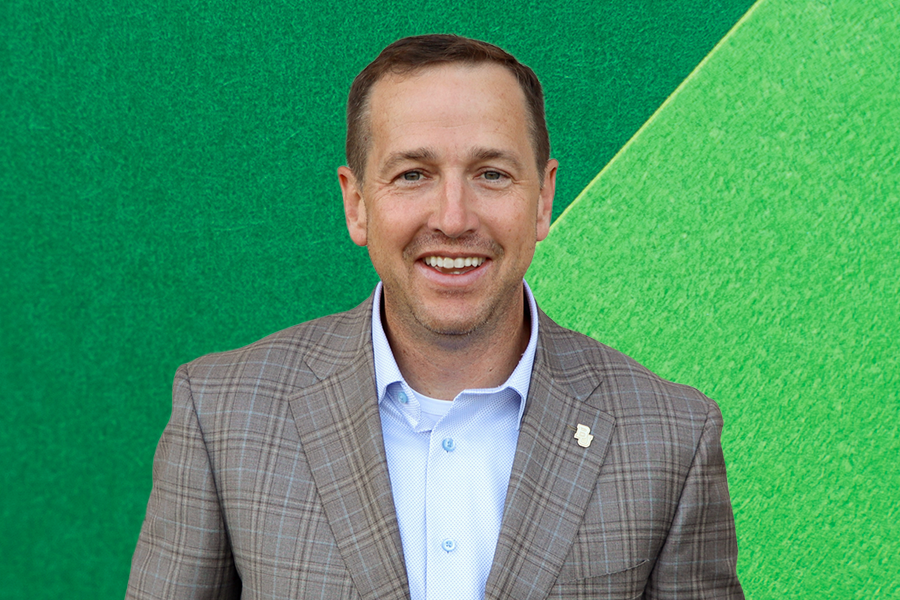
Educational leadership shapes classrooms, schools, and communities. Jon Eckert, director of Baylor’s Center for School Leadership, shares how Baylor is supporting educators at every level—locally, nationally, and around the world, living out its mission within that discipline. Eckert shares how the Center has grown into a global network connecting leaders, research, and practical tools, all with a focus on helping educators—and students—flourish. From navigating change and technology to fostering wellness, engagement, and joy, the conversation highlights Baylor’s commitment to serving those on the front lines of education.
Show Notes
Educational leadership shapes classrooms, schools, and communities. Jon Eckert, director of Baylor’s Center for School Leadership, shares how Baylor is supporting educators at every level—locally, nationally, and around the world, living out its mission within that discipline. Eckert shares how the Center has grown into a global network connecting leaders, research, and practical tools, all with a focus on helping educators—and students—flourish. From navigating change and technology to fostering wellness, engagement, and joy, the conversation highlights Baylor’s commitment to serving those on the front lines of education.
The conversation highlights:
- how the Center for School Leadership works with educators across all 50 states and more than 50 countries
- why the Center focuses on connecting and accelerating what’s already working in schools
- how the Center has grown in reach from Texas to a global community
- the core questions driving the work: educator wellness, student engagement, and meaningful feedback
- why Jon Eckert believes there’s never been a more important—or more challenging—time to be an educator
- how research and tools guide leaders without prescribing one-size-fits-all answers
- the role of collective leadership in today’s complex educational landscape
- how Baylor’s Christian R1 identity shapes the Center’s approach to leadership and service
- the Culture of JOY event and its focus on helping educators rediscover meaning, resilience, and joy in their work
- the Center’s long-term vision to multiply impact by developing leaders who develop other leaders
Transcript
Derek Smith:
We welcome you into Baylor Connections. Today, we are talking about a topic that touches everyone at some point or many points in their lives, and that is education, specifically educational leadership today. And we're visiting with a catalyst here at Baylor University for that, Jon Eckert. Jon Eckert is the director of the Baylor Center for School Leadership, and they've got a lot going on close to home and all around the country, serving and building leaders around the country. Jon Eckert with us today, and Jon, really appreciate that. Thanks for joining us.
Jon Eckert:
Hey, great to be with you, Derek. Thanks for having me.
Derek Smith:
Well, I know you are traveling all over the place. You're back in Waco at the moment, all over the country, doing work with educators around the nation. And let me ask you, this is a broad question. If we were to kind of be able to travel with you or be here in Waco and look over your shoulder at the things you and your colleagues are doing in the Center for School Leadership, what are some things we would see?
Jon Eckert:
Sure. So we work with educational leaders in over 50 countries now in all 50 states because our goal is to find particularly Christians who are doing great work in schools and whatever schools are called to, public schools, private schools in any country or state, and try to figure out what's working and then connect them with each other, study what they're doing, write about it, talk about it, and just catalyze good work that's already happening. So we're constantly going around looking for people doing great work, trying to accelerate it. We always say we have the best jobs in education because this is what we get to do every day. So it's a blessing to be able to come alongside, see that work, connect the work, and try to accelerate it.
Derek Smith:
You know, there's always challenges that educators face, but it seems to me like your approach to those challenges is looking for the good and disseminating that. Is that fair to say?
Jon Eckert:
Yeah, there's certainly enough out there about what's not working in education, which certainly for some kids, education has not worked for a long time, but there are a lot of really good things happening. And I always say there's never been a better time to be an educator because we have more tools than we've ever had to help kids learn. And we know more about how people learn than we ever have. And so now it's just figuring out how to deploy those, not for some kids or even all kids, but for each kid, because we always say, "Hey, God doesn't see all of us. He sees each one of us." So how do we as educational leaders make sure that we're serving adults so that they can in turn serve each kid and make sure each kid's getting what he or she needs?
Derek Smith:
Jon, you just painted a great picture of what the Center for School Leadership does, but how would you take us back inside a little further? When did it get started? What was it created to do and how is it growing?
Jon Eckert:
So I got here in 2019 and worked alongside the director of the Center at the time. It was just in the infancy stages of what it was going to become. In 2021, it was renamed the Center for School Leadership to support leaders in all different kinds of schools, not just in Christian schools or not just in public schools, but in all schools to do the work. And so it really quickly, with COVID hitting, it became imperative that we start connecting leaders who were doing things in an environment that we'd never operated in. And so we thought we were going to do regional events in Texas and serve Texas really well. And all of a sudden, I was here eight months and we're working with leaders all over the world trying to figure out how they're going to deliver education to each kid so that each kid's well, each kid's engaged, and each kid's getting feedback.
And that became the core of the work we do. How do we make sure each educator and student are well? How do we know that they're engaged? And how are they getting meaningful wisdom for improvement through feedback? And so that work really accelerated it and gave us a much larger footprint than we originally imagined just because there was a great need, which was a tragedy. And there was no blessing in that in COVID, but because we were able to quickly connect education leaders and meet on a monthly basis as they put plans together for how they were going to roll out school, we suddenly became a needed partner in that. And because we were a Research 1 university and had a Christian emphasis, people looked to us in a way that they didn't look to other people. And so we suddenly were connecting and learning from leaders at that point in over 20 countries right off the bat.
And that was completely unforeseen by us. And so then we just took that and have accelerated that work over the last few years. How do we make sure those three things, even as education continues to change with AI and with all the different pieces that we look at with, do we use devices? Do we not use devices? What's the most effective way to do it? We're not coming in with the answers, but we're coming with research and tools to help leaders find those answers.
Derek Smith:
So I want to talk about what you do even a little further, but let me ask you first the who. Who all is a part of the Center for School Leadership? And you're the face here on the program, but who else is a part of the team here at Baylor & Beyond?
Jon Eckert:
So we have an amazing team. We have a director of networks and improvement who's actually based out of San Jose, Eric Ellison, he's one of the best connectors of leaders that I've ever met. He's been doing this work forever. Sahira Kodra is our program manager. She is the glue. Those people that just figure out how to do everything, that would be Sahira. Then, we have a director of strategy and management and organization, and that's Krystle Moos. We just hired her last year. And so that's kind of the full-time team, but then we have catalysts all over the world who are paid a stipend to use our tools and research to work with the networks that they're in. We will expand that to 31 of those people next year because that's how you expand your influence. Our goal is by 2035 to reach a million leaders around the world to help them do the work better that they're doing.
Right now, we touch leaders who work with over 6 million kids. And so the benefit of working in educational leadership, if you have great leaders developing other leaders, which is what a leader is always doing, they're always looking for who's the next person that I'm helping to elevate, you can very quickly get to a lot of kids. And so our goal by 2035 is to get to a million of them. The only way we do that is by replicating ourselves and not necessarily on campus at Baylor, but in classrooms and schools where the hard work's really happening.
Derek Smith:
When we talk about the idea of the Center, it's not like, "Oh, here's the building."
Jon Eckert:
That's right.
Derek Smith:
This is the Center. Yeah.
Jon Eckert:
That's right. You would laugh if you saw the Center. The Center is basically a large converted closet and two offices, and then Eric's home office in San Jose. That would be the structural investment that Baylor has made into this. And it's not about the structures. It's not over here. We have amazing facilities if we want to convene here at Baylor. We're in the Hurd Ballroom this center in June, and that's an amazing facility. And then in August, we're in the Foster Pavilion. So certainly Baylor has structures that we can leverage for this, but it's not in offices. It's where the people are doing the work with the kids that we put our investment.
Derek Smith:
Well, I know the generosity of Baylor family members has made a lot of this possible, your position possible, and certainly the buy-in from the university. But what you're saying is that investment's going into the work, not in a lavish office.
Jon Eckert:
Yes. It is flowing out into schools that are in great need of this. And so just this January, we had a donor give a very significant gift, and it was Jack and Linda Tinsley who gave it. Linda was a lifetime educator, and she worked in public and private schools, and she's very, very sick, and they really wanted to give this. She's retired now. They wanted to give this in a way that would honor the work that she'd done. And she said, "Hey, I'm investing in we call it Catalyze, that's our June event, because that's the kind of work I wanted to do. I want teachers and administrators doing this work." And her husband, who had made significant money, not in education, had said, "I went through Baylor 50 years ago, and tuition was $10,000, and it was paid for entirely by financial aid." And he said, when he graduated, he had made a commitment that he would pay it back someday.
And as he's saying this at the ceremony where we're honoring them for this, he gets choked up and can barely get it out of his throat. And he's like, "And today I'm making good on that promise." So to have donors like that believe in educators in that way, such a blessing to just be a conduit for those resources to get them out into schools and leaders that really need that kind of encouragement.
Derek Smith:
Oh, that's amazing. That's a great picture of the work and other people supporting that. You mentioned Catalyze, you hold events. There's research, there's travel, but there's bringing people here to campus. Catalyze is one, but I want to ask you about Culture of JOY. I think this isn't necessarily what I immediately picture when I think of the Center for School of Leadership, but you've got something pretty exciting coming up this summer.
Jon Eckert:
Right. So August 3rd, 2026, we have the biggest event we've ever done. It already has 5500 educators registered. So we'll be in the Foster Pavilion. Scott Drew will hopefully be there to welcome them. We're just still locking in his calendar, but it builds off his work around Culture of JOY and what he's built in the basketball program. So we've been doing these events for the last five years, but we've never done it to this scale. So this year we're hosting 10:00 to noon the biggest pep rally for educators in the State of Texas, maybe in the country, to launch what will be the most joyful school year ever. And we don't mean that in a toxic positivity way. We mean, "Hey, the year's going to be hard, but the year's going to be hard and joyful," because oftentimes the depth of the struggle that we ask educators and students to embrace in, that determines the peak of the joy.
So even though things are hard, where do we find joy in this work? Because oftentimes joy emerges through doing hard things with others. Ask any basketball coach or football coach, those wins that mean the most are the ones that were really hard to get. And so easy wins are nice. Getting ChatGPT to write your paper for you and getting an A on it, that may give you a little happiness, but it doesn't lead to joy. Doing that really hard work with others, that's where joy is found. And so we're launching this next year with that event in Foster Pavilion. So we're really excited about that opportunity to be an encouragement to educators to have fun. That'll be an amazing competition. Alison Sweeney is emceeing it for us. She and her husband also donated money to do it. So we're able to make this free-
Derek Smith:
Oh, wow.
Jon Eckert:
... for educators because we've had donors give a significant amount of money. And the next day, the book that we've been working on for the last three years, The Happiness Crisis, comes out.
So we have a donor that's given money so that we can give 2000 books out to educators as an encouragement about, "Hey, let's stop chasing happiness," because kids are really going on a fool's errand toward happiness. They think happiness is self-focused, circumstantial, which then makes it fleeting and they think it's mediated through their phone. And oftentimes comparison comes into play. So then if I'm struggling, happiness is gone. And so we have a lot of kids that are searching for happiness, not finding it because they don't really know what joy is because we define joy as something that's from enduring love and gratitude for others and it emerges in struggle. So how do we invite them into that? So that event is going to be about that. That book is the research that supports all of that and it comes out the very next day. So the timing feels providential. So we're really grateful for that.
Derek Smith:
So we'll keep an eye for that. The Happiness Crisis-
Jon Eckert:
That's it.
Derek Smith:
... is the name of the book. And as you described that, Jon, I think that concept of joy being something deeper certainly resonates as a Christian, but it's also something that resonates whatever an individual's faith may be. And I would imagine there will be people of all different backgrounds at the Culture of JOY event. I think it might seem obvious, but I want to ask you whether it's that event or other events. What are you looking for to sort of tie into the mission of the Moody School of Education-
Jon Eckert:
Sure.
Derek Smith:
... the Center for School Leadership-
Jon Eckert:
Sure.
Derek Smith:
... and Baylor when you create events-
Jon Eckert:
Sure.
Derek Smith:
... like this?
Jon Eckert:
Well, and that event's the first one. And the book is the first one we've written for teachers, parents, coaches, anyone who's helping point kids toward joy. And so the book is not explicitly Christian. The event will not be explicitly Christian. There is a hope that we have as Christians that helps drive what we do. And I always think it's amazing when we have secular humanists that don't have any belief beyond this life and what they're doing. And they're pouring into kids every day. So we want to help them see where joy is and point them to this so that they see a better way to live and there's a deeper depth to it, but certainly we will not be proselytizing at the Culture of JOY event. The School of Education, and now that it's the Moody School of Education after a great investment by the Moody Foundation that Dean Hagan-Burke pulled together and was able to announce this January, is accelerating that work of supporting kids wherever they're at.
We ant great teachers for every kid. And certainly there are great teachers of many different faith backgrounds and ones that don't have faith. And so we want to support and encourage those people, but we also want to do it with this hope that we have that as a Christian Research 1 university, there is really good applied research that we can do to support that work. And we want to support that wherever it is, whatever your orientation toward faith. But we also really want to highlight the work that can only be done at a place like Baylor. So we can lean into that faith. Why do you go in the classroom? Why would you endure the really hard things educators are enduring right now for the paychecks that they receive? And so there's really I said there's never been a better time to be an educator, but in some ways it's never been harder to be an educator because there's so much expected of educators.
And so the Moody School of Ed, whether it's in ed psych or curriculum instruction or in ed leadership, we're leaning in to try to support the work of educators and do whatever we can to make that work better and easier. We don't want to add more to educator's plates. They cannot do more than they're already doing. So how do we do it better and more efficiently for each kid?
Derek Smith:
What you're talking about really does sound like that picture trying to be servant leaders in bringing these resources to people. I want to ask you more about the research, but before I do, before we get too far down field from Culture of JOY, are there still seats available? Can people still-
Jon Eckert:
Yeah.
Derek Smith:
... sign up?
Jon Eckert:
There are. The beauty of being in Foster is that we have 7,000 seats. So we're at 5500 seats. So as of right now, we have about 1500 seats available. That's all the seats there are. So we would love to fill those. And we still have several districts that are still figuring out their schedules for back to school. We tried to hit it at a time when teachers and administrators could come, but yes, welcome. And we're also welcoming in parents with these last 1500 seats, if they're parents that just want to see, here's what educators are doing, here's what they believe in your kids. And you just want to see educators in dance competitions or any number of other competitions on the floor of Foster Pavilion, you are welcome to come.
Derek Smith:
You Google Baylor Center for School of Leadership, you can find that information-
Jon Eckert:
That's it.
Derek Smith:
... to become a part of it. Well, Jon, let's switch gears a little bit and look back at some of the research you're talking about. It sounds like maybe the research comes from a lot of different areas, but what does it look like? What research do you and your colleagues do? What do you and your colleagues look for elsewhere? Just paint that picture for us, if you would, of the role research plays in the center.
Jon Eckert:
Yes. We're always drawing on great research done in a variety of places, but one of the main things we always focus on is collective leadership. How do teachers and administrators do this work together? It's not about one person leading. This world is way too complex for one person to lead alone. So my research since 2015 is focused on collective leadership. And so then that's bled into this survey that we do now where we've asked 42,000 kids in five different countries how they experience their own well-being in a classroom, how engaged are they and how much feedback do they receive that they actually use. So we now have responses from Cambodia, Australia, Canada, the U.S., and Indonesia. And we have this feedback from kids about how that's actually playing out because we don't want to do research that's just for the adults in the building. Obviously, the adults have to do good work for kids, but we want to know what kids think about what's going on in their classroom.
And so that research has been amazing. And so we're publishing a lot of work on that. We also just are finishing up a million-dollar federal grant in rural Mississippi where we were brought in because there's huge issues with the opioid crisis. And so we came in, not because we have drug expertise, but because we know how to build thriving learning communities. So just this past Saturday, we finished up our third year with school teams where we have intervention schools and control schools to determine if any of the interventions that we've put in place have made a difference for kids in increasing engagement, relationship, and enhancing joy in those schools. And so we'll have those papers coming out this summer. So we've got five papers in the works. One's been published, a few are under review, and then we're wrapping up with the data that we get in that comes in May and we'll finish those up in June.
Derek Smith:
A lot of important information coming from that. And I would imagine, you've talked about Baylor being a Christian R1 university, I would think that aspect and being here on campus or elsewhere leads to a lot of opportunities to partner and collaborate and blend your areas of expertise with others.
Jon Eckert:
That's right. Our Associate Dean for Research, Grant Morgan, is the co-PI on this. He's one of the best quantitative statistical minds in the country, and he's working on this project in Mississippi because he believes in the work that we're doing. Bill Sterrett, who's the department chair in ed leadership, he's a co-PI on that project as well. And then, in other colleges, we have so many great partners where we're looking at doing a study, potentially a sleep study if we get it funded with the Robbins College. So Jason Carter is the dean there, and we're looking at how principals are sleeping or not sleeping and how to enhance that, how to put an intervention in place.
So just having this wealth of talent all in one place is great. And then, when you have Baylor's name behind you and you reach out to other universities, Harvard has a great partnership with Baylor on this Flourishing Study. And so Byron Johnson, Tyler VanderWeele at Harvard, they're creating all this great research. And then how do we give it legs? And so they're great partners in that because Baylor has a good name and a good reputation for being a partner. So we get to build on that good work.
Derek Smith:
Yeah, that's exciting to see. You can apply that for educators in some pretty cool ways. Jon, as we head into the final few minutes of the show, you've painted such a great picture of what the Center for School Leadership is doing. Maybe one broad question would be, where is it going? What are you excited about as you look ahead?
Jon Eckert:
Yeah. Well, our goal really is to reach a million leaders by 2035. So that's where we're going. And it's not because we think we have all the answers. It's because the more smart people who believe that they have a hope and a future, connecting those people to kids, like that's the goal. We are hoping to reach out more to parents as well as educators because we need to put parents and educators on the same page. So we're hoping that this book and some events like Culture of JOY accelerate some of that at scale. And then, we're also doing a deeper dive. We just started these this year, Rejuvenate retreats. So for educators who are kind of burning out and feeling like this maybe isn't for them, how do we take some time to step back? We feed them well, we put them up in a hotel, we only have 40 of them. We do a deep dive with them. And then, the next day it's just like, how do we reflect on what we're called to, what we could do more, and how we could connect more people to that work?
So we're doing some of those deep dive pieces. So it's not just about big numbers. It's how do we help each educator be better for each kid? So that's really the goal of the Center. Again, like I said, we don't have all the answers, but we have tools and we have research and we have resources thanks to amazingly generous donors. Another donor is giving a fund. They're not naming it after themselves. They're endowing a Joy Fund because they want to spread more joy to schools. So really, if we can spread that joy, not a false hope, but a real joy that there is something deeply meaningful about doing this work with other human beings and seeing them become more of who they were created to be as we become more of who we're created to be, that feels like a perfect place for Baylor to serve.
Derek Smith:
Absolutely. Well, Jon, you paint a great picture. I think that's a great place for us to end with because that's a great lasting thought there as we talk about the Baylor Center for School Leadership, but we're excited to see what's ahead for you and appreciate that. And if people, if educators are watching or listening want to learn more about what you're doing or get involved is the best way just to go to the website?
Jon Eckert:
Yeah. The Baylor Center for School Leadership is a great place to be. Even President Livingstone is an amazing entry point for us. She's amazing at connecting people with us. So talk to educators that know anything that we've done. It's always good to hear from them what's helpful. Our master's program, our PhD, our EDD, any of the programs because of donors, many of them are defrayed in cost or are free. So the Baylor Center for School Leadership is a place to go on that. You'll find Catalyze, you'll find Culture of JOY, and you'll be able to connect to all the programs that are part of ed leadership in the Moody School of Education.
Derek Smith:
Well, that's exciting. Hope people will do that and get involved in the work you're doing. Jon, thanks so much for taking the time to share with us about what you and your colleagues are doing and the great work you all are doing out with so many people on the front lines in education.
Jon Eckert:
Yeah, and it's a pleasure to be here and love being at Baylor.
Derek Smith:
Well, we're excited to have you here and excited to see what's ahead. Jon Eckert of the Baylor Center for School Leadership, our guest today on Baylor Connections. I'm Derek Smith. Thanks for joining us. A reminder, you can find this program online on the Baylor University YouTube channel, and you can download this and other episodes on iTunes. Thanks so much for joining us here on Baylor Connections.