

Pro Mundo: A Vibrant, Caring Global Community
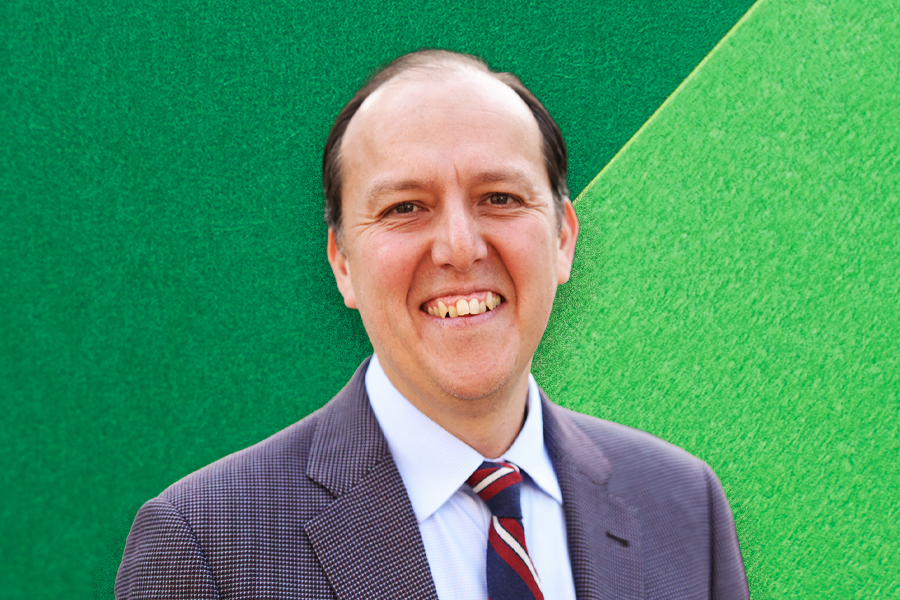
Baylor’s mission has always reached beyond campus, and with the addition of Pro Mundo—“for the world”—that global focus is now a part of the University’s motto. Eddie Contreras, Vice Provost for Global Engagement, shares how Baylor is living out that calling. From study abroad and international student opportunities to faculty partnerships and long-term global hubs, Contreras shares how Baylor is building a vibrant, caring global community—one rooted in service, learning, and meaningful engagement around the world.
Show Notes
Baylor’s mission has always reached beyond campus, and with the addition of Pro Mundo—“for the world”—that global focus is now a part of the University’s motto. Eddie Contreras, Vice Provost for Global Engagement, shares how Baylor is living out that calling. From study abroad and international student opportunities to faculty partnerships and long-term global hubs, Contreras shares how Baylor is building a vibrant, caring global community—one rooted in service, learning, and meaningful engagement around the world.
The conversation highlights:
- The ways Baylor’s global work—study abroad, international students, research, and partnerships—works under a shared vision
- Eddie Contreras’ journey to Baylor and what drew him to the University’s faith-centered global mission
- How Baylor’s Christian identity actively shapes its approach to global engagement
- The role of the Center for Global Engagement as a connector for students, faculty, and partners around the world
- The ways international students are supported through high-touch programs focused on belonging and success
- A Baylor distinctive—faculty-led study abroad trips that prioritize deep, immersive experiences over surface-level travel
- How Baylor’s global partnerships are distinctive, from major research universities to Christian institutions worldwide
- How Pro Mundo experiences ultimately prepare students to leave Baylor with confidence, perspective, and a lasting sense of home
Transcript
Derek Smith:
Welcome into Baylor Connections. We've talked a lot on the program over recent months about Baylor's global impact, the university adding Pro Mundo to our institutional motto two years ago. And today, we're visiting with someone who knows that side of the institution very well, a leader in the Center for Global Engagement. Eddie Contreras is with us today on the program, and Eddie, it's really great to have you here with us today. Thanks for joining us.
Eddie Contreras:
Thanks for having me. It's a pleasure.
Derek Smith:
Well, it'd be fun to dive into the work that Baylor is doing around the world and the impact that you think of Baylor going out into the world with study abroad, but then international students coming here. There's a lot of different ways that those interactions enrich the institution. I'm looking forward to talking with you about that here on the program today.
Eddie Contreras:
Me too.
Derek Smith:
Well, let me ask you, you've been here since 2023, and a lot's happened since then. Let's go back in time a little bit to the beginning there. What did you notice about Baylor's global impact and outreach when you were looking at coming here and when you joined the institution?
Eddie Contreras:
Well, the one thing that I really appreciated about Baylor then and now was that the commitment to global has always been part of what Baylor does. And that was very present in the early days when I was first doing my research about Baylor.
I grew up in El Paso, was born and raised in Texas. And so, Baylor was not unfamiliar to me, but when I started to look into it professionally, it really resonated with me, the commitment to global. What was different then than now is a lot of the commitment was diffuse and in some ways, unnamed or unbranded. And so, that's something that I've seen evolve and change and that I'm really excited about today.
Derek Smith:
Well, when we added Pro Mundo to the institutional motto, certainly it was an aspiration and a roadmap to where we're going, but also an indication that so much of that great work was already taking place here. I imagine we could talk almost the whole program on this question alone, but overview, how have you seen things change and grow since you got here in 2023?
Eddie Contreras:
Yeah, I think that's exactly the moniker that has been the piece that's kind of encapsulated the myriad of global endeavors is to be for the church and for the state, that had a resonance with me as a Christian and as a Texan. But to be for the church and for the state, Pro Ecclesia, Pro Texana, and now Pro Mundo, for the world, is something that is a symbol and a signifier of the growth. But to see how people have taken to that Pro Mundo piece.
I love listening to President Livingstone. When she speaks, she'll mention that people come up to her and say, "I'm doing Pro Mundo research," or "This summer, I'm going to have a Pro Mundo summer." And whatever that means to that person, whether it's a young undergraduate who's studying abroad or a faculty member who's engaging with a global partnership with an institution around the world, or if it's an international student coming to Baylor, all of that now has the moniker Pro Mundo, and it really is exciting to be part of that.
Derek Smith:
You came here to Baylor after being at other great institutions, University of Portland, Harvard University, and now, you're here at Baylor. If you were talking to colleagues from one of those institutions or just anywhere and bragging on what you see here at Baylor, what would you tell them about what makes Baylor's global outreach, global mission, global exchange distinct?
Eddie Contreras:
It's something that I do talk to colleagues quite a bit about. I was just in DC last week speaking to colleagues from around the world who do similar work who engage in global engagement. And one thing that is very different, obviously many American universities started out as Christian institutions. And for some institutions, that's still a part of what they do in name.
Sometimes it's fundamental to what they are as a mission, but at Baylor, it's really front and center to what we do. And that Christian element of being dedicated to worldwide leadership and service permeates through everything that we do. And it really allows us on a global scale to connect with institutions that we wouldn't be able to connect with, say, small Christian universities if we were just an R1, or if we were just a Christian university without the R1 element, we wouldn't be able to connect with some of the major research universities.
But at Baylor, we have partnerships with institutions like Christ University and Bengaluru to Oxford University. They're very different institutions, but because we are uniquely situated to work with both, to have strong research to work within Oxford and to have a Christian mission to work with Christ University, that puts us in a league that is very distinctive and very unique amongst US higher education and indeed global higher education.
Derek Smith:
And maybe there's a parallel here. I know your leadership in the Center for Global Engagement, a Center for Global Engagement sits at a unique intersection at Baylor University. Now, there's a facility, it's a center, but it's also, I feel like in a lot of ways, a conduit.
And as we describe a lot of the work that's taking place here at Baylor, what does it mean to you to be able to play a role in the Center for Global Engagement, you and your team that touches students, faculty, partners around the world, and get to probably every day is a little different in bringing those relationships to the forefront.
Eddie Contreras:
Every day is very different, which I love, but you said it quite clearly. It's a team and I was blessed to inherit a really strong team and we've added a few people since I came on, but one of the things that we talk about in our office is serving the university as really a service organization and a partner organization to facilitate the myriad global endeavors that we undertake at Baylor.
So, if you look at it in terms of units, we support all the international students and scholar service. We've got a terrific team that is working with international students to make sure that they are welcome, that they have a sense of belonging and that they feel part of a community. With study abroad, we work with faculty and students to get them out into the world, to have educational experiences that are meaningful, that are not one-off, that are not superficial. That's something that we do in service to our students and in partnership with our faculty and departments.
And then, we have been working on building up our partnerships unit to work with institutional partners around the world to see where there's overlap with what we do here at Baylor in terms of our research, in terms of our interest in recruiting graduate students and international students. So, those areas of the CGE, to me, are here to benefit the institution as a whole and really to serve all of our peers here at Baylor.
Derek Smith:
You used the word relationship and talked about really getting to know your students. It's that high touch interaction. What does it mean to you? We talk a lot about Baylor being a caring community. What does it mean to you and to your team to serve students well as it relates to global opportunities of bringing students here?
Eddie Contreras:
Just this morning, I was talking to one of our faculty members in our global gateway program, which is a language pathway program for students who are accepted to Baylor academically, but need some work on their English, and we do a ceremony in our office that's special for international students when they graduate. They get a sash that has Baylor on one side and has their flag.
And the faculty member at the last ceremony that we did in the spring was mentioning a student that crossed the stage and got her sash and saying how when that student started, they really were a fish out of water. They really came to this faculty member who teaches a mandatory course that we offer called transitions, which is getting students plugged into the community, making sure that they feel welcome and supported, seen, heard, and supported for success.
And the faculty member said, and was a little choked up about it, that when that student started, they were really concerned because they were not in a good place, but that the student built trust with the faculty member. And over time, even when that class was no longer a class at the student, the student would come back.
And to see that student graduating and finishing, she got very involved in student clubs and really became a student who thrived, that, to me, it's an N of one, but that's what we care about is that kind of ones, can we touch the individual students who come our way? Can we see them succeed, and can we see them graduate so that when they graduate, they can say, "Oh, now I've got another home in Waco. Baylor will be my home," wherever they go back in the world."
And for her to tell that story about that student who started out a little shaky, but through our help and through the help of others on campus to see them be finished and go off to the next stage of their life, that's the magic of what we're able to do.
Derek Smith:
Magic's an interesting word because you were describing that. I was thinking, use the word fish out of water. When we travel abroad, those of us from the US are fish out of water.
Students coming here in a different environment and we all know there can be really incredible and dynamic and exciting growth that takes place that really you can't get any other way, but what does it mean to you to really walk alongside students? And you mentioned faculty too, it's not just CG, it's faculty all across campus partnering with you, really walking alongside students to help them navigate that fish out of water experience.
Eddie Contreras:
That's exactly right. It happens in the reverse. When we send our students, we could have a student who it was a big deal for them to come from Midland, Texas here to Waco, and now we're asking them to go halfway around the world to spend a summer in London, in a big city.
One of the things that's special about our study abroad programs is that the majority of them are led by faculty. And when faculty lead programs, they're not just showing up, being the sage on the stage, giving their wisdom and then going away. They're on the bus with students. They're there when things go bump in the night. Students have a tummy ache and need to go to the clinic, the faculty are often there with them.
And so, we work with the students to show the kind of humility that most Baylor students have to mention to them that you're a guest in another country and there are different cultural norms. You're also showing what it is to be an American. And that is our chance of really showing the world how our students are special and have this passion for worldwide leadership and service.
And to do it under a faculty member who's there as an expert in their field, we have amazing faculty, but who's also a really caring human who's going to understand that students will be homesick, students won't understand different modes of the culture, students will see food that they perceive as weird. That is a really special experience.
And one of my favorite things is seeing study abroad students when they come back, particularly after long-term experiences, semester long experiences with just a newfound sense of confidence. They've developed this tolerance for ambiguity and change, and they developed skills that weren't necessarily baked into the class, but that they learned, and then they develop relationships with their faculty as well. And that really helps diminish some of that fish out of water experience that can be really challenging at the beginning.
Derek Smith:
As you described some of those qualities that they're able to build, you think about the Baylor mission, the leaders, worldwide leaders. I mean, those tolerating ambiguity, understanding other people, bridging gaps. I mean, those are qualities of leadership that are very important you describe.
Eddie Contreras:
Their qualities of leadership, I agree with you completely. It's also fundamental to Christianity. If you think about the words and works of Christ, love your neighbor as yourself was not just a bumper sticker, for Christ or for Christians. And love your neighbor as yourself involves getting out of your comfort zone, engaging experiences that you wouldn't normally have.
And sitting in it, in community with others, it's amazing when our students are able to have experiences with other Christians in the world to see what it's like to celebrate in a different country environment. It's also quite frankly, quite valuable for our students to interact with students from other faiths, from faiths that are not their own, even though they are Christian, to have that interaction is something that they'll need as adults in the professional world.
And the reasons that we do that and the reasons why it is important to understand and develop this mutual knowledge about others is with, I believe, that Christian undergirding of loving your neighbor like yourself and showing it by really being [inaudible 00:13:25].
Derek Smith:
Absolutely. As you and your team, when students come back, when faculty come back from those experience, how much do you enjoy hearing the stories and what are some of the things that really are most enriching or life-giving for you all?
Eddie Contreras:
I think the pieces that I love the most are the pieces that come from students linking either what we said in their pre-departure session, we do a lot of work to prepare them to come out or something that they learned from a faculty member, something that a faculty member explained to them and said to them. And so, when they come back and they say, "Yeah, you said that in this country context, punctuality was very different than the American version of punctuality," and I was very frustrated with that in the beginning.
But then, I came back and now I'm very used to it. I'm used to not being so hyper focused on punctuality. They're in a country contact where punctuality has a different meaning, and to see that light bulb go off, because you can say something academically, you can explain different modes of time, different senses of personal space, but for student to experience it and remember it that it came from instruction, that is something that I enjoy hearing from students.
Derek Smith:
And I want to transition here, you paint the picture so well of some of these experiences as students come from international settings to study at Baylor or as Baylor students go out to study abroad, I think anyone who's gone to college can picture those very clearly. Are there any other areas that are important to you all on your team that stand out as areas that you want people to know about global engagement at Baylor? International partnerships may be one.
Eddie Contreras:
Absolutely. I appreciate the question. There's two areas that we think about that are not in those two frames of students going back and forth. One is partnerships. Partnerships have always been important for Baylor, but the way we're thinking about partnerships now is thinking about having really sustained long-term partnerships in country in ways that can benefit the communities that we're in, but also can benefit our students and faculty.
So, we've introduced this idea of the hubs where we would have hubs in different parts of the world, and we're starting this in Rome where you could have a study abroad program, you could have a missions program, you could have faculty doing research all together with local partners. And over the long term, the goal is that we would be able to build long-term partnerships with those communities so that the folks who are in country can see what Baylor does have a lot to offer in terms of their academics.
We also have really good students and really good faculty here willing to work with us. That partnership piece, I think, is a way of really enacting our Pro Mundo mission in a tangible way. We're working right now on Rome around ideas of hunger, and that's something that is special to some of our faculty. We're looking to Latin America as another location for a hub as a neighbor as part of a long-term commitment to Latin America with Baylor. I think that'll be a next area.
And the idea is not for us to go and say we have all the answers, but really, it's for us to go listen to community partners and say, "How can our research benefit what's happening here? How can the work that students are doing in the classroom?
How can they learn from what's happening here, but also how can they be involved because our students are very eager to serve and how can we do missions work in ways that are going to support the community?" And the idea of doing that all-in-one place will help us financially because with more people there, it brings the cost down, but it also is a nice way to build those long-term relationships in country. So, that's the partnerships piece.
I think the other piece that is really important that we've been thinking about a lot is faculty development. We really want faculty who are already extraordinary in their areas of expertise, but to develop skills in partnership building and leading study abroad and developing international curriculum. So, we're introducing something called the Pro Mundo Institute that will be in ACRO Ghana this summer as a way of inviting faculty.
This is something that we've had funded from a generous donor to fund faculty to go to Africa, to be in Ghana, to meet with partners. And then, we'll ask of the faculty after they've returned to develop either a new course or study abroad program or to make a commitment to partnering with one of the organizations that we've met with as a way of generating more engagement with different parts of the world where we don't work as much as regularly as we do in, say, Europe, Western Europe.
Derek Smith:
So, there's that aspect of being able to go and grow, but also some very tangible outcomes coming back from this. And I want to ask you, you mentioned some of these global partners, are these educational institutions, businesses, nonprofits, religious organizations, all of the above?
Eddie Contreras:
All of the above. The primary anchors for our partnerships over the past several years, at least with CGE, has been with institutions, universities and institutions of higher education. But with the hubs, we're looking to partner with local nonprofits, local non-government organizations when possible, working with even ministries of education in countries.
We've done a little bit of that work on the recruitment side, and certainly with congregations and church communities in country, all of the above are considered part of this new partnership's commitment, which is also one of the strategies in our strategic plan Baylor in Deeds.
Derek Smith:
Well, Eddie, as we head into the final few minutes of the program here, you've really painted a great picture of the exchange that's taking place around the world here, Baylor and partners and other institutions. Two more questions for you. One is, where are we headed? What are you excited about as you think about the ways Baylor's global impact and exchange can grow in the years ahead?
Eddie Contreras:
Well, one of the things that I'm really excited about is connected to partnerships. We've created this year a campus-wide partnership group. It's a committee and nobody gets excited about committees, but the goal of the committee is exciting, and this is a group of people who work in different units across campus, from general council to public safety, to research, faculty representatives to look at partnerships in a holistic way and to have a central body that will look at the partnerships that we have and say, some of these we can really build on and we can amplify.
Some of these we may not need as much anymore and we can let those go, but where are the areas that we're missing and where can we move next to partner with? And so, that group has been really helpful in giving ideas and providing some structure around how we are going to move forward to really expand the Pro Mundo partnership side. And with that, I'm sure we'll see new developments for study abroad, new avenues for international student recruitment.
The other piece that's relatively new to our unit is last year, right around this time, we hired somebody who's directing international graduate student recruitment. And so, our office now works with all of the schools on campus to see what their needs are in terms of international graduate recruitment. And so, we've been working on getting more international graduate students to come to campus, and that's been something that has been great fun. Our directors are a real dynamo and so it's been nice to look into the future in terms of getting more folks to Waco from around the world.
Derek Smith:
That's exciting to see for sure. And I know when we've talked about Baylor in Deeds, the strategic plan, that global growth is an important part of that. And so, it's exciting to see the ways that these things that we've seen on paper or seen in action continue to grow as we go forward.
Eddie, my final question for you is, and you've really touched on this before, but I want to ask you again specifically as we wind down, what are the ways that are most meaningful to you and to your team when you think about the world coming to Baylor and then Baylor going out into the world, the enrichment that takes place in that exchange, how would you summarize that?
Eddie Contreras:
Well, I think we talk a lot about hospitality and service, and the two are connected in the sense that when we host guests, and we've been fortunate to host local dignitaries, institutional presidents, and we host students all the time.
But when we host guests, we want them to feel that when they're on campus, that they're part of the community, that they're learning, that their needs are met, and like I said earlier, that they're seen, supported, and set up for success. That's the hospitality piece, and that's something that we think about for short-term visits that are just a day until people who are here for the duration of their academic experience.
On the service side, we think about service in the sense of how are students and faculty who are going into the world, serving the world in ways that are just and that are aligned with our mission, and how can we set them up for doing that? And oftentimes, international offices can be seen as the bureaucrats that are asking you to sign this piece of paperwork or jump through this hoop.
And there's enough red tape in the world, green and gold tape in our case, that we want to diminish as much of that as possible so that we're not the bureaucrats sending the way, but that we're the facilitator so that when students are serving the world and sharing their talents, when faculty are serving the world and sharing their talents, they can do that without all the distractions of the bureaucracy. And so, that's my hope on those two ends of global mobility.
Derek Smith:
Well, they may have to sign a few papers, but the experiences afterwards are absolutely, absolutely worth it. Well, Eddie, thank you for your time today. Thanks for sharing with us the work that's taking place around the world, and we're excited to see what continues to transpire. And again, that unique partnership, the Center for Global Engagement, just working with organizations and faculty and individuals all across campus. Can't wait to see what's ahead. Thank you.
Eddie Contreras:
Thank you, Derek. I appreciate you.
Derek Smith:
Eddie Contreras, Vice Provost for Global Engagement, our guest today on Baylor Connections. I'm Derek Smith. Reminder, you can find this and every Baylor Connections episode in video form on the Baylor University YouTube channel. You can also find each episode online and audio form as well at connections.web.baylor.edu, and you can subscribe on iTunes. Thanks for joining us here on Baylor Connections.