

Beyond Inclusion: Faith, Disability and the Power of Belonging
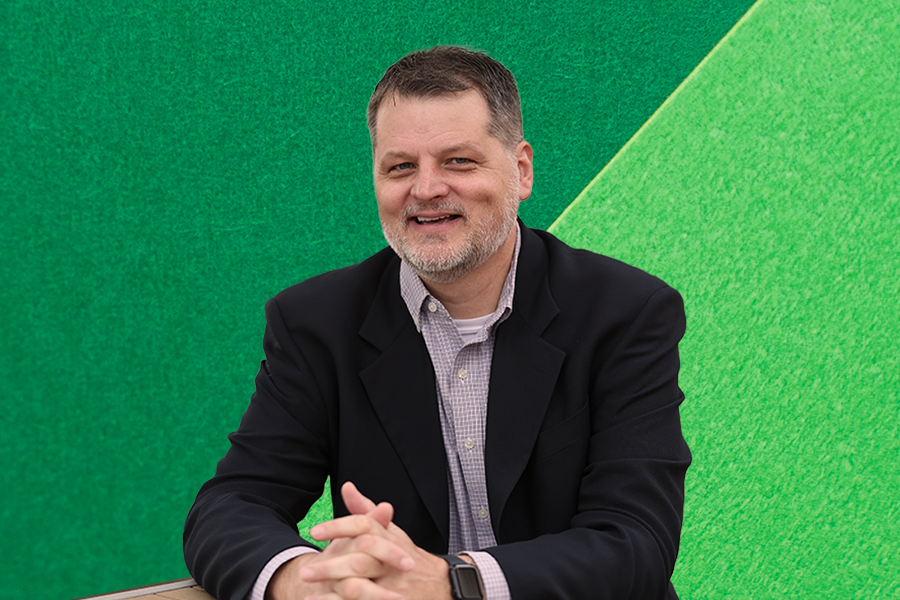
Disability touches nearly 70 million Americans and affects one in three families, yet many schools, churches, and community organizations still struggle to fully welcome and support people with disabilities in daily life. What would it look like if everyone could move from inclusion to belonging, where individuals with disabilities are empowered to fully contribute in the lives of their communities? Erik Carter came to Baylor from Vanderbilt University in 2022 to blaze new trails in research at the intersection of faith and disability. He takes listeners inside that work and shares the conviction that everyone’s contributions are vital.
Show Notes
Disability touches nearly 70 million Americans and affects one in three families, yet many schools, churches, and community organizations still struggle to fully welcome and support people with disabilities in daily life. What would it look like if everyone could move from inclusion to belonging, where individuals with disabilities are empowered to fully contribute in the lives of their communities? Erik Carter came to Baylor from Vanderbilt University in 2022 to blaze new trails in research at the intersection of faith and disability. He takes listeners inside that work and shares the conviction that everyone’s contributions are vital.
The conversation highlights:
- Disability affects 70 million Americans and one in three families, shaping daily life in ways often unseen.
- Baylor’s Center for Disability and Flourishing works across disciplines to help people with disabilities thrive in school, work, faith, and relationships.
- Research partnerships with schools develop practical instructional and peer‑support strategies that build learning and belonging.
- Churches receive support to move from intention to action—removing barriers and creating meaningful participation for families.
- Effective practices are scaled nationally to reach over 100,000 schools and 300,000 churches.
- Baylor’s mission and interdisciplinary strengths make it a natural home for work integrating faith, research, and community impact.
- Carter’s approach to move beyond inclusion to belonging, where everyone’s contributions are seen as indispensable.
- Inclusion strengthens entire communities—helping both individuals with disabilities and those alongside them flourish.
Transcript
Derek Smith:
We welcome you in to Baylor Connections. I'm Derek Smith, and our guest today is a leading expert on faith and disability. We're visiting today with Erik Carter. He came to Baylor in 2023 as the Luther Sweet Endowed Chair in Disabilities. He's the executive director of Baylor's Center for Disability and Flourishing, and we're going to visit with him today about a lot of really exciting and inspiring actions and work taking place throughout Baylor and beyond, to really invite people into the lives of churches, communities, and more. Erik Carter, really glad to have you here at Baylor and glad to have you on the program today. Thanks for joining us.
Erik Carter:
Yeah, you bet. Joy to be with you, and a joy to be at Baylor.
Derek Smith:
Well, we've got a lot we can talk about here in our 20 minutes or so together. The work you do is in an emerging field, and in some ways an entirely new field, but let's just start off maybe physically where you are a lot of your time here at Baylor, the Baylor Center for Disability and Flourishing. If we were to amble in there and just kind of poke around the halls, what are a few of the things we might see taking place there?
Erik Carter:
You bet. Yeah, so the Baylor Center for Disability and Flourishing, it's actually less of a place and more a collection of some really incredible people doing really compelling work on behalf of people with disabilities and their families. We have faculty and students and staff from all across Baylor who convene. We do have a building right at the heart of campus on Fountain Mall, but who are convening to do all kinds of incredible work. You would see research projects that are serving schools all across central Texas, all throughout Texas, and actually around the nation. You'd see research projects that are focusing on work in churches, to help equip them to really welcome people with disabilities and their families well. You'd see support groups for Spanish-speaking families and others in our community who desperately need support in raising their kids with disabilities, and if you ventured off of our campus, you'd find our clinics that are serving kids and their families all throughout Waco, helping them with assessments and behavioral supports and all kinds of needs that these families have.
Then, kind of peppered all throughout that are students from just about every school and college across Baylor who are part of those projects, learning to lead and serve and do work in the area of disability, so the center really is this hub for research and training and leadership and all sorts of things that have that impact on the lives of people with disabilities and their families.
Derek Smith:
Very multifaceted in the ways that people interact with it and in the way it impacts others. I'm curious, broad question, again. Who is the center for? Who all is a part of it? Who all benefits from it?
Erik Carter:
Well, at the heart of our work is the flourishing of people with disabilities and their families, so we want to make sure that we're doing work that identifies the kinds of services and supports and practices and policies that help these families really thrive in all areas of their life, in their schooling, in their work, in their faith, in their relationships. At the heart, we really are aimed at the thriving of people with disabilities and their families, but we're also for communities, communities that are called to welcome and support these families, but don't often know how to do that. We see our work as really serving churches and schools and workplaces and other kinds of organizations that want to welcome people with disabilities well, but they just don't know how.
I think the third group that we're really for is for Baylor. We are a hub at the center of Baylor, trying to animate work in every discipline, all across our university, towards this end of thinking about helping communities and people with disabilities to live abundant, rich lives. We need all of Baylor engaged in that work to be able to change that kind of landscape, so we've got a lot of people we're really for, but what's really exciting is how many people are coming together to make that work happen.
Derek Smith:
When we talk about disability, what are we talking about, exactly? Could you orient us there?
Erik Carter:
Sure. I think that word, disability, evokes so many different things depending on who you're talking to, and so we all have a different image of what that is. We often think about people who have impairments related to vision or hearing or communication, or learning, or mobility, or even just sensory considerations. In one sense, it's a broad spectrum of people, but let me really drive it down. About one in six kids in our local schools has a disability that impacts their learning or relationships, so that's about seven and a half million kids in every city, every state, all across our country, and those kids grow up, so we have about one in four adults, would identify as having some kind of a disability, which I think surprises a lot of people, but disability is often hidden. It's not always visible, and can impact people in lots of different ways.
Then, as you think about aging, about half of all people over 65 have some kind of impairment that impacts their everyday lives, even though they might not call it a disability, they might just call it the impact of aging, so disability, in many ways, what binds all of those together is it's an experience that often leads to barriers to being part of the communities and activities that matter most to individuals. We have a really expansive view of disability in terms of thinking about this broad spectrum of individuals, and that means if you put all of that together, that's about 70 million Americans, and it impacts about one in every three families. When we're talking about disability, we're not talking about someone else. We're talking about our families and our neighbors and the people we work with, and the people we worship with, and Baylor alumni and Baylor students and faculty. It's a really important segment of every community that we think is absolutely indispensable.
Derek Smith:
Well, when you talk about this impacting one in three families, that means, I mean, clearly we all know someone. We all know families, friends, loved ones who are dealing with this.
Erik Carter:
Absolutely.
Derek Smith:
There's no shortage of ways your research can impact others. Zooming out just a little bit here, how would you describe your calling in the research you do, and what led you to that?
Erik Carter:
Yeah, I think that my calling as a researcher is really to think about how good scholarship can change the landscape for people with disabilities and their families, to be able to bend the practices of communities from exclusion or oversight to inclusion and belonging. I really feel my calling is trying to identify faithful best practices that everyday communities can use that widen their welcome for a group of people who are so often on the margins or edges of our communities. To me, research is an incredible way, it's not the only way, to begin to move things, to have a redemptive influence on our culture and on our communities.
Derek Smith:
Well, you have been doing this work for a while. You came to Baylor three years ago, just about, not quite three years ago, from Vanderbilt, and since you've been here, we've seen some exciting opportunities and awards. Recently, a $5 million Lilly Endowment Grant that's very exciting. Could you give us a few examples of how research has some real impacts? Kind of take us on the ground in what you're doing in a couple instances, if you would.
Erik Carter:
Sure. Well, one example would be in our local schools, for example, I think that often really struggle to think about, how do we serve and educate students with disabilities, particularly those who have more extensive support needs? Students with Down's syndrome, students who are autistic, students who have intellectual disability, and they really are struggling with, what are the kinds of practices we can adopt that really not only promote good learning, but also promote the kinds of relationships that lead to connection and belonging in schools? We'll do work with schools to teach them new ways of providing instruction in classrooms, to think about how we work with peer-based support models, for example, in those classes, in ways that bring students into the center of instruction and really promote their learning and relationships. It's very intervention-based work, where we're going in, we're trying new things, we're seeing what the impact is, and when we learn that something really makes a difference, trying to bring that to scale so that every school can benefit from it.
A lot of work in schools, but I think one of the things that really animates me is this work that we're doing in churches. We all know that churches are called to be places of embrace and welcome for people with disabilities, and they want to be, but they just don't always know how. They sometimes feel under-resourced, they're not sure what to do and whether they have the capacity to do it. Our research is learning from families about what meaningful participation in their church might look like, listening closely to the kinds of barriers that stand in the way of that, and then working with churches to modify and reflect on and adapt their practices in ways that bring people with disabilities and their families into the heart of worship, into the heart of religious education, and into service opportunities and fellowship opportunities.
Then, as we learn what really works, we figure out how we embed that into training so that every church can go and do likewise, so it's really unique. We're not just assuming what schools and churches should do. We're actually spending the time deeply involved in the lives of those communities, figuring out what differences might be applied, and then when we learn that there's an impact, figuring out how we take that to the 300,000 churches around the country or the 100,000 schools around the country. In many ways, it's that learning on a local scale that we're then taking to a national and really even a worldwide scale.
Derek Smith:
Erik, as you described that, I believe part of what you're saying is creating places or accommodations to welcome people with disabilities in, but I've also heard you talk about the idea, how strongly you feel, and it's really meaningful, that everyone's contribution is vital, not just being there, but contribution. What does that look like to you?
Erik Carter:
Yeah, I think there's a difference between being present in a community and having a real presence in that community, between ministry to people with disabilities and ministry by people with disabilities. There's something about being part of a community where you're needed, where you're valued, where you're sought out, where you're missed when you're not there, that really leads to that deep sense of belonging and connection, and so that's what we're really trying to do, is if we are convinced that every person has gifts that the community needs, and that includes people with disabilities, part of the work is figuring out, how can we identify and cultivate the gifts of people with disabilities, and then invite and equip churches to seek out those gifts and put them to work?
For us, it's not about just bringing people into a community, but trying to figure out how we help that community value them, come to need them, find leadership and service opportunities for them, and out of that, to be the recipients of the gifts and friendship and faith of people with disabilities. That's theologically true, that that's how communities were designed, but we learned that's also empirically true, because when we study communities that make this movement towards inclusion, they don't just talk about how that was good for the person who was included. They talk about how that's enriched our lives together as a community, how we're stronger, better, more faithful because of that commitment. That's a thing that firsthand I learned long ago, when I stumbled into friendships with people with developmental disabilities, and I received that same gift of friendship and faith and belonging. That's the kind of work we're trying to invite every community into. To not see this as something that's good for them, whoever them is, but actually that's something good for us all.
Derek Smith:
You described those friendships you built with individuals with intellectual and developmental disabilities. Is that what helped lead you into this area?
Erik Carter:
Yeah, absolutely. I think, like a lot of people my age, and unfortunately, I think today I grew up in a world that didn't really include people with disabilities, particularly developmental disabilities. I remember growing up in schools where students with disabilities were in entirely different buildings, in entirely different parts of the community, so I never had the opportunity to meet a friend with Down's Syndrome, or someone who had a visual impairment or was autistic, but that changed as I entered into college and was looking for a summer job, and found a job that stumbled me into the relationships with other 18 and 19-year-olds with Down's syndrome, and just became captivated by the friendships that we developed, I think because I didn't expect them to be so mutual and so reciprocal. I sort of had this sense that I had something to give to them, and it was true, but it was also, the opposite was true, that I had much to gain from those relationships.
I think those early encounters are the things that animated me towards saying, "How can I help other communities widen their welcome in ways that those kind of encounters aren't rare, but are utterly ordinary?" That being part of a community together is an unremarkable thing, rather than right now, we celebrate that because it's so very rare in our communities. In a sense, I think a lot of the work that we're doing is trying to get people in every corner of our city and state to stumble into relationships that they might not have otherwise pursued, but if they do, they're opening themselves up to being transformed by those relationships.
Derek Smith:
I'm going to ask you a question, Erik that we could probably talk a whole another 20 minutes on.
Erik Carter:
Sure.
Derek Smith:
Specifically about this type of research from the world you described, where there was an otherness, and not that there's not still barriers to get there, but there have been improvements, from that line to the work you do now where you're receiving large grants and people recognize this field of study. How have you seen research in this area grow and how are you, how is Baylor growing that still?
Erik Carter:
Yeah, I think the landscape is beginning to change. Where exclusion and separation were the profile of most communities of the day, we're seeing more and more communities open up and saying, "We want to be more inclusive, we want to be more embracing of people with disabilities than their families, or anyone who might have been otherwise a stranger to our community." The questions in communities are changing from, "Why should we do this?" To now, "How do we do this?" That's where the research becomes so important, because good research can guide you in what movements lead toward greater inclusion and belonging, and what leads in the opposite direction. That's really what we're trying to build, is really a new field that didn't exist, I would say, even 10 years ago, of rigorous research that's deeply connected to community practices, that helps us understand what leads towards good flourishing together and what leads away from it.
That kind of scholarship is challenging, because it's real life scholarship with real people, and we're not always sure what movements we should make, and so being really careful and thoughtful and rigorous in our work with local communities helps us understand the kinds of practices, the kinds of postures that communities can adopt that really do lead to that kind of flourishing that I've talked about. It's a really exciting time for that new work, but Baylor's also a really exciting place for that work. I can't think of any place in the country that has that core mission that is so aligned to this work and that brings together such different disciplines towards that work. We have scholars in the area of social work, and at Truett Seminary and Robbins College, and the School of Music, and Arts and Sciences, almost every corner of campus, that can come together to solve these really challenging but meaningful problems in our communities.
It's unique both in this commitment that we have, but also, the ground is so fertile at Baylor of people who are passionate about this work and can come together in really unique interdisciplinary ways.
Derek Smith:
As a researcher and scholar, how invigorating is it for you to interact with people from all these different disciplines, researchers, students, and learn from them?
Erik Carter:
It's incredible. I think very few universities are really living out this commitment or this desire for greater interdisciplinary engagement, but at Baylor, with the center as the hub, we're creating a context where that can not only happen, but actually, it can really flourish in a way that I think other universities struggle to do. I'm learning so much from my colleagues who bring a theological perspective that I might not be as deeply embedded in, from my colleagues over in Robbins College who bring a very, understanding of professional practices around disability in a way that I might not have thought of. My colleagues in arts and sciences and the law school, and in the business school, all who bring disciplinary and methodological ways of thinking about the world and these problems that enable us to really tackle challenging, pressing needs in a community in a way that none of us could do on our own.
I think that's what animates me. It's part of what led me to leave one place to come to a place like Baylor.
Derek Smith:
Well, we're glad to have you here for sure, building on this work. Erik, as we head into the final few minutes of the program, I want to go back to the Baylor Center for Disability and Flourishing, again, where so much of this work emanates from. Wasn't always called that. I think you've painted the picture as to why it's called that now, but I just want to ask you about that transition and what that meant to you and your colleagues, and what it represents.
Erik Carter:
Yeah. The center was born about a decade ago. It was born out of some community clinics, meeting the needs of families, that were serving really families that had kids with autism and other developmental disabilities. We were called the Baylor Center for Developmental Disabilities. As that work moved, not just, I wouldn't say moved. As it expanded from clinics in the community to also the heart of campus, we began to realize that the work we were doing extended well beyond just kids with developmental disabilities, but really had the possibility for impacting people across the lifespan and across all sorts of disability experiences, but we were very deliberate about this pairing of the word disability and flourishing, because, one, we believe, we're convinced because of our faith and our convictions, that people with disabilities and their families deserve to flourish in all areas of their life, in their relationships, in their vocations, in their community connections. In every way that matters to anyone else, we feel that people with disabilities need the services and supports to flourish in ways that matter most.
We also believe that people with disabilities can and are flourishing. Some of the families with the most vibrant faith are families of kids with autism and developmental disabilities. Some of the families that are having the most impact on their communities are these same families, so we also wanted to put two words together that often people don't naturally put together. They think about disability as a deficit rather than people who bring incredible strengths and gifts and passions that enrich their communities.
The second reason we put those words together is we also believe our communities flourish when people with disabilities and their families are present, that we're incomplete if these families aren't part of our communities. I think that's both theologically true, as I've mentioned, that picture of first Corinthians and the body of Christ, where every part is needed for every part to flourish. That's true, but empirically, it's true as well. When we study communities, whether it's churches or schools, where people with disabilities are woven in deeply and well, they talk about how they're enriched by that presence, how they're learning differently, how they're worshiping differently, how they're understanding God and one another differently, because perspectives that were so often overlooked are now brought into the center. It's got these dual messages of, how do we help people with disabilities and their families flourish, but actually, how do people with disabilities and their families help all of us flourish?
Derek Smith:
I'm struck, as you described that, we've had one of your Baylor colleagues, Byron Johnson, on the program. He's leading the Global Flourishing Study, the largest of its kind to ever look at the roots and causes of human flourishing, and one of the things he talked about is that flourishing can take place in unlikely places. In some cases, it's people with disease, or even imprisoned, and to your description here, that can be people dealing with really hard things, and yet the factors that lead to a flourishing life are all there. I imagine that's really fun for you to see as well as promote.
Erik Carter:
Absolutely. I think so often, we have a picture of what someone's life might be, and we project into that whether real thriving can exist there, but the stories, when we listen closely to the stories of families and we listen to their hopes and their experiences, you can see these glimpses or even really exemplars of real flourishing that we all need to hear. I think that any community that narrows who has gifts to bring is a weaker community, and so, how do we unlock the vision of our congregations and our schools and our workplaces to say, "Maybe we're missing some really essential members when we think too narrowly about how we gather and where we gather, and with whom we gather."
Derek Smith:
Well, it's exciting to see that go forward. You talk about stories. You've got this Lilly Endowment Grant, you're going to be collecting a lot of great stories in the years ahead. Want to ask you, imagine you could go a lot of different ways with this as well, but what are you most excited about as you look ahead in this work? What's really got you looking forward to coming in to work every day?
Erik Carter:
I am so excited about the way Baylor as a whole is coming alive to this vision, to this bold pursuit of saying, "We want to be all in on this intersection of faith and flourishing and disability." That this isn't just a nice thing that happens in one corner of our campus, but a thing that as an entire university, we're committed to and all in on. I think seeing that whole investment of the university is so exciting, because I think that gives us the opportunity to bring together the kinds of faculty and staff and students in projects and partnerships that really have a chance of changing this landscape. We've been working a long time in these issues. This is not a new need. It's been around for a long time, but I have such a hopefulness and an excitement about what could happen here at Baylor, because so many people are so deeply invested in this work.
I think it's that idea of not having to do it alone, finding a community of scholars where we experience belonging together and we can aim our collective efforts towards what we know is at the heart of God and our deep desire for communities of flourishing.
Derek Smith:
Well, it's exciting to see the work you're doing, exciting to envision that going forward, still. I know I was able to easily Google Baylor Center for Disability and Flourishing and found lots of great info, but is that the best way for people to learn more? If people have questions, how can they kind of dive into what you're doing even a little more?
Erik Carter:
We would love you to check out our website, to sign up for our newsletter. It shares about the good work that's happening. The easy way to find us is just baylor.edu/disability.
Derek Smith:
Baylor.edu/disability, easy to find. Well, Erik, grateful for the work you do and grateful for your time today. Thanks for joining us on the program.
Erik Carter:
Thank you, Derek. We appreciate it.
Derek Smith:
Great to have you here. Erik Carter, our guest today on Baylor Connections. As he said, you can learn more about that work at baylor.edu/disability, and you can find this and other programs online as well in multiple formats. Each episode is available in a video format at Baylor University's YouTube channel, and you can also find all ways to listen to the program, audio, video, and more at baylor.edu/connections. I'm Derek Smith. Appreciate you being with us. Thanks for joining us on Baylor Connections.