

The Fan First Era: Shaping the Future of Baylor Athletics
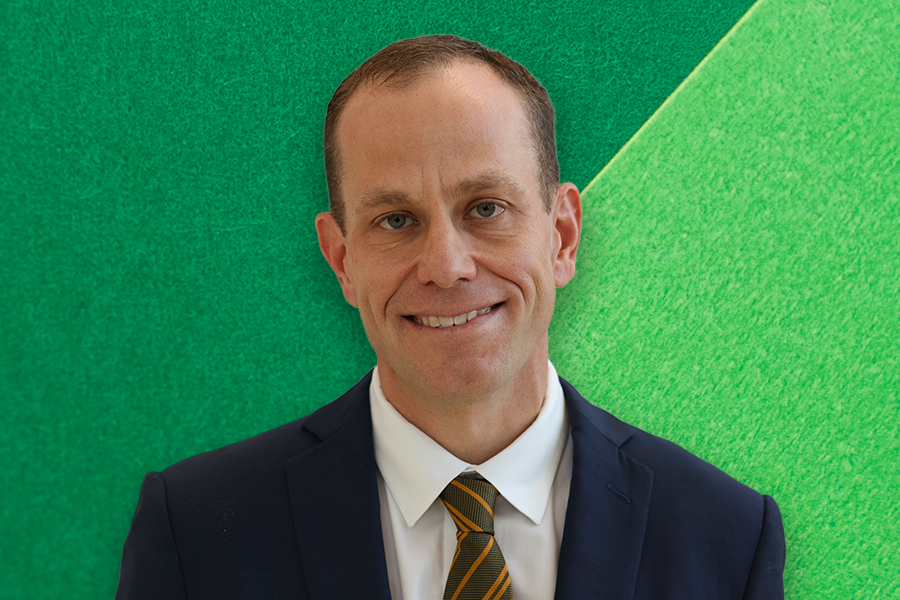
When Doug McNamee returned to his alma mater as Vice President and Director of Intercollegiate Athletics, he promised a focus on fans and experiences alongside the pursuit of excellence on the field or court. In recent weeks, Baylor Athletics has announced new initiatives to reduce friction points for fans attending games, from tailgating to concessions and more. Doug shares insights on delivering a great fan experience, galvanizing the passion of the Baylor Family, supporting student-athletes and more in this Baylor Connections conversation.
Show Notes
When Doug McNamee returned to his alma mater as Vice President and Director of Intercollegiate Athletics, he promised a focus on fans and experiences alongside the pursuit of excellence on the field or court. In recent weeks, Baylor Athletics has announced new initiatives to reduce friction points for fans attending games, from tailgating to concessions and more. Doug shares insights on delivering a great fan experience, galvanizing the passion of the Baylor Family, supporting student-athletes and more in this Baylor Connections conversation.
The conversation highlights:
- Insights from Doug’s first two months in the AD role
- Renewing relationships and engaging with the Baylor Family in the new era of college athletics.
- Challenges and opportunities for the Baylor Athletics Department in the days ahead
- A reimagined gameday experience with reduced points of friction to make it easier for fans to attend games
- Value and experiential enhancements in areas like tailgating, concessions and more
- Demystifying NIL and making it easy for Baylor fans to support Athletics in areas aligned with their passions
- Doug’s longstanding family ties with Baylor University beyond Athletics
Transcript
Derek Smith:
Welcome in to Baylor Connections. Visiting today with Doug McNamee, two-time Baylor alum, long time Baylor family member, and now Baylor's Vice President and Director of Intercollegiate Athletics, our athletic director. And Doug, appreciate you being with us here on Baylor Connections. Thanks for taking the time to join us. I know it's been a very busy stretch to start things off.
Doug McNamee:
It has, but moments like these, to get to sit down with friends and talk about something you love dearly, like Baylor, this is a fun thing for me, so thank you.
Derek Smith:
Well, thank you. I mean, a lot of us around here have known you, going back to around the time you were a recent graduate, your passion for Baylor over the years has evidenced itself in a lot of different ways. But in this role now as AD, I'm curious, let's just dive right into what it's been like since you were announced in December. So how would you describe the first, what, about two months now being AD, it's been what?
Doug McNamee:
Yeah, I would use the word surreal, although I'd say as the job gets more in depth, the surreal part starts to fall off and it starts to get real. But a rush, I mean a blessing, just a dream, could throw a lot of adjectives out there to describe the experience so far. It has been just a dream come true, and a gift for sure.
Derek Smith:
What's one thing that's been most surprising or enjoyable to you?
Doug McNamee:
I think that there's been some sport programs. One you work closely with, women's basketball, and I didn't know Nikki because she had come after I had departed. And just getting to know her and seeing her program up close and personal, and obviously with the seasonal nature of where we're at right now, certainly success obviously helps in that regard, but that's been a real joy, is to get to know some of the coaches that I just didn't have a relationship with because they had come up after I had departed, has been a blessing for me, for sure.
Derek Smith:
Well, obviously a lot of exciting things still to come as we head into March with basketball, and then baseball and softball are spring sports forthcoming. Let's zoom out a little bit here. As you look at Baylor, survey the scene from this seat, give us a few challenges and a few opportunities that you're excited about tackling.
Doug McNamee:
Yeah, I mean challenges, certainly we're in the midst of a disappointing men's basketball season, and to Scott Drew's credit, he's raised the standard so high here that anything less than the tournament feels like a disappointment. And I know that it's been hard for everyone, coach, the team and the program, and obviously a disappointing football season as well. So I think we have to acknowledge that two of our more high profile sports are in the midst, or have completed seasons that have been hard for everybody involved. And so there's just a general disappointment associated with that, that I think we have to be mindful of, and honestly recognize the intent to get better and focus on that. So I would say that in terms of the challenge. As far as opportunities is concerned, the common theme with almost every interaction that I've had with the Baylor family and constituencies, usually it starts or it ends with a question from them asking me, "How can I help? How can I be a part of helping to bring the vision and life together of what this is all about?"
And so that eagerness, that willingness to do your part, to help us go where we want to go. I mean, it's been prevalent for a long time, but to get back into it and now be in the seat that I'm in, to have just an overwhelming amount of folks that are asking that. And candidly, at this point, what I'm doing is calibrating to figure out how do we mobilize the family to make the biggest difference? And so truthfully, right at this point, I don't necessarily have an answer, direct answer to them, other than to say, keep coming to games, keep supporting us, keep praying. Those are all relevant, but I think we'll certainly be more intentional about giving people more tangible direct ways to activate as we go. And that's a big part of what I'm trying to focus on right now, is how do we mobilize the Baylor family to benefit and ultimately get us to achieve the success that we're seeking?
Derek Smith:
The Baylor family cares, right? Sometimes they're fired up about something they don't like. Oftentimes they're fired up about something they do, but there's that care factor that's high.
Doug McNamee:
Yeah. And I've talked about it before, being upset and disappointed versus being apathetic. And in an apathetic community, we wouldn't have any dialogue with them. They'd be gone. We wouldn't be able to talk to them. So people, if they express disappointment, even had a conversation yesterday with a Baylor Foundation member, a season ticket holder that wanted to let me know about an experience that wasn't great, and the effort and energy for them to spend time to tell me that is because they care enough to want to make it better, and it's easier probably for them to just be upset and go away. So those reminders are opportunities to understand, hey, we got things we can get better at, and if we can operate at a higher level, then certainly the opportunities are endless in terms of what we can accomplish.
Derek Smith:
It makes sense that, given the timing in which you were hired, we've seen you most at Foster since you were hiring. I know you're a big fan, obviously, over the years. How much of your time at Foster is being a fan and cheering? How much of it is noticing things, or talking to people, or hearing from fans like that?
Doug McNamee:
It's been an interesting experience in the seat, because I think first and foremost I want to reconnect with people and cultivate those relationships, and most importantly, tell people thanks. I mean, that's the thing that I keep reminding folks, is a lot of people will be like, "Hey, what can I do for you?" Right now it's me saying thank you. Thank you for creating this department and this opportunity for me. But you definitely want to engage with folks. And getting to watch the game and be a fan has really had to take a back seat to that. At the same time, I would tell you, one of the things I'm eager to do, and [inaudible 00:05:47] really haven't had a chance to do really, because I've been so intentional about wanting to meet and spend time with people that I have missed, is being to really sit down and analyze the overall of the game and the overall experience.
And that starts well before the first horn for the game starting, the tip-off. It starts from people showing up, pulling in the parking lot, walking through the plaza to get to the arena, getting their tickets scanned to come in, and just the overall production within the game. Probably one of the things that I am eager to do that I haven't, is to really take that perspective and really study and analyze that, and help provide input and feedback to continuously improve that. And so that's something I'm eager, and definitely will probably have a couple games where people will be like, "Is Doug even here?" And I'll be there, but I really want to be in a spot where I can take note and walk through the production with our team, and see where I think there's opportunities for us to get better.
Derek Smith:
Let's talk about the fan experience. That's something you've discussed a lot since being introduced as athletic director, looking at that, I'm curious, what's your take on, there's those elements like, you think back to when the Baylor women played TCU at Foster Pavilion, there were a lot of fun one-offs, magician, giveaways, concession deals. So there's the fun things that provide a little splash, but then there's also the baseline foundation elements of a game that are there every game. What's it like for you kind of looking at both of those and thinking about the whole fan experience? Do you have a philosophy or a take on that?
Doug McNamee:
Yeah, I mean, broad philosophy, in reverse answer to your question, broad philosophy is reduce the points of friction for the consumer. It's an effort to, one, to take the money and spend it to buy tickets, and to gather friends or family to come to a game. In this day and era, in this day and age with how well games are produced from a TV perspective, every game essentially is on TV. You can be a fan and never leave your couch. So we really have to earn people's willingness to make the effort to come to games. And I think that's really a responsibility for us to reflect and say, "What are the points of friction that make this difficult? And how can we help remove those? How can we help eliminate those where possible?" And so philosophy, that's what I look at, and just trying to be mindful, and there's always a balance, and certainly there's times where you love to do something and just fiscally you're not able to do it.
But I do think that there's a short term, say, sacrifice to ensure that that's delivered upon, in effort to earn a long-term investment from the fans. So I would say that's first and foremost for me from a broad perspective, as it relates to fan experience and what that means and what that looks like.
Derek Smith:
So you want them to get to the game easy, have it as easy as it can be to get their tickets, to get in, et cetera. What about in the game? Obviously we all want Baylor to win every game, and I know you're as competitive as anyone when it comes to that, but what's it mean to provide an experience in game that's exciting and fun? And even if you're disappointed Baylor lost, you're happy you spent that time?
Doug McNamee:
Yeah, I mean, winning cures a lot. Winning makes us all feel good, and losing is hard to overcome, but that's really the challenge, not to accept losing as an outcome, we want to strive for excellence. But that's really a challenge to put in front of our team, is did we deliver a great experience, potentially, in spite of the outcome? And I think that's where we're going to really focus our time as an athletic department. It's our coach's responsibility to deliver, once we get in season, the success on the court. And it's my job to give them every opportunity to do so in advance of the season, and in advance of the game. But we've got exceptional coaches to do that. But really then, the responsibility on our athletic department side comes to, how do you deliver success everywhere else? And I think that's part of the things that we've recently announced as it relates to football.
There's some very, very intentional strategies we've taken in a short time period. Things, I think, we've got bigger plans as we've got more time to build, but whether it be our intent to really lower concession prices and make it affordable for the fans to come to the game and be able to feed their family while they're there, tailgating is something that we'll talk at length of. And we really spent these first few months to look at how can we provide greater flexibility? And that's a big part of the decisions we've made, is how do we ease those points of friction? Our game time, we're going to announce, when we have control, certainly there's times where we don't have control, and that's dictated by TV, but I think you'll see the intentionality associated with, I think the later games are more conducive for a better fan experience, certainly with the heat and just giving people a great atmosphere on Saturdays to go out and tailgate.
So there's things that the timing, in short capacity, has allowed us to have the opportunity to make adjustments, but I think there's certainly longer term strategies that we've got to immediately go to work on that we'll take more time, but we'll be mindful of trying to bring that change in those spaces as well, too.
Derek Smith:
So lower concession prices, that's going to be a hit with everyone. What are some things we can look forward to tailgating wise? What's your vision for that?
Doug McNamee:
Yeah, I mean, I speak often to it, because I remember vividly the early days of that tailgating culture coming alive in Floyd Casey. And as a student, it really didn't exist. So it was post-graduate that I saw that. And the thing that's most meaningful for me, is tailgating provides us, what I feel like, is the front door for people that don't have an affinity to Baylor, but live in this community, a chance to get involved. And I remember at Floyd Casey, just seeing fans that wanted to kind of be a part of the party, and experience a fun, enjoyable, accessible day at Floyd Casey and then ultimately McLean. I think that tailgating really provides that, and it really opens the door for local individuals and families to come in and feel like they're part of the Baylor family. And so I think we have to be incredibly intentional about the points of friction associated with that.
And I would say some of the challenges that have been presented in the past, the rigidity of, this is how everything's got to look, and costing, and we can't just open it up and have no rules. We need to make this a safe, reasonable environment, so we'll certainly do that. But I think giving people more options and trying to be mindful of the cost, because tailgating in itself is a commitment, and the cost and the energy to get up there and be out there all day is difficult. And so if we add layers of further complexity on top of that, I think it's challenging. And knowing your consumer, for some people, they're okay to pay for the convenience and have everything dialed in.
For some people they're not, and they will do it, but they want to do it themselves and make it as most cost-effective as possible. And I think one of the challenges in the past for us, especially of late, is that we've limited that flexibility for our audience. And this year, the intent is really to open that up and give people options and ability to make tailgating happen with a greater sense of ease.
Derek Smith:
That's funny. You used the word energy in there. There's an energy with a vibrant tailgating scene that'll be fun to see, fun to see come back. Let's pivot a little bit. Thinking about, obviously there's a lot of changes in college athletics that people have talked about ad nauseam. Let's look at some ways the Baylor family can help in some different ways. We've heard lately about more external NIL. Could you define that for us and why that's important?
Doug McNamee:
Yeah. First I'll say we're a smaller alumni base, so truth is that we really need a unified community, and we need everybody to play their part for us to be successful. And so the NIL world has certainly come with its fair share of twists and turns, and I think a lot of misinformation and confusion on what it actually is. And that's part of the job for us, I think, in the very foreseeable future, is to give people clarity on how they can be a part of it. And for some people, NIL is not an option. They have no interest to participate in that, and that's okay. We have a tremendous amount of scholarship need to deliver the student-athlete experience for our student-athletes. And so if giving to provide a great student-athlete experience, and provide the academic experience that Baylor affords, then we need you. And if you want to be more involved and you have a genuine interest to support directly on the NIL side, we will absolutely make that opportunity possible as well.
But I think, first and foremost, it's really important to be clear to meet people where they're at and what their interests are. And for some people, like I said, scholarships are what drives them. Giving a student-athlete a chance to experience Baylor that would not have had that had it not been for the scholarship, is a powerful, powerful tool for people to be a part of, and a legacy. And for some people, we know the realities of NIL, and we want to step right up and be integral as it relates to external NIL, and follow the guidelines that are out there for us to be able to support through an external NIL. And oftentimes that includes a business taking advantage of the name, image and likeness in exchange for benefits in return for that.
And so what I would promise and what I would say is we've got to do a better job of showing the lanes of participation and making it clear for people to say, "Here's just where I want to lean in." And making, again, remove those points of friction where, wherever they want to lean in, we make it easy for them to do so.
Derek Smith:
Everyone can play a role really, is what you're saying, in some different way. Business owners on the external side, scholarships, we saw the exciting news a few weeks back of the gift from Chip and Joanna Gaines, the largest gift in the Baylor baseball program history, Magnolia Field at Baylor Ballpark is, everyone's got that lane where they can find something that touches their heart and benefits the student athletes.
Doug McNamee:
And that's where the relationship with the central Texas community is so important, because the benefits of a successful athletic program, and us experiencing success on the field, it reaches far outreaching in terms of beyond just the Baylor community, but truly to the larger central Texas community. And so I think being intentional about creating ways for really genuine NIL opportunities is important for us. And I think some of the ... there's been some really successful campaigns that I've really, from afar, been taken back by businesses understanding how to really activate student athletes to the benefit of their business. And that's the truest sense of what NIL was meant to be about. Whether that be Central National Bank, or Raising Canes, or I love the Raid promotion with Bugs, and Jeremy Roach from last year is just brilliant in the way that they played on that.
And there's a lot of great opportunities associated with that, and we just got to make it easier for people to be able to take advantage of it, and giving our student athletes more opportunities, ultimately will attract more student athletes. So that's our job as a department to really facilitate that in a successful way.
Derek Smith:
We got a lot of really vibrant student athletes too. It's kind of fun seeing that side of them, and those ads and in those opportunities.
Doug McNamee:
Great representatives, ambassadors for us as a department, and great ambassadors for businesses to connect with a consumer. And so that's where the magic takes place and where we've got a responsibility to really facilitate that connection.
Derek Smith:
Well Doug, as we head in the final few minutes here, let's talk about your Baylor ties. A lot of discussion centered on that when you were announced, and of course a lot of people here at Baylor know you or know of you from your time here in the past, but I'm curious, I even learned some things I didn't know, just how far back your family legacy goes. How much, and why were you celebrating that recent news, the massive gift that named the Moody School of Education? Why was that special to you?
Doug McNamee:
Yeah, it's really special. I shared that with, amongst my family, my grandfather was the dean of the School of Education in the late 70s, early 80s. So near and dear for sure, for us. I have a sister with two degrees from the School of Ed. My master's degree is from the School of Ed. And so we have a long lineage. My dad was raised here in Waco, went to Richfield High School, and went to Baylor and ultimately met my mom at University of Indiana, Indiana University, excuse me, in Bloomington. But our connection goes deep to the university, and growing up, coming to games, visiting grandparents here in Waco, and getting to go to Baylor athletic events is a vivid, vivid memory for me. And so really excited for the School of Ed, and so grateful for the Moody Foundation for their commitment to just make that a transformational gift.
And for us in a very small way, for my wife and I, once we got settled in, one of the first things we wanted to do is give back to the School of Ed as well too. And so we were really honored to participate in a scholarship endowment, because the School of Ed has made such a difference for the McNamee family for us. So hopeful to do that for others as well. But just, there are a lot of memories for me that have been formative in my life because of Baylor. And so to have the chance and to come back and serve it in this capacity is a really, really good thing.
Derek Smith:
And we're going to touch on some of those on Baylor social media here. Get a few quick hitters of some of your favorite moments or memories. But one thing social media that I want to ask you, for people who don't know exactly when you attended Baylor, graduated from Baylor, our social media team did a thing a couple of years ago where they said, "Tell us when you went to Baylor without telling us when you went to Baylor." So what are a couple facts about your time at Baylor, something that happened here, that would give us a clue as to when you attended?
Doug McNamee:
I'll give you two. The Student Life Center, the McLean Student Life Center opened the week of my welcome week as a freshman. So that's a big one. And then I would say the other one that I'll say, is I went to Baylor when the intramural fields were where the science building is now. And that certainly has moved over towards where the Hawkins Indoor is, but having the intramurals right there in a little bit more of the heart of campus was a pretty awesome experience, while people were running around the Bear trail, playing flag football or softball or something out there, was a fun experience. And part of when I was in school, that was where it was located.
Derek Smith:
So you have two Baylor degrees, '03 and '05. And so you're here from what, about '99 to 'O5 as a student?
Doug McNamee:
Yeah. I came in the fall of 1999, and graduated with my master's in May of '05, and started working for ISP, which is kind of affiliate company of Baylor. Really, May of '05, just simultaneously rolled right into it.
Derek Smith:
And you and your wife, Lacey, and now your daughters, you've been here in Waco the whole time. This is home.
Doug McNamee:
Yes. Yeah, we never left. And even when I departed Magnolia, was thinking through what the next step was for me, working, leading a media company, not a lot of options in Waco, but it was always a non-negotiable for me that it was going to have to be in Waco or a remote opportunity, and so Field & Stream afforded me the opportunity to work remotely, because our team was through the United States. But Waco has been home for us, and God willing will be the home for us, for the future.
Derek Smith:
Well, and certainly we can see the fruits of the work you did at Magnolia and the continued success, the Magnolia Network and a lot of their multimedia outreaches, Field & Stream as well. But Baylor's home, Baylor is where you've been, where you're back, and you've really painted this picture as we've been talking, but as we wind down, we talk a lot about the fact it's true, Baylor Athletics is the front porch to the university that you love. It's the introduction for so many people. What does it mean to you to get to steward those efforts that touch people who love Baylor, and people who will in the future?
Doug McNamee:
Well, I think for me, it starts with recognition that the university, and the leadership of the university with our board, our president, has made a statement and a commitment and an investment to ensure athletics are viable and fruitful at Baylor. And so I'd go back to my last seven years of working for owners and investors and just recognizing that relationship, and there's expectations for a return. And so same thing is true for us here with Baylor Athletics. There has been an investment by our university, because of the belief in athletics, and the belief that if athletics is operating at the level that we expect it to, that it will provide a return. And that return is really awareness and visibility that couldn't be purchased for a lesser amount. And I think when you look at the best days of Baylor Athletics, you look at the best days for other athletic departments, there's zero question about was the investment worth the return?
Because admission sees the benefit, development and the philanthropic side of the rest of campus sees the benefit. It's an engagement opportunity for people to plug back into the university that's hard to match. And so I just want us to ensure that we are delivering that ROI, and that means that we're operating at a high level, we're engaging our constituents, we're providing a great experience, we're winning. We need to win. We can't discard the importance of that. That's a big part of it. It's not the only thing, but it's a big part of it. And so that's what success for me looks like, and the responsibility that I carry as far as leading athletics to ensure that we're doing just that.
Derek Smith:
Well, Doug, it's been an exciting few weeks. See the energy surrounding your announcement. Now, hopefully as we head into March into spring, some more wins ahead on the court, on the field. And we'll also look forward to even a few months down the line, to that first off season, as you get to take those steps that take place once sports slow down. But hopefully not until a few more wins, championships perhaps along the way. But Doug, really appreciate you jumping on with us. Thanks for the time. We look forward to what's ahead.
Doug McNamee:
Thanks, Derek. It was fun.
Derek Smith:
Appreciate it.
Doug McNamee:
Appreciate it, man.
Derek Smith:
Doug McNamee, Baylor's Vice President and director of Intercollegiate Athletics, our guest today, here on Baylor Connections. I'm Derek Smith. Appreciate you being with us. A reminder, you can find each episode of video at Baylor University's YouTube channel. And each episode's audio is available online, baylor.edu/connections, and on iTunes. Thanks for joining us here on Baylor Connections.