

Elite Science and Mentorship: Baylor Chemistry and Biochemistry
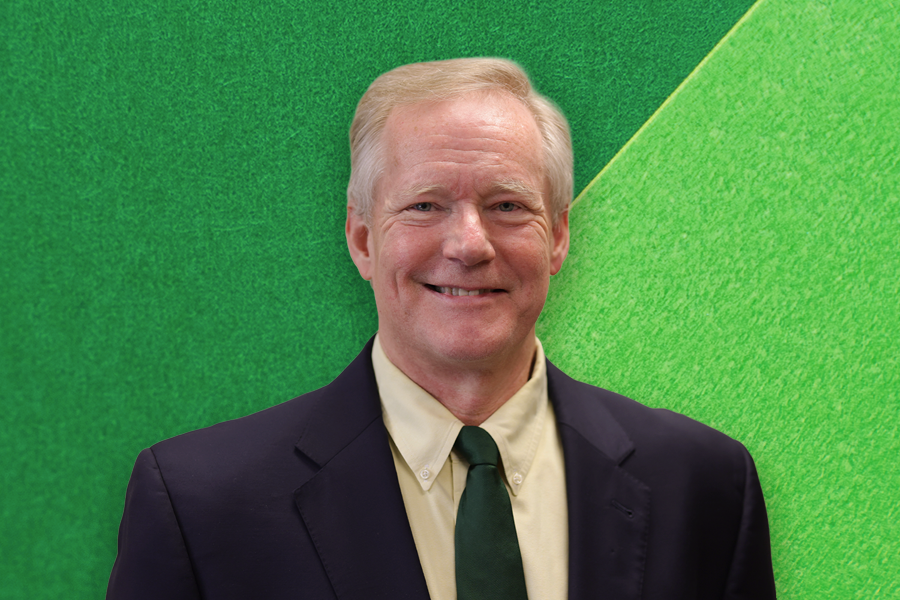
“If you build it, they will come,” says John Wood of Baylor’s 508,000‑square‑foot Baylor Sciences Building (BSB), an elite facility that houses Baylor’s Department of Chemistry and Biochemistry alongside other science disciplines. A nationally recognized leader in organic synthesis whose work contributes to drug leads for cancer and numerous other diseases, Wood speaks from inside his BSB research lab about his department’s continued growth—ranging from advances in understanding disease to expanding work in materials chemistry and beyond. He also reflects on the collaborative environment the BSB enables and shares why mentorship remains a passion as he and his colleagues nurture resilient, creative future problem‑solvers.
Show Notes
“If you build it, they will come,” says John Wood of Baylor’s 508,000 square foot Baylor Sciences Building (BSB), an elite facility that houses Baylor’s Department of Chemistry and Biochemistry alongside other science disciplines. A nationally recognized leader in organic synthesis whose work contributes to drug leads for cancer and numerous other diseases, Wood speaks from inside his BSB research lab about his department’s continued growth—ranging from advances in understanding disease to expanding work in materials chemistry and beyond. He also reflects on the collaborative environment the BSB enables and shares why mentorship remains a passion as he and his colleagues nurture resilient, creative future problem solvers.
The conversation highlights:
- How Baylor’s Chemistry & Biochemistry faculty are expanding the ways they address critical scientific challenges, from drug discovery to new materials
- A growing, mission‑aligned research culture supported by world‑class facilities like the Baylor Sciences Building
- Cutting‑edge laboratories and instrumentation that empower students to engage in real‑world scientific inquiry
- The collaborative, interdisciplinary environment that mirrors the teamwork required in modern scientific research
- Creative approaches to teaching, problem‑solving, and hands‑on discovery in the lab
- Breakthrough advances in areas such as organic synthesis, battery materials, and potential drug leads for cancer and other diseases
- New research directions emerging from a dynamic cohort of young faculty
- The mentorship philosophy that prepares students to become resilient, innovative scientists and leaders
Transcript
Derek Smith:
Hello and welcome to Baylor Connections. We are here today inside the Baylor Sciences Building, surrounded by over half a million square feet of science labs, classrooms, and more. Specifically right now, we are in the Baylor Synthesis and Drug Lead Discovery Lab, led by John Wood, a university distinguished professor and chair of Baylor's Department of Chemistry and Biochemistry. And over a time together, we're going to talk about all the great work taking place inside Baylor Chemistry and Biochemistry, talk mentorship, what's great about this building and more. Here with John Wood today, and John, it's great to have you with us. Thanks for joining us.
John Wood:
Thanks for being here, Derek. Thanks for having me. It's great to always to talk to you.
Derek Smith:
Well, thanks for letting us inside your lab here. We're butting in today and we appreciate you letting us be in here and take a look at what takes place inside the lab. And this is just one part of the great things that are taking place here inside Baylor's Department of Chemistry and Biochemistry, of which you are the chair. So, let me ask you this to start off. If you were bragging about this department to a colleague from another university, what would you like to tell them?
John Wood:
Well, I think there's a couple things I'd probably point to. One would be the Baylor's Christian identity. It really gives all of the faculty and the university a common thread. And that commonality amongst faculty can be something that's comforting, especially when you're a young faculty member, stressful situations, at least you know you're sharing something in common with your faculty. I think another aspect that I would really point to in this particular time in chemistry and biochemistry is that there's a lot of fantastic young faculty that we've hired. There's a lot of enthusiasm in the department. It's just simply a fun place to come and work with the people here.
Derek Smith:
Well, you're a veteran here in the department. You came here in 2013. We mentioned this is the Baylor Synthesis and Drug Lead Discovery Lab. So, we talk about what goes on in Baylor Chemistry and Biochemistry. What goes on in this lab? What do you all do?
John Wood:
Well, in this lab with a couple of my colleagues, Daniel Romo, other organic faculty, Kevin Penny, Bob Cain, these are all faculty who are more or less devote their time to putting small molecules together, one atom at a time, controlling where the atoms go in three-dimensional space and teaching students how to do that. And in the course of that process, you can be making new drugs, new drug leads that may lend lead to new drug discoveries. So, that's what's going on in these labs. We're putting molecules together and teaching students how to do that.
Derek Smith:
It's not just cancer that Baylor is treating, but that's certainly one people think of.
John Wood:
Yeah, absolutely. It's certainly in the forefront of everybody's mind. Everybody seems to know someone who's been affected by cancer, so it tends to be a disease that is right on the front of people's minds, but the sorts of chemistry that goes on here can be applicable really to any sort of disease that you might think of.
Derek Smith:
So, the work you do and the colleagues you mentioned is one part of what's taking place here inside Baylor Chemistry and Biochemistry. It's impossible to summarize it all, but what else is going on, if I could ask you that?
John Wood:
Well, I think that there's lots going on and people can kind of associate what goes on in our department with the sort of normal traditional teaching that takes place in a chemistry department. We teach in the areas of inorganic chemistry, physical chemistry, biochemistry, analytical chemistry, organic chemistry and inorganic chemistry. And so, there's faculty that work in those general areas, traditionally in chemistry departments, and we have strength in all those areas, so a very diverse faculty in that sense. And then in recent times, as part of the undergraduate curriculum, there's been a more of an emphasis on materials chemistry.
And so, Baylor has moved in that direction in recent years and we've hired chemists devoted to materials. And so, that's also an aspect now that we're gaining strength in our portfolio of chemists that we have here.
Derek Smith:
For those of us like me whose chemistry experiences ended with a basic class in college somewhere, a lot of things that I've learned talking to you and your colleagues that I don't necessarily think about when I think of chemistry, whether it's batteries, whether it's materials that we might find in the products we use, certainly medicine, as you said, these are all things where it feels like Baylor's influence is growing. Is that fair to say?
John Wood:
I think it's fair to say chemistry impacts all of us every day in many, many ways and many ways, like you say, that we don't even think about.
Derek Smith:
Just how vital is collaboration to what takes place here within Baylor Chemistry, whether that's across the hall with different divisions on campus or with colleagues across the country.
John Wood:
I think it's really vital and it's important. I think it's also important to remember that when we are hiring chemists, new faculty, even senior faculty, you're kind of looking for that identity that they have and strength that they're going to build in that particular area. And those identities and that strength then will help facilitate future collaborations and help collaborations. For example, we have a young chemist, Jonathan Larson, who's working in the areas of batteries that you mentioned, who's going to be putting pieces of equipment in Baylor right across the hall from us here that will be one of a kind in the United States.
And that's sort of innovation and forefront technology is the sort of thing that attracts collaborations and helps build them not only within the campus, but externally as well.
Derek Smith:
You look around this room and this building as we look out the window here, we can see different wings of this massive Baylor Sciences building. It's been around just over 20 years now, which is hard to believe, but 508,000 square feet to be exact, numerous divisions housed here. Let me ask you, going back to 2013, you'd been at Yale, you'd been at Colorado State, and then Baylor came along. And I know it's not only the building, but let me ask you, what role did this building have in attracting you here? Well,
John Wood:
This building was really important. I think that if you were to look for another metaphor or another way to describe it, you could think about the movie Field of Dreams. And so, if you build it, they will come. And so, this was really a great vision on part of the Baylor administration and the faculty that were here at the time to build a facility that would serve to attract cutting edge research scientists to move us towards the R1 goal that they had set out for themselves early on. And so, that was of course an attraction, a good facility to work in.
But really it's not just the facility itself, but also the sense that I was going to be working in a university with an administration that was committed to that mission of building the research enterprise. If they've devoted the sorts of funds that were needed to build this building, they were certainly going to follow through with what was needed to help fill that building. And it's really come true for sure. This building is now, I don't know whether it's at capacity, but it's getting pretty close. And so, they've done a great job fulfilling that dream.
Derek Smith:
I mentioned it's been around 20 years, but even after 20 years, it seems like it still impresses people when they come here to visit.
John Wood:
It is. It's an impressive building to begin with, but they've also done a fantastic job just maintaining it. If you can look at a lot of other buildings, I think on other campuses that are 20 plus years old that don't look nearly as vital and as vibrant as this building, not only just due to how it's constructed, but the amount of effort that goes into maintaining it, I think is also impressive.
Derek Smith:
Your students are here working around us as we visit. What's the impact for students who've been able to work in a facility like this?
John Wood:
Well, the impact is great. If you consider the lab space that we're in now, it's a very comfortable space to work in. We're looking at windows that are just exposed to the outside right next to the bench where the students are working day in and day out. So, that sort of attention to what humans might need to work comfortably in an environment that was thought of, and that's been helpful to the students. The fact that there are facilities, instrumentation facilities close by to the laboratories where they're working, that's also just lowers another barrier to them getting their work done.
The fact that the building is large and the hallways are large and interconnect a number of different groups and divisions, as you say, different departments in the university, that allows the students to interact with one another in a much more casual and easy way. And to the extent that this interaction amongst the students facilitates their research, they get ideas from other students, they see what's going on in other departments, that helps to motivate them in their own work. That all works together and it's made possible in a building like this that provides that sort of interplay between various groups that are working inside the building.
Derek Smith:
For students, how meaningful is that interdisciplinary aspect? Different groups, whether it's within chemistry and bio, but also there's access to all these other divisions, all these other departments within the Baylor Sciences Building. For students going forward trying to tackle these big problems, how important is it to build that interdisciplinary mindset?
John Wood:
I often tell the students that one of the most valuable resources that they have are their colleagues, their student colleagues, and the different perspective that they can bring to the project that they're working on. Student in biology is going to think about the project that I'm working on in a different way than I'm thinking about it. They'll ask me questions from a perspective that I don't have, and those questions will cause me to think about how I'm approaching this problem. Maybe there's a different way to approach that problem. And oftentimes, that turns out to be the case, and it's where new innovation and new solutions to these problems come from.
Derek Smith:
John, as you work with your students, I think it's a really cool thing. As we've talked in the past, it's clear mentorship. Talking about mentorship gets you, I think, about as excited as anything else you discuss. And I know you wouldn't brag on yourself like this, but we will. You've got the 2024 Ernest Guenther Award from the American Chemical Society, basically really a lifetime achievement award in a lot of ways from this governing body that oversees so much and that brings people together in the fields of chemistry and more.
You're a university distinguished professor, just the second such person bestowed that award, and you're here in the lab with your students hands-on every day, talking to them, they get to interact with you. I think that's a cool thing. Mentorship. Why is that so important to you?
John Wood:
It can be difficult to answer that question without it maybe sounding self-serving in a way, but the single most important thing to my research or doing my job, it's not the building, it's not the equipment, it's the students doing the work. That's a resource that's very valuable. And so, you want to cultivate that resource as much as you can. And if you can do that through good mentoring, even the better. Good students are attracted to good mentoring, good mentoring helps good students perform well. So, there's lots of reasons to try to strive to be a good mentor. And so, it's really just that it's the most valuable resource that we have.
And after all, we're an educational institution, and I think that's my job, is to try to mentor these students and to teach them the skills that they're going to need to be successful, whether it's not only just in the laboratory, but presentation skills, writing skills, all the aspects that can go on in their life that will help them in the future.
Derek Smith:
Obviously, this lab has been very productive. The grants and honors and awards demonstrate that, but it seems to me that even after doing that all these years and that success, that you still are excited, motivated, and just really enjoy that process of discovery with your students, of seeing them even struggle or fail, if you will, in a short-term experiment, but then working through that and learning.
John Wood:
Yeah. I think that I've often said that the absolute best part of my job are those moments where a student is working on a project, they've come up with an idea of their own and that idea works. And that's the moment when a project that we started becomes their project. And when they turn that corner, it's fantastic to see. And so, I think that trying to provide an environment where you allow that to happen or try to encourage that to happen is important.
And I think that some of the mantras or things that I've lived by over the years, there was a really famous 20th century chemist, RB Woodward, who I was talking to one of his students and the student conveyed to me, Woodward came in the lab and said, "If you're faced with a decision based solely on hypothetical arguments, consider all the reasons not to perform an experiment and disregard them." In other words, don't talk yourself out of those experiments. So, providing an environment to the student, I think that's really important where they can embrace failure. Don't talk themselves out of trying new things or things that are different.
Don't talk yourself out of doing those experiments really is a way to help enable that process of them discovering new things themselves and taking ownership of their projects. It's a way to kind of help that happen. And it's also true that if you think about that, not talk yourself out of experiments, try innovative things. If you limit yourself to only trying experiments or exploring things that you know are going to work or you know what the outcome's going to be, you really limit the chances of you're discovering anything new.
And it's when you're discovering things that are new, that's what elevates the project that you're working on from say a mediocre publication to something that goes into a world-class journal that people are going to look at and say, "Wow, that's really cool. How'd you come up with that?"
Derek Smith:
Yeah. And you've had plenty of those over the years, your students and...
John Wood:
Yeah, we have. So, I've been very fortunate. I've had some really great students working in my lab.
Derek Smith:
And many...
John Wood:
It's not just me. I mean, it's a two-way street.
Derek Smith:
And many of them are your colleagues or will be your colleagues down the line here at other-
John Wood:
They are.
Derek Smith:
... institutions. And that's a pretty cool coaching tree, mentoring tree-
John Wood:
That's right.
Derek Smith:
... if you're able to see.
John Wood:
Liela Romero, one of our outstanding young faculty, chemical great-granddaughter of mine.
Derek Smith:
Yeah, that is neat to see. They come and many of them have come back to Baylor or doing great things elsewhere at carrying that Baylor Mantle for sure. As we talked about what you do here in this lab and you talk about that willingness to try new things, to be willing to fail, to get to success, I mean, when we think about a cancer drug that someone can take right now, the work you do going far, far back is at the tip of the spear. And I mean, I know there's no telling how many failures, if you will, along the way, got to that success of a cancer drug down the line, but it's what? A lot of work and a lot of years in between.
So, maybe to state the obvious, to get to that potential outcome years down the line, you got to try a lot of different avenues to get there.
John Wood:
And another kind of aspect of talking with my students and what do I tell them oftentimes in the laboratory, they'll ask me, "When is it time to write up your thesis or when is it time to go out and look for a job?" And I tell them, "I can usually get you the skillset that you need to do the chemistry in a fairly short period of time, a couple of years." But it takes a few more years in order to have a good job talk. And a good job talk is all about lots of failure in that job talk. And it's where it's not just that it's all failure, but you encounter a problem and you assess that problem and then you overcome it and move to the next one.
And then there's another problem and you've encountered that and assess that and go move to the next one. And you don't necessarily have to finish the project that you're working on as long as you can give a job talk where there's problem, solution, problem, solution, problem, solution, because people are going to want to hire problem solvers, right? And you have to have resilient problem solvers with good skills, and that's what we're trying to produce here.
And so, as long as you can demonstrate that, you'll get a good job and you'll also be able to do what you say is to go into a situation where in the development of a new drug, there's tens of thousands, hundreds of thousands of compounds that need to be prepared and assessed, and only one of them is going to make it in the end. And so, that requires a lot of resilience along the way. And so, being able to take solace and those few successes that you have from time to time and let that carry you forward through the many different trials and tribulations is important. And the students here, I think learn that skill as well, just coping with the failure and learning from it.
Derek Smith:
How important is in developing that in these students and helping them feel comfortable with that? How important is your accessibility to them, their ability to talk to you?
John Wood:
Oh, I'd want to say it's really important for them to... But the fact is if I can get them to the point to where they can solve their own problems, that's where I want them to be. But I do think that I can help guide them along the way. And I try to be as accessible as possible. My door is open always. And if students in my research group have questions, they have priority number one in terms of everything that I deal with, but not everybody, just because your door's open doesn't mean that people are going to walk through it. And so, you really have to take a proactive stance on managing your group. And so, I do walk through the laboratory multiple times a day.
More often during the day when I'm doing things in the front office that I'm not enjoying as much, I'll come down here because I know this is my happy place, but I do see them and talk to everybody pretty much every day. And I think that that accessibility's important. I can not only provide advice, but I can also tell them it's okay. This didn't work, this reaction didn't work, but we've learned something from it and so, encourage them.
Derek Smith:
Now, John, I understand as we talk about your students and navigating failures and careers and all that, you have some rules about hobbies. And I know you have your own hobbies that maybe we can ask you about, but what does it mean to you to have students who just aren't all chemistry all the time?
John Wood:
Well, I do encourage hobbies. In my group guidelines book, there's a section on them having a hobby, doing something outside the lab that will stimulate their mind in a completely different area. I think that it's an important thing to do for their own mental health. It's also can help, I think, inspire creativity in a way. There are many times when one of my favorite hobbies myself is woodworking. I might be in the wood shop, but working on something and in the back of my mind, all of a sudden some chemistry creeps in and I'll think, "Oh, we should really be doing this this way, or this would be a really cool idea if we could try that." And I know if that happens for me, it's going to happen for my students.
And so, if they just take those moments out of the very week, spend a little bit of time thinking about something else and doing something that's different, that those innovative thoughts will creep into their minds as well and just result in not only a better product as a student at the end of the day, but also a better solution to the problem that they're working on than the lab likely.
Derek Smith:
Is it fun or inspiring to you to learn what your students are doing? Has it ever turned you in any direction like, "I might want to try that sometime"?
John Wood:
I can't really say that nothing really comes to mind where I've taken that hobby from my student and called it my own. I think that there sometimes where a hobby from a student can be cooking and we might have a group potluck and I'm thinking to myself, "Oh, I need to have this student show me how to do this." And it would be probably the most common thing that comes to mind in terms of walking away from a student with something where I've learned about their hobby that's kind of inspired something in myself. Yeah.
Derek Smith:
That's a good demonstration that you can conduct high level science, have a very productive lab, but also have a little bit of a life outside of it. That's a good thing, right?
John Wood:
Right. Yeah, it's important.
Derek Smith:
Well, John, as we wind down, really appreciate you letting us inside your lab here today and telling us more about what you do and what goes on here in the BSB and the division you chair, the Baylor Department of Chemistry and Biochemistry. So, as we close, I just want to ask you, as you look ahead, what's going on here in these labs around you and within Baylor Chemistry and Biochemistry, what are you most excited about where it's headed and where it can continue to grow?
John Wood:
Right now, I think one of the most things that I'm most excited about are the young faculty that we've hired and the new and innovative directions that they're moving in, watching those grow, but then also watching the collaborations within the department and outside the department that are going to develop around those new faculties and the innovative things they're doing. I think that's really going to be a fun thing to look forward to.
Derek Smith:
Well, we've seen that taking place and look forward to seeing it continue to do so. John, thanks so much for letting us in here today.
John Wood:
Thanks a lot, Derek. Appreciate seeing you.
Derek Smith:
It's been fun. Great to visit here, and we appreciate being allowed here inside the Baylor Synthesis and Drug Lead Discovery Lab visiting with John Wood today on Baylor Connections. I'm Derek Smith. A reminder, you can listen to and see every Baylor Connections Program. You can go online to baylor.edu/connections. You can find the videos on the Baylor University YouTube channel and audio is available on iTunes. Thanks for joining us today here on Baylor Connections.