

Global Supply Chain: People, Products and Ethics
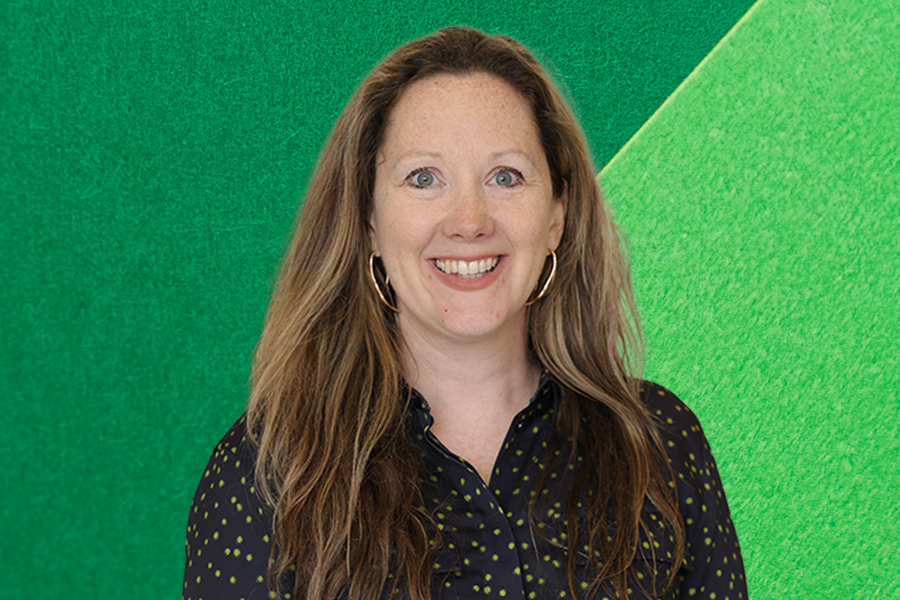
Hannah Stolze of Baylor’s Hankamer School of Business shares takes listeners inside the global supply chain. Stolze explains how recent disruptions and new technologies like artificial intelligence are changing how goods move around the world, and further shares how Baylor’s approach to supply chain leadership emphasizes ethics, people, and human dignity alongside innovation and efficiency.
Show Notes
Hannah Stolze of Baylor’s Hankamer School of Business shares takes listeners inside the global supply chain. Stolze explains how recent disruptions and new technologies like artificial intelligence are changing how goods move around the world, and further shares how Baylor’s approach to supply chain leadership emphasizes ethics, people, and human dignity alongside innovation and efficiency.
The conversation highlights:
- The scope and importance of global supply chains
- How supply chains function as interconnected global networks
- Recent disruptions affecting supply chains worldwide
- Strategic leadership in supply chain management
- Ethical and faith‑integrated approaches at Baylor
- The role of people and labor across supply chains
- The impact of artificial intelligence and new technologies
- Research on integrity, wellbeing, and human flourishing
- Baylor’s growing global influence in supply chain scholarship
Transcript
Derek Smith:
Welcome in to Baylor Connections. Today, we're discussing the global supply chain. It's an area of emerging research and academic strength here at Baylor, and no better person to talk about that than Hannah Stolze from Baylor's Hankamer School of Business. And it's been a couple of years since you came to Baylor to really increase Baylor's visibility and output and impact in this area of the global supply chain. Thanks for joining us today on Baylor Connections.
Hannah Stolze:
Thank you for having me. It's great to be here.
Derek Smith:
Well, it's great to have you here. And when I think of the global supply chain, I have something in my head that's probably at least somewhat accurate. Probably most of our viewers and listeners do. But let me ask you, when you're talking about the supply chain, what is it that we're talking about for the next 20 minutes or so here?
Hannah Stolze:
Yeah, great question. So I would define the textbook definition, right? Global supply chain management is the coordination of sourcing, manufacturing and delivery of products from raw material all the way to finished goods with the logistics flows that go all the way to market. And then even afterlife, thinking about recycling, remanufacturing. So it's a global process of managing a product from start to finish efficiently, but also sustainably in a changing global landscape as well.
Derek Smith:
Well, I think this is a topic that's become more prevalent since COVID over the last few years. It's something more people think about. Let me ask you, are there any misconceptions that you find yourselves having to clear up or are there aspects of it that are a little known that you like to elevate when you talk to people, certainly not only students, but others who are interested in the topic?
Hannah Stolze:
Yeah. Supply chain management is actually, it's a young field academically. We've been moving products around the world since the beginning of humanity, so that's not new, but it's really transformed from logistics to thinking about transportation management or warehousing to really being a strategic business function. So I think that's been a big shift in the last 10 years, just seeing how strategic supply chain management is in global business networks. So we have chief supply chain officers at companies that are really thinking about what is the supply chain strategy to get the products that you and I want to shop for, right to the shelves of the stores we shop in and the online platforms.
I think the other thing that we don't realize about supply chains is that they're not actually chains at all. They're complex networks that have lots of tiers of suppliers, of logistics flows. And one disruption somewhere else in the world even can affect the availability of products and goods locally. So supply chains have really made us a very intertwined world.
Derek Smith:
Has this become something that as we have become more interconnected globally? You said it's a relatively young field of study. Is part of that just that rise in that global interconnectedness? Do they both feed off of each other?
Hannah Stolze:
Absolutely. I think both change, the rapid change in technology as well as the rapid globalization of manufacturing we've seen in the last 30 years that companies have become more global. Our products have ... I mean, I think most products I buy have a better stamped passport than me. And so our products are traveling around the world and it's both trade relationships as well as how technology enables us to work globally.
Derek Smith:
So when you as a supply chain scholar, when you go to the store and buy some food that may have been grown in another country or a jacket or something, do you have that hat on all the time? Do you find yourself thinking about these things or are you able just to go purchase like a normal consumer in those cases?
Hannah Stolze:
Or you can never ... Once the veil has been lifted, now you know. And there's so many different products that we take for granted, they show up on our shelves that I'm grateful that we have other countries that can grow on things like chocolate and coffee. And even we import a lot of bananas. And these are products we expect to have available every day and we need international trade partners to keep the product availability that we're used to in terms of product on the shelf.
Derek Smith:
Well, you came here to Baylor Hannah about two years ago and already some great supply chain colleagues here. More have joined since you arrived here. Let's talk about what that looks like here right now. How would you describe where Baylor's supply chain area is in 2026? And what are some things that make it distinct?
Hannah Stolze:
Yeah. So we have about nine faculty in supply chain management who are doing great work, both in the classroom as well as in their research. And one of the exciting distinctives at Baylor is that all of our faculty really do have really a faith integrated perspective that they not only bring to their classroom, but they also bring to the questions they ask in their research. And you might think like, "Oh, what faith perspective can you bring to trucking or inventory management or supply negotiation?" But people are engaged in all of those spaces and the products you bring to market create availability that people need. We need products, we need food, we need clothing and shelter to be available to us. And so I think one of the unique distinctives of our faculty is our human focus and the approach that a lot of us take to ethical and sustainable supply chain strategies in our work.
Derek Smith:
When we think about people who are involved in the supply chain, the people you care about, obviously there's manufacturers and consumers, but who else is a part of that? Who else needs people in higher education thinking about their role?
Hannah Stolze:
Yeah. And it's funny because when it's your field, of course, you think everything fits within your field. So if you look globally at the people who work in transportation in trucking and ports, on ships, you think about warehousing and then you look at manufacturing, you can almost argue. Almost. Some people roll their eyes when I say this. Are you ready? Don't roll your eyes. Okay. But almost we could say that 80% of the global workforce is working within the supply chain.
Derek Smith:
Wow.
Hannah Stolze:
And definitely when you think about frontline, a lot of large organizations, they have their headquarters, but they also have probably three quarters of their workforce is going to be frontline. So this is going to be frontline retail, frontline driving trucks, working in the manufacturing or warehouses. So a lot of people work in the frontline of supply chains around the world.
Derek Smith:
So when we think about it's not just moving product from point A to point B, it's a lot of different ways of dignifying, supporting, helping those involved. And we're going to talk about that here in just a minute because it's a big part of what we do here at Baylor. But Hannah, I want to ask you to zoom out a little bit first. With your students, when you're studying, what are some of the things that are front and center in supply chain work right now that are important for Baylor to know about to stay on the cutting edge, to be on the cutting edge?
Hannah Stolze:
Yeah. I think one of the key things that we all are going to be really focusing on in the classroom is to approach supply chains and supply chain strategy from a systems perspective. So no company is in a silo, right? We're dependent, organizations are dependent on each other to create products and move them to market. And so really, we want our students to not just make a decision as what's best for their own organization, but every decision that gets made in business, it's going to have a ripple effect on customers downstream as well as suppliers potentially upstream. So really training students to be decision makers and problem solvers that think about the effect of their solution from a system's perspective.
Derek Smith:
So I'm trying to think of an analogy that might make sense. I know that if I go to a park, national park, I shouldn't just leave my trash. Kind of leave it like you found it. If people, fishermen often think about conservation and what does it do if I overfish this? Is that analogous there?
Hannah Stolze:
Yeah. And actually we have a fishing game that we play in the tragedy of the commons, right? So it's thinking about, say you were a fishing company, we'll go to use your analogy, it's thinking about, maybe you're tasked with reducing the cost of the fish that you source that comes into your fish production manufacturing facility. And I actually got to work with a fishery in North Florida at one point in time. And so they're thinking about where are they sourcing the raw fish from? And you may say, "Well, I really want to drive down my costs." And so you negotiate with your suppliers a really, really low cost for the fish purchase that you're making and it looks great on your books.
But if it's not profitable for your supplier and your supplier goes out of business, well, now you don't have access to the fish that you need to meet your customer's demands. And the same thing with making your customers happy, right? You might say, "Well, I want to make sure that 100% of the time we always have our product on the shelf." Well, if that means you're being so effective that you're losing money and moving your product to market too quickly, that's also not going to be efficient in the long run. So it's always balancing efficiency and effectiveness. And what is the overall impact of your supply chain choices, both upstream and downstream? It's a complex world.
Derek Smith:
It is. It is. Well, and then you throw in external factors that can shape multiple industries, certainly it sounds like the supply chain industry. What impact is technology, particularly AI having on the supply chain globally?
Hannah Stolze:
Yeah, it's interesting. I think a lot of people, maybe not everybody, but people are worried about AI replacing jobs. And certainly there's a lot of opportunities like in inventory planning and in routing and transportation spaces where AI definitely can be a great tool. But the interesting thing, I think, especially in supply chain spaces over the last five years, so the last five years I would say have been the most exciting five years of my career.
Derek Smith:
Really?
Hannah Stolze:
To be a supply chain professor.
Derek Smith:
Why is that?
Hannah Stolze:
Not just because of COVID where we all learned what supply chains were, but we've seen a lot of disruption globally, geopolitically, in terms of weather. We had a Panama Canal drought, we had a ship get stuck in the Suez Canal. So a lot of, I'll say exciting things have happened globally that have kind of brought supply chain bottlenecks and challenges into the light. And so when you're thinking about AI, supply chain professionals today are working around the clock. Product is always flowing, right? If you're buying from China, they're 12 hours ahead of us. If you're buying from somewhere in Europe or moving products to Europe, they're six hours ahead of us. So the supply chain is always moving.
And so supply chain professionals today are working lots of hours. And the beauty of AI is it can run case scenarios. It can help you do your analysis faster. And actually it speeds up decision making that maybe gives us more hours in an industry where we're already a little bit talent constrained. So I'm excited for the advantages that AI can bring to supply chain professionals because it can make them faster and more efficient in their decision making and hopefully give them some space to think about the impact of their decisions, as we would say, from a systems perspective.
Derek Smith:
That's great. So it is helping people. That's one thing I think people worry about, like you said. What about tariffs? We hear tariffs and products that are being imported or not imported. When you talk to your students, what are some of the things about that you discuss?
Hannah Stolze:
Yeah. I mean, we never had to be so aware of tariffs as we are today. And I will say this, every administration looks at tariffs and reassesses what tariffs are in place. So we always look at tariffs. It's not new. I think one of the biggest challenges to supply chain. Supply chain's all about planning, right? It's you're balancing supply and demand, and so you're always forecasting what you think demand is going to be, and then trying to secure the supply you need to meet that demand. So the way that you do that best is if you have certainty. And we know we don't operate in a certain world where everything goes to plan. That's why we forecast, right? They're often wrong.
And I think one of the biggest challenges with tariffs today is that there's so much uncertainty around them. So I definitely have taught Ricardian Theory. That's macroeconomic, geopolitical theory, differently than I ever have before in terms of what is our awareness of tariffs and how do we navigate where our products are coming from to make sure not just so that you're moving products around the tariffs, but that you're getting your product to your customer, which is the promise of the company.
Derek Smith:
Well, Hannah, as you talk about these things, these are our topics that Baylor does well, and obviously a lot of our other colleagues in the field, our other institutions there talk about these things as well. But sounds like really kind of the secret sauce at Baylor is that focus on people. I want to dive into this, but is that fair to say?
Hannah Stolze:
Yeah, I do think so. I think we have a very specific values-based approach that I think is unique across our faculty.
Derek Smith:
Well, when you think about research that you do or some of your colleagues, what does focusing on people look like in that?
Hannah Stolze:
Yeah. We've had some amazing, amazing publications come out from our supply chain group this last year in areas like supply chain integrity. So does the supply chain actually look like what a firm claims they are? So if you're, say you're Walmart and you say all of our bananas are fairly fair trade sourced or come from our suppliers are doing ethical practices. Supply chain integrity, and one of my colleagues really explores this. Does it actually line up? Is it authentic? Is it true?
I have another colleague that does a lot of work in fairness, looking at how do you negotiate within the supply chain and some other faculty are looking at supply networks. So what is your upstream tier two, tier three supply base look like and how does it reshape in the face of disruption? All of those kinds of questions take into consideration human behavior, human impacts. And we're launching into new spaces of really exploring wellbeing and flourishing, not just at the executive level, but also of workers throughout the supply chain.
Derek Smith:
Well, Hannah, as we think about the people in the supply chain a few minutes ago, you mentioned who a lot of them were. And you said it could be 80% of people out there in the workforce that we see have a role to play. In that what are some challenges to affirming the dignity of people within the supply chain around the world? What are some examples you're working on?
Hannah Stolze:
Yeah, I think there's challenges on both in our neighborhood as well as far away in other countries where our products are being sourced from. The interesting shift with technology that's kind of in our neighborhoods around us is the increase of gig work and gig workers. So think about the fact that maybe 20 years ago when you ordered a package, who did you expect to deliver it?
Derek Smith:
Yeah, you'd think a truck with UPS or FedEx or the post office was postponed. Yeah.
Hannah Stolze:
And it might've even been an individual whose name you knew, right? You know your postman, you give them a Christmas card hopefully in the next few weeks, right? And so with gig work and the expansion of that last mile delivery piece where you can order something on Amazon and have it show up in like, it's miraculous, three hours it shows up. Now all of a sudden we have a lot of frontline delivery workers who are working for maybe Uber Eats or Amazon Flex or other kind of platforms like that who aren't company employees like a UPS or a FedEx or a postal service worker was. And so we're seeing a lot more precarity in terms of what frontline last mile delivery looks like than we've seen before. And that's in the home front.
And then you start moving globally. And of course the benefit of globalization and the reason manufacturing has gone global is because it's so much cheaper. Labor is so much cheaper in other countries. Some of the challenges that comes with that is we don't always ask the question, "Why? Why is it so much cheaper? And is it just currency differences or are these people really being paid a fair wage?" And so there's on both fronts globally in supply chains, you want to be asking, "How are the people being treated with dignity? They're moving the product last mile to our homes and our front porches, and where are those products coming from? How are they being made? Maybe thousands of miles away. Are those workers being paid enough to have a standard of living and a good life?"
And I think those are questions that we're all asking about our global supply chains today.
Derek Smith:
So what you just described there is an example of taking a look at developments within the supply chain and saying, "Are these as good as they can be? Can we make them better?" What about maybe negatives? Are there bad actors within the supply chain and where do we see that and what does it look like trying to address issues there?
Hannah Stolze:
Yeah. And this is where supply chain truly becomes strategic because it's not just about the transportation of the products, it's about it's firm to firm or company to company collaborations. And so this is where when a company is sourcing a product, there really is an onus or a responsibility. We take a stewardship approach to how companies source products to saying, you need to know your suppliers, especially the suppliers that are maybe supplying 80% of your products. You need to know who they are, how they run their business, where they get their supply from. And you need to work really closely with them to ensure that you have integrity throughout your supply chain, that your supply chain is doing good around the world and not just where the product is going to market.
And so it really does mean you have to have accountability and you have to build relationships. It's not just about the transportation flow, it's about collaborating and coordinating across companies as well.
Derek Smith:
Hannah, when you talk about this, a human flourishing aspect emerges for sure. Not too long ago, we had Byron Johnson on this program. He's the director of the Global Flourishing Study, which is really a first of its kind study and we believe to be the largest longitudinal study in research history focusing and it's focused on global flourishing around the world. Where does your work intersect with his, whether it's somewhat just broadly or specifically?
Hannah Stolze:
Yeah, actually we're launching a study looking at flourishing in the supply chain that builds directly on Byron's work. So we're really excited that they've done the work they have to really lay a foundation and how to psychometrically use psychological tools to measure how do you know if somebody has that good life or not? And so in the supply chain space, we're looking, especially you heard it, like in the last five years, there's been a lot of disruption. Supply chain jobs are intense. There's a lot of burnout of leaders. And so we're getting ready to launch a study, really exploring what is the impact of leaders flourishing in their supply chain positions in the face of an industry that is, it's disruptive, it's uncertain, there's a lot of precarity.
And what is the impact of somebody having spiritual wellbeing, physical wellbeing that they bring into the workspace? How does that impact their subordinates and followers? How does it impact their suppliers? So what we say, supply chain's all about getting the right product to the right place at the right time. And we want to say, "Well, are the people all right?" And so what is the impact of faith? What is the impact of health and psychological wellbeing on leaders that really does impact global business?
Derek Smith:
Well, these are great descriptions of areas that you're looking at. And as we head into the final few minutes, I want to ask you, we think about Baylor, where it is in supply chain management research, where it's going. Like we said, you came here a couple years ago to help really grow our leadership in this area. And one really tangible aspect of that, you were recently named editor-in-chief of Supply Chain Management, a prestigious journal in the area. What kind of opportunities does that open up, not just for you, but for Baylor to have you receive that opportunity?
Hannah Stolze:
Yeah. I mean, it's definitely both a lot of work and an honor. And it's exciting to see Baylor on the front page of a leading journal in the area of supply chain management. So the journal of Supply Chain Management is very global. My two co-editors are in Denmark and Spain. So we have a very global editor team and we have a lot ... As a global journal, we're doing a lot of work right now in also elevating voices from all around the world. So it's unique. It's not just a North American or US-based journal. We really do, supply chain management is global. I'm sure you've heard that in our conversation.
And so really how do we both promote the journal so that great scholars all over the world are targeting our journal with their best work. It's also an empirical journal. So that just means that the research that gets published in the journal of Supply Chain Management comes from data that comes from industry. So it's really looking at real world business problems. And we also have the opportunity to ask, "What are the societal implications? How does this research impact society? How does it impact the world?" So it's an exciting journal to be at the helm or co-helming.
Derek Smith:
Well, a global journal. I think we added Pro Mundo to the university's motto a couple years ago. I'm sure that was music to your ears in terms of the work you do.
Hannah Stolze:
Yeah, it's really exciting.
Derek Smith:
Yeah. Really a great fit there for sure. Well, Hannah, as we wind down, you mentioned a growing number of students, growing amount of research, growing impact in this area here at Baylor right now. As you look ahead to Baylor's influence and impact in the supply chain area, what do you foresee down the line? What are you most excited about?
Hannah Stolze:
Yeah, we have a really interesting opportunity right now in kind of the transitions in business to think about not only how will our students be supply chain leaders, which is what we want to train them to be. Values-based, ethical leaders when they leave Baylor and go out into the workforce. But our students aren't just going to be managing people. They're going to be managing AI agents and they're going to be managing different technology integrations. And so we want our students to have an imagination for what does it look like to manage AI agents and people that are going to be executing some of those decisions in the field.
And so I'm really excited, particularly in our supply chain program, to see a launch of a lot more corporate-based projects where students are going to get training in how do you build AI agents and use them in decision-making with a focus on Imago Dei, with a focus that it's people created in the image of God that are actually going to be executing these decisions, that are going to be making these things happen in the supply chain.
And so I think it's pretty exciting to say, how do we use tools that are a blessing and then use them in ways that enhance people's work, makes their jobs more dignified, makes their jobs easier, and hopefully helps us deliver something better and more timely into the marketplace. So there's a lot of opportunity there that we're exploring right now as a supply chain faculty today.
Derek Smith:
So really sounds like excellence in practice with a strong focus on loving your neighbor, wherever those are.
Hannah Stolze:
Absolutely. Yeah, absolutely.
Derek Smith:
Well, Hannah, thanks for taking the time to join us today for sharing. It's exciting to see the way that Baylor is growing in this area. And I would imagine that you're finding more and more students with an interest in this as well. And I don't know, we're excited to see where this goes in the years ahead.
Hannah Stolze:
Me too. Thank you.
Derek Smith:
Thanks so much for joining us on the program today. Hannah Stolze, our guest today here on Baylor Connections. My name is Derek Smith. A reminder. You can hear these in the programs and you can view them as well at baylor@baylor's YouTube channel, or you can go to baylor.edu/connections. Thanks for joining us here on Baylor Connections.