

Growth and Innovation: How Baylor’s Robbins College Equips Healthcare Leaders
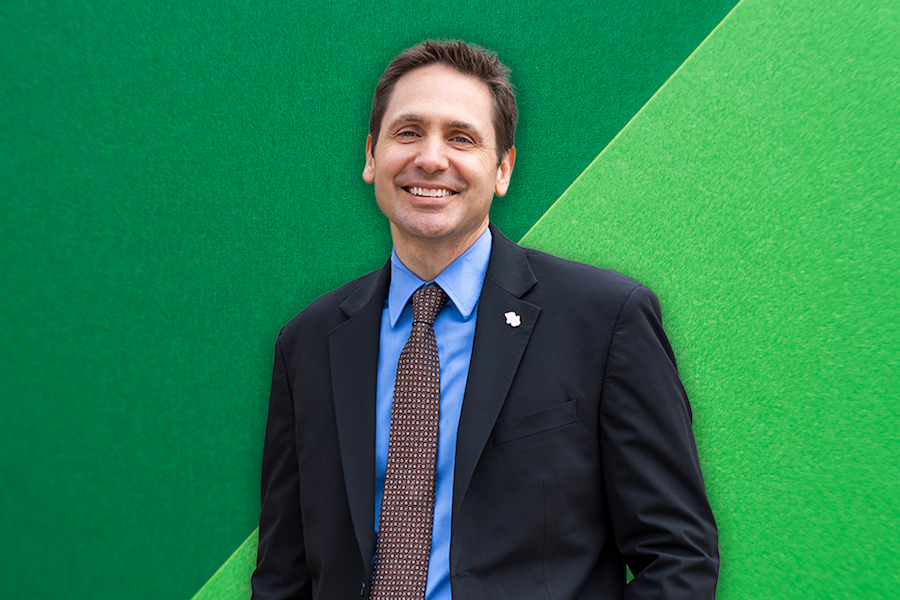
As healthcare needs and opportunities grow, Baylor’s Robbins College of Health and Human Sciences is responding with innovative approaches to prepare compassionate leaders for the field. Dean Jason Carter shares Robbins Colleges distinctives like interprofessional education, hybrid graduate programs, elite research and cutting-edge technology, highlighting the ways Baylor shapes graduates who serve patients and communities with integrity and excellence.
Show Notes
As healthcare needs and opportunities grow, Baylor’s Robbins College of Health and Human Sciences is responding with innovative approaches to prepare compassionate leaders for the field. Dean Jason Carter shares Robbins College distinctives like interprofessional education, hybrid graduate programs, elite research and cutting-edge technology, highlighting the ways Baylor shapes graduates who serve patients and communities with integrity and excellence.
The conversation highlights:
- How Baylor prepares graduates to address critical needs in patient care and health services
- Innovative, mission-centered graduate education models that serve students nationwide
- Cutting-edge technologies and labs that ensure students are ready for real-world clinical scenarios
- Interprofessional education that mirrors the teamwork required in modern healthcare settings
- Creative approaches to teaching and research
- Breakthrough studies in areas like cancer cachexia and chronic disease prevention
- New interdisciplinary programs
- Preparing graduates to serve patients and communities with compassion, integrity, and leadership
Transcript
Derek Smith:
Hello and welcome in to Baylor Connections. Today we're discussing Baylor's Robbins College of Health and Human Sciences with Dean Jason Carter. A lot of exciting things taking place in the Robbins College, growth in the ways they equip those in the health industry and more to serve in their communities and beyond. And so much to discuss today with Jason Carter. And Jason, like I said, a lot of exciting things taking place at Robbins. Thanks for joining us to share.
Jason Carter:
Oh, thanks, Derek. It's a pleasure to be here. What an awesome time of year this is here at Baylor, Christmas. And I just love this time of year with our students.
Derek Smith:
Students have a little extra spring in their step.
Jason Carter:
They do, they do. They're a little stressed. Coming into the end here with final exams coming up soon, but a lot of excitement in Robbins.
Derek Smith:
Well, so many great things are going on and we're going to do our best to unpack that in 20 minutes or so. But before we talk about what Robbins College is, let me ask you the question of who. Who makes up Robbins College?
Jason Carter:
Yeah, it's a great question. We've got a great community. It's a community of students, faculty, staff, donors, alumni. And I think when I think of the Robbins College community, the words that come to mind is a very caring community. I think we hear that from our students. We hear that from our faculty. There's a deep, deep sense of who we are and our Christian mission and our foundation in that and that we know our North Star. Our North Star is our students. We often talk about that. Our faculty know that, our staff know that, our donors know that. And it's been great over these past three and a half years to really help hone in on that. It was already there and I have been able to just amplify some of that and put the emphasis on our students, which is great.
Derek Smith:
When you talk about your students, obviously you're enthusiastic about them and the work they're doing. When I think of it, really every college on campus in some way at Baylor has students who are living away from campus, who are adult learners, who are working full-time jobs. You see the gamut at Baylor, but is that particularly distinct at Robbins College?
Jason Carter:
It is. We launched the hybrid-based graduate programs in Robbins, and 10 years ago we had 100 graduate students or so, and we're over 1,300.
Derek Smith:
Wow.
Jason Carter:
Almost one in four graduate students at Baylor's in Robbins College now. So we have the physical therapy program, the occupational therapy program, the speech path, the PA, can go on and on with all these professionally-based programs now, and most of them are hybrid-based. So we have students from all over the country. We still have most of them coming from Texas in our surrounding area, but it's a really unique because we've got this online hybrid engine for our graduate education and then the more traditional residential experience for undergrads. And it's just such a wonderful mix of sorts for our faculty.
It keeps them engaged. It keeps them thinking innovatively. And so yeah, of all the colleges out there, and maybe we have the benefit of the Board of Regents launching this program in 2014, and we had the foresight to look back at what has Baylor done really well? How can we honor the history of Baylor? But then we aren't tied to some of that history and how can we do things innovatively and differently? And I think Robbins exemplifies that with the way our students and our faculty and our staff operate.
Derek Smith:
I think an obvious answer to this question is, well, Health and Human Sciences, but what ties together the different departments at Robbins College? What's the thread that brings you all together?
Jason Carter:
Yeah. Well, we often, most of our degrees are geared towards healthcare, but not all of them. We've got a great and very, very strong interior design program. It's been one of our fastest growing programs. And just three weeks ago, the Board of Regents passed a new master's program, a master's in architecture that we're going to launch in another year. I'm really excited about that. So when we think about some of those ancillary programs that aren't directly in healthcare, it's still about human flourishing. And even our interior design program, it's very focused on hospitals. And we see in the literature how important your environment is to healing. And so everything still focuses on health and human flourishing. And that's the commonality across every program in the Robbins College.
Derek Smith:
You talk about the fact that students are in their communities. Let's talk about impact. When you think about impact of students who are on campus, students who are in their communities, who are also studying at Baylor while they work and serve in the field, what's that impact that you want to see look like to you?
Jason Carter:
Well, at Baylor, of course, our broad mission for every one of our students is to produce men and women of worldwide leadership. And that's really what I want to see. I want to see our students being able to not only learn the basics. You take a student who maybe wants to pursue physical therapy. Of course, they've got to know their anatomy and physiology. Of course, they've got to know biomechanics, some of those bread and butter elements, and they do. We've got phenomenal faculty. And we'll get into this when I give you a couple examples later, I think, of teaching and the uniqueness that's threaded with this just deeper compassion because of our Christian mission and foundation. These students, even though some of them come from all kinds of wide varieties of religious backgrounds and socioeconomic backgrounds, all kinds of areas, they're surrounded by faculty and staff fully committed to that Christian mission.
And that's a beautiful combination because our students get to see how they can be different. And I know that this is the case when I talk to Linda Plank in nursing and other of the deans that, when we talk to our employers, they just say, "A Baylor student just looks a little different. They act a little different. They're more compassionate, they're very hardworking, they're honest, they have integrity." That's what we want. We want them to represent what this university has been for over 180 years, and that is committed to that mission and pushing the boundaries in whatever their profession is.
Derek Smith:
You talk about these students. Obviously there is that exchange that takes place as Baylor faculty impart into them and help them grow in their careers, whether that's current or in the future. But what's it mean to you to also be working with so many students who are working on the ground, in physical therapy or other professions? It feels like they have things they can share too.
Jason Carter:
Absolutely. And we engage those individuals. We have a number of outstanding clinicians in this local area here that we're engaging. Some of them, we're hiring as faculty. Some, we're actually now even exploring with some joint partnerships. We have some individuals that are working part-time with us and part-time with clinics. We're bringing those people in to intersect with our students and it's a phenomenal experience. We have, of course, our core faculty who are doing the bread and butter of all the classes and things like that. But then when we have these immersive experiences, we are drawing from the local community, all of our experts in the fields of PT, PA, OT, all these areas, and it's just a rich learning environment.
Derek Smith:
It's appropriate. Robbins is growing so rapidly and in so many exciting ways. You're in a field that's always growing, always changing, when you think about healthcare and beyond. So I'm curious, as you survey the landscape and see needs and opportunities in healthcare, how does that motivate the offerings within Robbins College?
Jason Carter:
That's a great question. And we're at a time right now where, I think, across this country, we're all trying to bolster up how do we support these students. And with changes nationally, with how student loans are going to be operating into the future, we have to get more and more creative with how we support these students, make this degree affordable and get them into the field. So I think we're always surveying for opportunities. That's why we launched the PA program a year ago. We got this beautiful fourth floor Cashion facility now for our immersives and our simulation spaces.
We're always looking for what is new, but we're also balancing new programs with bolstering up existing programs and sometimes that means strengthening some of the faculty with regards to their research. Other times, it means slowing down and bolstering up the curriculum for the students. But we try to balance new versus strengthening existing programs constantly. And that's a constant tension that we have in the college. And I think, for the most part, we're doing a great job because we've got great people. I have an amazing group of department chairs, amazing group of faculty that are bought into what we're trying to do.
Derek Smith:
This is a broad question. You can maybe go a lot of different ways with this, but as you describe new and longstanding, what does it look like, the things that never change in building excellent practitioners in different fields, but also bringing in technology, all the new technologies that are impacting the things that you can provide students here on campus, the things they'll use when they're in the field someday?
Jason Carter:
Yeah. Back to the simulation space and why that's so important. It's just amazing what we can do now with simulations and prepare our students before they get into the field, right? Whether it's a PA or whoever it is, absolutely mind-blowing simulations that can now be done so that our students aren't seeing that for the first time when they're in clinic. So I think that's, technology-wise, really where we're finding a sweet spot. And artificial intelligence is getting infused into that.
We know that AI is here and here to stay and here to play a role. And I think everybody's navigating that space, but in Robbins, we're really leaning into that because we want our students to be able to be prepared to utilize those technologies ethically and to make good decisions. And I just was getting a demo on some of our new simulations and how they are using AI to inform interactions with the students. You'll have a mannequin that is maybe a stroke victim and you'll go up and say, "Can you squeeze my hand, Mr. X and X?" They'll squeeze the hand. "Can you squeeze it harder?" And it's able to. I mean, it can process at a different level that we've never been able to see before with these simulation mannequins.
Derek Smith:
As you described this, I think you all must have so many different interesting things, you and your faculty as you talk shop, if you will, things that are changing in the field, things that are opportunities for Baylor. What are some of the things that come to the forefront when you all get excited talking about the opportunities you have before you? What are some of those conversations like, when you're thinking about ways you can all serve students?
Jason Carter:
Well, I think right now, there's a heavy emphasis in the Robbins College because we're finally catching up and having these programs maturing. PT's been around for a while now, OT, we're launching PA, but they're off to an amazing start. And of course, a longstanding, strong program in communication sciences, disorders is how do they work together now? Because our students, I mean, students don't work in their future careers in isolation. They got to work together. You get a stroke victim and they're going to see a speech pathologist, possibly, for helping them to swallow. You're going to see an occupational therapist, a physical therapist, a PA may be attending.
And so what really gets our faculty jazzed up right now is the idea of interprofessional education opportunities where we bring these students in and expose them to a scenario that is not only challenging, but requires others. They don't have the expertise to handle all of it. And bring them in teams, whether it's a speech pathology student working with a PA and an OT and they get a case study and they have to figure this thing out together. That's real world application. And so that gets our faculty very, very excited. It's a big part of our strategic plan, within the college, that aligns with Baylor's new strategic plan, Baylor in Deeds, which is all about interdisciplinary everything, interdisciplinary research, interdisciplinary teaching, doing things in a very complicated world.
Derek Smith:
Well, you talk about the strategic plan when you talk about addressing issues in health, chronic diseases. That's a big part of that, which I guess gives you even more exciting ways to look at how can we contribute to what Baylor's doing? How can we contribute to needs the world has?
Jason Carter:
Absolutely. And we're really so thankful to have the support of President Livingstone, Provost Brickhouse that really are leaning into that strategic plan and wanting to see us have a larger influence on society because healthcare needs are not going away. They're only getting worse. And no matter what you say, I mean, AI can be used as a wonderful tool. It will not replace the people aspect of it. And so how do we infuse those kinds of things? I mean, the strategic plan was being built as AI was coming on the scene and yet everything within it still allows us to incorporate artificial intelligence into what we're doing and technologies into what we're doing, but you cannot get rid of the humanistic component.
Derek Smith:
It's crazy to think that these students now and some that you're probably recruiting are going to be, somewhere along the way, there's going to be that first generation that this is what's always been. And you're preparing that. It's crazy to think.
Jason Carter:
We are. And we're learning as we go, right? I mean, there's no playbook for this. We are learning as we go, we're talking to other people, but I find, as I talk to other deans and other leaders across the country, we're all navigating this and we're sharing best practices. And I think the fact that Baylor, prior to mine, I'm very grateful for so much, but very grateful to have the prior leadership and the current leadership and everybody have this vision of this hybrid graduate education. We launched those programs before COVID, and so we were first to market. And so we've navigated this space and people nationally look to Baylor, Baylor's Robbins College programs as the benchmark.
Our PT program came in number 47 or number 43, I think, in the US News & World Report, first initial ranking for PT programs. I'll be honest, we were like, "Boy, I really hope we're top 100 and wouldn't it be great if we were top 50?" I mean, our colleagues think highly of what we're doing here and we're doing it right because we've invested right and we're not doing this for some sort of monetary reasons. We're doing it because we believe in the mission and we believe our students have a lot to offer. When Linda says, "The world needs a Baylor, we're in." And we think the world needs more Robbins College students that can serve God by serving others.
Derek Smith:
Well, as you describe that, let's paint a picture of the ways that you're imparting in those students. Think when you talk about the PT program, it speaks to some of the online programs, speaks to innovation. As you said before, COVID. What does innovation look like in teaching and research at Robbins College?
Jason Carter:
I am so impressed with our faculty and how innovative they are when it comes to their teaching and research. They will push the boundaries. They are not afraid to experiment if they think it's going to benefit the students. And then, by experimenting, they're also very willing to adapt if it's not working. Just to give you a couple examples, on the teaching side, our faculty across the college are doing absolutely amazing work with flipped classrooms, with case studies, with real world type of situations that are pushing the boundaries, the simulations we talked about earlier. And then getting really creative. The one that comes to mind a lot, and especially when I talk to our donors who are passionate about our mission, they're passionate about Baylor being a Christian R1 university, trying to do something no other is really doing. And we have a faculty member in our HHPR program who teaches some anatomy and physiology, and he uses the crucifixion as an example of a way to teach anatomy, the bone structures, the muscle structures.
And then he follows that up with some optional devotionals with the students that the vast majority of them do. So we get to teach about these complicated body systems and do it through a biblical view. And it's really special. You're not going to get that everywhere in the country. You'll get that here, at Baylor. And yet our students are incredibly well-prepared, always do well when they go to medical school, PT schools, whether it's our PT, other PT schools, we get great feedback. So we're preparing them and just we're preparing them in a uniquely different manner.
Derek Smith:
That's a great answer. I always recognize, when I'm talking to a dean, as I ask for examples, there's no way to go through them all. We could spend the whole time talking about all the great things they're taking, but that's a great picture of what's taking place.
Jason Carter:
And on research, to come to the second part of that question, so many areas of research in Robbins that are so exciting. We had a fourfold increase in research funding this past year. And despite all the things happening and you hear about, we had a banner year. Our faculty are getting grants in research in all kinds of areas. The area though that I think is worth highlighting that has occurred naturally, kind of grassroots, is this work that we're doing on cancer and cancer cachexia. So there's the muscle wasting associated with cancer.
And I can remember a couple years ago, I'm very pleased with the type of faculty we're hiring now. I think that that R1 status has changed the way people look at wanting to come here. They're still firm in their Christian faith, but they want to be at a place that values research. And we did a reference check on this postdoc that was down at MD Anderson and the faculty member in the lab she worked with said, "We've never seen a postdoc change the way we think about exercise and cancer as much as she has." And we were so fortunate to be able to land her here. She's part of that cancer cachexia team. We've got some amazing faculty here doing great work on things that are very, very important to society today.
Derek Smith:
That's exciting. Well, we'll have to have some of your faculty on this program to-
Jason Carter:
Absolutely.
Derek Smith:
Discuss the work that they're doing in the future here. Jason, as we head into the final few minutes, a couple of questions. I want to ask you that idea of community. Students are going to go out and they're going to work in communities, or they are currently. When you think of students as the product, if you will, it's communities that they're going to impact. What does that mean to Robbins?
Jason Carter:
Yeah, we're constantly preparing our students for the complexities of society today. Baylor, in large, has launched this civil discourse series where we are in a broken world, and so we're going to have people with differences of opinion. We're going to have people that we have to navigate complicated situations. And so we're preparing our students to do that, to serve their communities, to love their neighbor, no matter the circumstance. When you are a doctor or a physical therapist or a speech pathologist, you don't get to choose if you agree or disagree with that patient. You serve that patient. And I think of no other model that's more Christlike than that. And yet we get to model it. I mean, I feel so blessed that I'm, I would gather I'm the only R1 dean in the country that gets to put scripture on my wall.
And one of my scriptures is Galatians 5:22, 23, the fruit of the spirit. Love, joy, peace, patience, kindness, goodness, faithfulness, gentleness, self-control. That's what we tried and aspire to do to prepare our students for their communities. You can't go wrong. I don't care what religion you are, where you're from, those virtues matter, especially in the industry of healthcare. And so that's what we're trying to do. We're trying to create our students so that they're prepared to navigate the complexities and model Christ through what they do in their careers.
Derek Smith:
I think you really just answered the question I had next, but I'm going to go ahead and ask it anyway, Jason, because there might be something to add to it. My question was going to be, what do you want people to say about Robin's college grads, whether they employ them or whether they're served by them? I really think you just did that, but I'll go ahead and ask that a little bit, ask you that anyway, just in case there's something you want to add.
Jason Carter:
No, I really hope that they say they're compassionate, hardworking individuals that care deeply about their patients or their clients. If it's an interior designist or somebody from our apparel program, they care deeply about the other individual.
Derek Smith:
Well, Jason, as you look ahead at Robbins College, thinking, you came here in, what? 2022.
Jason Carter:
Yes.
Derek Smith:
So what is something you might, if you could go back and tell the 2022 version of yourself, what would you tell yourself then? And maybe what does that have to tell you about what's ahead at Robins College?
Jason Carter:
Well, that's a great question. There's so much, when you have the benefit of looking back, that you think, boy, I could have done that. I feel like I was incredibly blessed and well-prepared administratively. I had leadership roles for 20 years at two different institutions, department chair for 14 years, a vice president for research. So I knew how to operate teams. I was prepared for that. We did a great job with that. I think what I would tell myself back in 2022 is engage quicker with your alumni and donor bases because I've always done that, but we had so much work internally to do and I didn't get a chance until really months in to see how passionate our community is. The Baylor family's amazing. And I wish I would've taken some time to do more outreach early on. And even if it was just to say, "Hey, I've got to really focus in on getting to know my faculty, our students, our staff, but I want to get to know you."
Because now, three years in, I mean, I just had my board of advocates meeting. We're in the most amazing spot with our board. We're in the most amazing spot with some of our donors, and I think we could have engaged them earlier because they're so passionate about Baylor and they want to see Baylor succeed. And I mean, I've seen that other institutions, it's different at Baylor. And I think I underestimated that and the importance of that. I value transparency and communication and that comes up time and time again, when I do my own 360 evaluations of myself. And I would've liked to have found more time to do that with our donor base, but it happened in year two and now we're really moving forward and they're walking side by side with us and helping us to take that next level jump. But I guess I didn't realize how passionate our Baylor community is about seeing Baylor succeed.
Derek Smith:
Well, as you harness that passion with alumni, with friends of the university, with your students, you add that to all the new programs we've already been seeing added in the last couple years, no telling where it's going to go in the years ahead.
Jason Carter:
Absolutely. And like I said, just last year, we got approval from the regents to launch a marriage and family therapy program. We're excited about that program. We're going to do some partnerships, hopefully with Truett Seminary, on that program as well. And then now the M.Arch program, an architectural master's degree that builds off of our interior design program. So just super exciting times. The college is invigorated right now, I think. And I'm just always constantly trying to balance out pushing new initiatives versus strengthening the existing. And I think people, our pace is fast, Derek. I mean, it probably doesn't surprise you. And every once in a while, I got to tell myself, "Hey, slow down and let's just strengthen some things too." And so it's that constant pull. But no, there's energy, there's excitement and we do our very best to keep that north star on our students and their experience and preparing them for the world.
Derek Smith:
Well, it's exciting to see the ways they serve, the way they serve patients and help improve health, quality of life in so many different ways. Really appreciate you taking the time to share, to join us and we look forward to what's ahead at Robbins.
Jason Carter:
Thank you so much.
Derek Smith:
Great to have you with us.
Jason Carter:
Thank you.
Derek Smith:
Jason Carter, Dean of Baylor's Robbins College of Health and Human Sciences is our guest today on Baylor Connections. I'm Derek Smith. A reminder, these programs are all available on Baylor's YouTube channel, and you can find them all archived at baylor.edu/connections. Thanks for joining us on Baylor Connections.