

Mind and Spirit: Ethical Foundations in Scientific Research
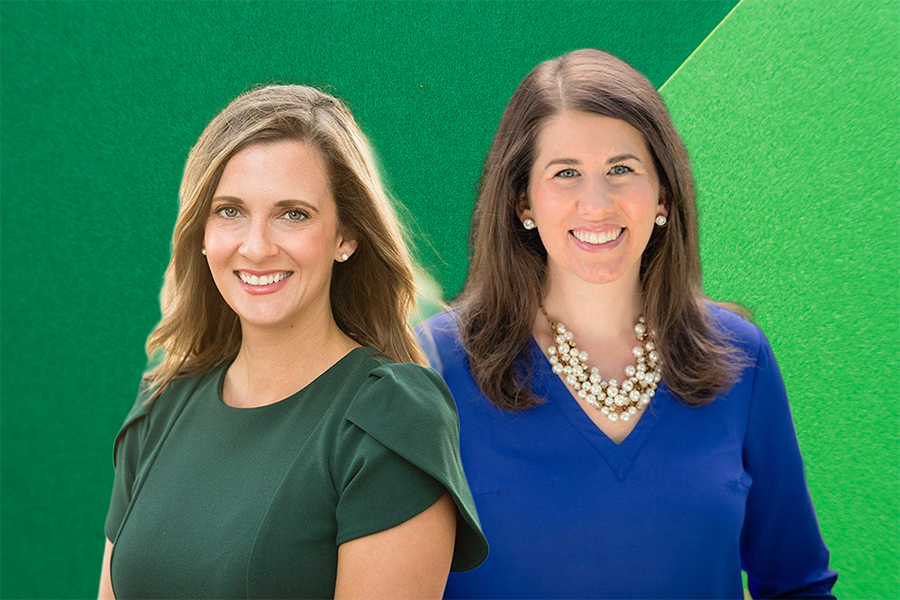
How do science and theology intersect to promote human flourishing? Baylor researchers Sarah Schnitker and Devan Stahl share how research collaborations bridge psychology, ethics, and faith to address real-world challenges. They discuss the origins of their research partnership, a new collaborative human thriving research center at Baylor, and a project that equips scholars to integrate empirical research with theological inquiry.
Show Notes
How do science and theology intersect to promote human flourishing? Baylor researchers Sarah Schnitker and Devan Stahl share how research collaborations bridge psychology, ethics, and faith to address real-world challenges. They discuss the origins of their research partnership, a new collaborative human thriving research center at Baylor, and a project that equips scholars to integrate empirical research with theological inquiry.
The conversation highlights:
- Schnitker’s Science of Virtues Lab and virtue development research
- Stahl’s bioethics research origins and focus
- The role of faith in shaping research questions
- Baylor’s new BRIGHTS research center
- Their unique research project integrating theological inquiry and empirical research
- Why Baylor fosters unique interdisciplinary collaboration
Transcript
Derek Smith:
Visiting today with Sarah Schnitker and Devan Stahl on Baylor Connections, two researchers at the intersection of science, ethics and more. And a lot of topics we can discuss with you both today, but Sarah, Devan, really appreciate you jumping on today.
Devan Stahl:
Yeah, nice to be here. Thank you.
Sarah Schnitker:
Thank you for having us.
Derek Smith:
It's great to have you with us. And both of you, when I think of your research, I think of that blend of science and ethics, a spiritual component to it, as something you both do intentionally. So that's a very broad description. I want to get from each of you how you would describe what you do. So Sarah, I'd start with you. People say, what's your research focus, what do you say?
Sarah Schnitker:
Yeah. Well, I run the Science of Virtues Lab here at Baylor. And I always say I study virtue and character strength development, and really am interested specifically in how religion and spirituality can either facilitate the process of virtue development or sometimes undermine it. And so trying to understand how that happens and how we can actually cultivate more good people in the world, is really what I'm interested in.
Derek Smith:
What about you, Devan? How would you describe yours?
Devan Stahl:
Yeah, so I typically describe myself as a bioethicist. So I'm really interested in the ways that our healthcare systems promote human health and flourishing or don't. And so I work a little bit in clinical ethics, helping support clinical staff when they run into ethics issues in the work that they're doing, either because their patient wants something that they're not sure they should offer, or vice versa, that they are declining something everybody thinks would be really beneficial, and they want another opinion on what they should be doing. So I think on the ground with physicians and nurses about the work that they're doing. And then I think at a systems level, how can we make our healthcare system better for everybody?
Derek Smith:
You both have your own research streams, you collaborate on research, you, a psychology professor, Sarah, religion professor, Devan. How did you both get connected?
Devan Stahl:
Oh, that's a good question. I think first through friendship and maybe not through research. I'm trying to remember.
Sarah Schnitker:
I remember. So I came to Baylor in 2018, I think at the end of that first year we started a colloquium on human flourishing. I got here and noticed there were so many people doing research in this domain across Baylor's colleges, and yet a lot of them weren't talking to each other, and so we started that colloquium. And Devan got invited somehow through a friend, and I remember you presented and I was blown away. I was like, this woman is brilliant and we need to hang out more, and I think our friendship developed. And that colloquium actually turned into the Bright Center eventually, and so it was a really very productive activity in a lot of ways.
Devan Stahl:
I don't remember the specifics, but that sounds about right. Yep.
Derek Smith:
Well, a friendship beneficial to Baylor and the research that's taking place here as well. I want to find out how each of you really got into what you do. And Devan, let's start with you, bioethics, what drew you to that?
Devan Stahl:
Yeah, so I was actually in seminary. I thought maybe I wanted to be a theologian. So it's funny, I came sort of full back into a religion department. But when I was in seminary, I was diagnosed with MS, multiple sclerosis and it just rocked my world because I had really never been a part of the healthcare system before. I was young in my mid-20s, just hadn't had any health issues at all and this came on all of a sudden what felt like to me. And I had all these interactions in hospitals that I just couldn't make sense of. I didn't understand why people were talking to me the way that they were or how they could diagnose me the way that they did. And so I just got really interested in how hospitals work, how our healthcare system works.
And so after seminary, I decided to become a hospital chaplain. So I felt a little bit like, I wish I had had somebody like that when I was being diagnosed who could have helped me through the spiritual parts of it. It's one thing to have your physician help you understand your body, but you need more than that. And I didn't have anybody like that and I thought it would be really great to be that for other people.
And then when I was training as a chaplain, I met a clinical ethicist, so a woman whose full-time job it was to answer these ethics questions that were coming up in the hospital, and I just thought her job was really cool. And so I went back and got a PhD in healthcare ethics so that I could do some of the work that she was doing and then bring in all of that experience with religion and my theology degree into that program as well. And so I get to do this awesome hybrid of, I teach medical students, I teach undergrads, I teach graduate students about this burgeoning field of bioethics.
Derek Smith:
Devan, I would imagine we could spend a whole show talking about your diagnosis and the ways it's impacted you and the work you do. But I'm curious, what would you say is, if you had to summarize the good, what you've dealt with with your diagnosis, the good you want to bring to others?
Devan Stahl:
Yeah, I think part of it is learning how it is that we talk to people about a diagnosis like that, that it was given to me in a way that actually was not very helpful. It was pretty damaging. And I think it's about how we communicate with people who are diagnosed with something pretty serious that's going to be lifelong, that's going to be chronic, how we talk to them about that and how we give them resources. I wish that my physician at that time had sort of pointed me toward other places to go for emotional and spiritual support.
So part of it is that, and then part of it's like I got to be folded into this disability community that I had not been a part of before. And I got to meet all these amazing people who had diagnosis similar to mine, but also really different, but we still found commonality in this thing called disability that we were all experiencing in different ways. And it really opened me up to a whole nother community that was taking what could be seen as a negative thing, a negative diagnosis, but were actually proud of who they were and learning to thrive in a world that had barriers set up against them. And that was super transformative to me. So I wish everybody could be in some ways part of this disability community where I'm learning so much from so many people.
Derek Smith:
Sarah, what about you? Psychology, but you approach it from some different ways than a lot of people think of.
Sarah Schnitker:
Yes, and I think back to my adolescence, I am one of those weird people who knew what I wanted to do at 17 and I'm actually doing it. I loved these perennial questions about what is a good life, what is our purpose as humans? How do we become good people? What is good? And love these philosophical questions as an adolescent. And yet I love the methods of my science and math classes. I love statistics, I love the process of hypothesis testing. And was often frustrated by like, well, we can imagine people are like this, but are they really? What are people actually like?
And so I thought, you know what? Psychology is kind of this fun middle ground where I can start to look at these questions about what is the good life, but also use scientific methods. And so I became exposed in my first semester of college to this area of positive psychology that was just really becoming a field the very year I started college actually, and said, oh, this is for me. I love asking questions about virtue development, about the good life with the scientific method. And so from the get-go, that marrying of those disciplines was part of my identity as a researcher.
Derek Smith:
You like to measure things that are hard to measure, right? Is that a fair way to put it?
Sarah Schnitker:
Indeed. Right, sometimes I'll meet a philosopher or theologian and they'll be like, "Oh, you can't measure that." I'm like, "Well, I can. It's just how much error variance am I going to have?" Which is just a way of saying how well can I measure it? And sometimes it is not very good, but we can. And I think I truly believe that at least in this cultural moment, the things we really care about, we tend to measure. But because that helps us know if we're making progress and we know from a lot of psychological research, if you want to improve something, the first thing to do is just track it and you'll actually improve it.
And so when we think about something like virtue development, we should find a way to measure that to see if what we're doing actually works. And in our Baylor Faith and Character Study here at Baylor that's been going on through 2018, the Board of Regents said, we should measure this because we care about faith development, we care about character development at Baylor. We measure all these other things in our students, we should measure that too.
Derek Smith:
You both have given a great description of the research you do, let's take a look at some examples. We could talk about grants or journal articles of which you both have many, but let's focus in on some things you're doing in the area of human thriving, of human flourishing. And first off, you mentioned BRIGHTS earlier, Sarah, tell us what that is and who's a part of that broadly?
Sarah Schnitker:
Yeah, so BRIGHTS stands for Baylor Research in Growth and Human Thriving Science, and it's a center we started a couple of years ago here at Baylor just to bring everyone together who is doing research around human flourishing. And it includes faculty from, I think almost every college on campus and even people from nursing up in Dallas, so on our physical campus and remotely. And what we try to do there is just help faculty build relationships with each other that can lead to the kind of productive collaboration that Devan and I have been able to have and many others. And it's just a place to get together to talk about things and then to say, oh, if instead of working by myself, I reached across to a different department, could we learn something much more influential that really solves real-world problems, more so than just working in our home disciplines.
Derek Smith:
Collaboration is important in any kind of research, but when you think about human flourishing, for both of you, why is it so important and what does it say that Baylor's investing in this in different ways?
Devan Stahl:
Of course, you can't just measure flourishing and thriving in one way, and there isn't just one way to think about what that means. And I think different disciplines have different ways of thinking about what it would really mean to thrive as a human being. And so in theology, we think a lot about what it means to be in relationship with others and with God and in good relationship with ourselves. And I think that those kind of big ideas frame how it is that we look at what it means to thrive that maybe other disciplines who are not so God-centric. I think we're pretty God-centric at Baylor in general, but we get to sort of think deeply about how theologians over centuries have thought about what it means to be in right relationship, to love our neighbor, to love God, and that that's an important frame that maybe doesn't get imported into every discipline in the same ways.
And so we bring something in theology, but we also then need, we might just say things like, this is what it means and this is how you should be, but we don't typically have the tools then to see if that's working for people. We have anecdotal evidence, we have kind of theories about what works. And part of the reason that Sarah and I got together to do work together was that there might be tools that we as theologians need in order to say more, or that maybe sometimes we're making empirical claims without realizing that they're empirical claims. People thrive when they do this and we just say that and we actually don't bother to measure it. And if we could, if we could partner with others who do that work, we could sort of flesh out those theories, see if they're testable, and then see if that changes how our theories go.
So it's not just one way, at least in my mind, it's iterative. We have a back-and-forth kind of conversation and we're stronger when we can bring those conversations together.
Sarah Schnitker:
I would say too, I think psychology really benefits too from those theories that theology, philosophy have around human flourishing. I think often in psychology, historically what are we aiming for has often been just the absence of mental illness symptoms. And that is not a flourishing life. And so when we try to say what it should be, psychology traditionally in the U.S. at least, has had a very individual focused. And they sometimes forget that, oh, it's not just about my flourishing, about my community, about connecting to the transcendent, connecting to God and doing good and defining what is good and moral. And so I find I have to partner with people who make these kind of normative claims to actually give real grit to saying, what is our definition of flourishing and not letting it be anemic and just the absence of the bad.
Derek Smith:
As you described this, I was thinking Baylor is distinct as a Christian research university. You talk about Baylor's Faith Foundation, you're in the Department of Religion, you're in the Department of Science. Scientific rigor is scientific rigor, that's not a religious thing, but religious people can apply it in ways that are God-honoring. What does it mean to you to blend those two things, scientific discipline with that faith foundation that maybe ask different questions?
Sarah Schnitker:
Yeah. No, I think you're right. I mean, scientific rigor is scientific rigor. And so part of my Christian faith is doing that with excellence and using the highest standards of science and keeping current on innovations we have. And also ensuring that I'm fully transparent and do what we call open science practices to really keep my integrity as a scientist.
And so I think alongside that, then is recognizing the limits of my discipline and having the humility to say, as a psychologist, I can't make claims about what should be, and that when I start to go into that terrain, I need to go to another discipline. And this is where I think as a Christian, I say, science is not the only way of knowing. I believe there are other ways of knowing in this world, and that can be from divine revelation, that can be intuition, through prose, through art. There's lots of ways of learning and science is just one of those ways.
And so my faith says these other ways are really valid and important, and scripture teaches us things in natural revelation. So then I turn to the people who are experts in that and say, help me out. I need that expertise to come in and help us together to then be able to actually say something about human flourishing in this world and not just be one-sided.
Derek Smith:
Let's give an example of this now. You both have been working for multiple years on a project called Illuminating Theological Inquiry and Christian Ethics Through Training in Psychological Science. So that's the academic headline.
Devan Stahl:
It rolls off the tongue.
Derek Smith:
It rolls off the tongue, yes. So tell me first off, what's sort of the elevator pitch of this project you've been working on? Why is it taking place?
Sarah Schnitker:
I mean, I'd say really it's tough to do interdisciplinary work, and it's really challenging to enter into another language almost when you cross a disciplinary divide. And so the purpose of this broader grant was really to help train theologians and philosophers and religion scholars in some of the psychological science methods, because right, what's a P-test? And all these statistics and jargon that are really important concepts to understand, to be able to partner well.
And so our goal was to train our colleagues in psychological science so that we could more easily work together and bring that empirical evidence to bear on those theological questions in really robust ways. And so we included multiple waves of training to do that. That culminated in actual projects that were led by our theologians collecting data to test their questions. And Devan did one and others, and we had our capstone conference right before Thanksgiving, and I was just blown away at how awesome these projects were that our theologians did with their psychology collaborators.
Derek Smith:
That's great. So you work with them, they in turn, these theologians, they give you topics, insights that you can go ahead and research further. What have been some of the most meaningful moments for you all in those exchanges?
Sarah Schnitker:
I wonder if you want to talk about your interviews with some of your pastors.
Devan Stahl:
Sure. So I have been working with Dr. Erik Carter, who's in our Center for Disability and Flourishing. And he was already doing a big pastor survey where he was asking pastors about how they think about disability ministries. And I said, "Could we ask some theological questions too?" Because really curious about not just what they do, but what they believe and how those things might intersect. And he said, "Okay, write them out. We'll vet them." And so he allowed me to ask some theological questions. We got responses back and I said, "I want to know more". It was a response to a survey about whether you agree or disagree with a statement, I just need to know more.
So we then interviewed 25 pastors about how they would respond pastorally to different scenarios involving disability. And so we had these rich interviews where we gathered all of this information about what they really believe. I hadn't even really asked my own pastor what she really believed about disability. And so we had all this rich data, and then we were able to create another broad survey to see, okay, well now we have all this rich data. I wonder if that's representative? Do pastors sort of say these kinds of things? Do they believe these kinds of things? And how does that mesh with what they're doing on the ground?
And as far as I know, no one's really doing that work. So we will be innovators in this space knowing what it is that our pastors believe, comparing it to what parishioners people in their churches believe, and then how that influences what they're seeing and doing on the ground. And to me, that is so exciting because I do this work in theology, but it's not necessarily touching the ground. These pastors aren't citing my theology books. Sometimes they do. That's not how they're getting most of their information. And so how do we help them to think through how they could better welcome and accommodate people? Well, first we got to know what they're doing and what they believe.
Sarah Schnitker:
Yeah, I love this project that you've done with Erik because it just shows, I think what our Baylor In Deeds plan hopes to do, which is do research that matters that can help us then build resources that lead to more research questions. And I think it's just really phenomenal what you and Erik Carter and others are doing in this space and really important work that's going to impact the many, many families with someone with disability in their midst.
Derek Smith:
Sarah broadly talked about impact, what are your hopes for the impact of this project?
Sarah Schnitker:
I hope that our teams keep collaborating and going deeper and deeper and just create these long-term, sustained rich collaborations. Because I think it's one thing to have a one-off opportunity, but when you can start working with someone for years or even decades, you get so creative and you start to almost create a new discipline in a way of disability studies for instance. And I think that's just the kind of thing we want to see at Baylor, that these rich areas of inquiry are just going deep and then going out into the world wide.
Derek Smith:
Well, Sarah and Devan, as we wind down here, I want to ask you, you painted a picture of this project and the work you do, zooming out again, Devan, I'll start with you, why is Baylor a unique place to do both human flourishing research and collaborative research? And then Sarah, the same question for you.
Devan Stahl:
So I came here from another institution where I sometimes was able to collaborate, but I actually found it pretty difficult that the infrastructure wasn't there, that the incentives for my career weren't there. And I've just found the opposite at Baylor, that Baylor's been not only open to this, but encouraging us to do this kind of research, research that matters. And for me, as somebody who does religion and theology, just having people who care about that in the sciences, in the other disciplines is pretty rare. So I can go to a chemistry department, which I've done, and ask them about their faith and about how maybe even disability intersects with their work, and it's like everybody cares about this stuff. And that is really unique.
I'd say the flourishing and then the ways in which our religion and Christianity play into what motivates our work. Even if others aren't doing direct work in religion, they care and they get that it matters. So if I go to a psychologist and say, you know, no one's doing research on why spirituality influences this practice, they go, that's a great point. We should look into that. So the fact that we share this theological foundation and that we're all open to collaborating with each other and that Baylor wants to incentivize that is really exciting.
Derek Smith:
What about you, Sarah?
Sarah Schnitker:
I'd echo everything Devan just said. It has been my experience as well. I think we really do have a clear sense of mission here at Baylor. And almost everyone I meet shares that mission and so we are working towards something together. And we really have a caring community as well and we care for the world and want to use our knowledge, not just for knowledge sake, but to really serve the church, Texas, the world, right? I mean, this is our motto, right? But it actually lives out.
And the other thing I would say too is that I've just found doing this kind of interdisciplinary work really does require a lot of the virtues that I study. It requires a lot of humility, it requires a lot of patience. It requires integrity in that I think are-
Devan Stahl:
And fortitude.
Sarah Schnitker:
And fortitude. Thank you. It's hard. It's really hard. And I find the faculty here have those strengths of character that they can actually do this type of work and still like each other in the end.
Derek Smith:
Well, it's exciting to see the work you're doing and really what future partnerships are going to come through BRIGHTS, through the works you're doing in the Vice Provost office, and exciting to think about what's ahead. But Devan and Sarah, thanks so much to both of you for joining us today and sharing.
Sarah Schnitker:
Thank you for having us. This has been great.
Devan Stahl:
Yeah, thank you.
Derek Smith:
Good to have you both here. Sarah Schnitker and Devan Stahl, our guests today on Baylor Connections. I'm Derek Smith. Reminder, you can see each episode on a Baylor's YouTube channel, and you can find each episode online at baylor.edu/connections. Thanks for joining us today on Baylor Connections.