

Game Changers: Baylor’s Point-of-Need Innovations Lab
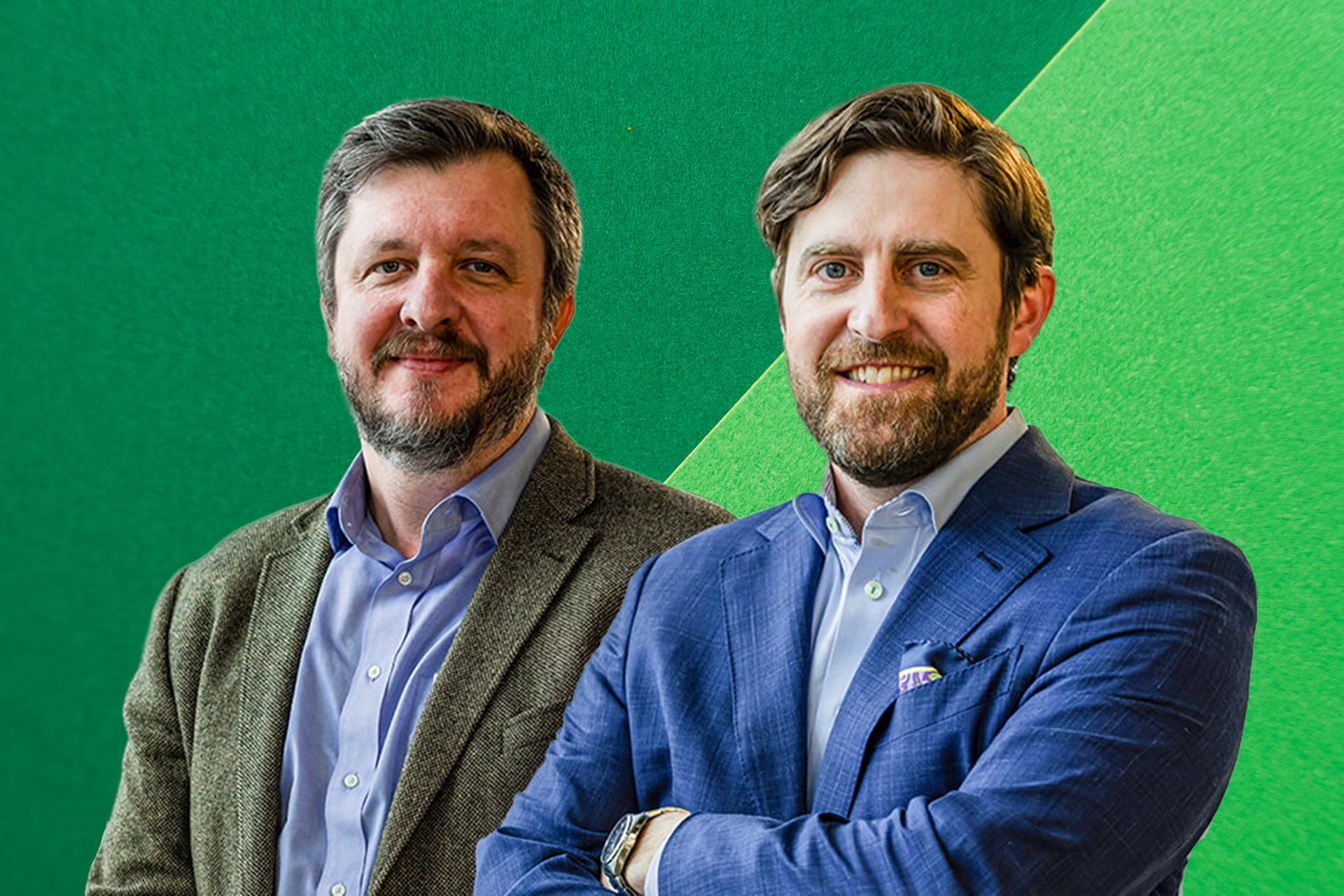
What happens when critical equipment breaks down in a remote location, like a far-flung military battlefield or even Outer Space? Baylor’s Point-of-Need Innovation Center (PONI) answers that question in the form of innovative solutions. Brian Jordon, Paul Allison and their students develop technologies that reduce supply chain delays, cut costs and promote sustainability. Discover how Baylor is innovating in these areas for defense, aerospace, and humanitarian applications—all with an eye toward human flourishing.
Show Notes
What happens when critical equipment breaks down in a remote location, like a far-flung military battlefield or even Outer Space? Baylor’s Point-of-Need Innovation Center (PONI) answers that question in the form of innovative solutions. Brian Jordon, Paul Allison and their students develop technologies that reduce supply chain delays, cut costs and promote sustainability. Discover how Baylor is innovating in these areas for defense, aerospace, and humanitarian applications—all with an eye toward human flourishing.
The conversation highlights:
• What “Point-of-Need” means and why it matters
• Applications of their work for military, space exploration, and disaster recovery
• How additive manufacturing enables repairs in austere environments
• Training students for immediate impact in aerospace and defense industries
• Using local and recycled materials to minimize logistics challenges
• How Baylor integrates research, education, and human flourishing
Transcript
Derek Smith:
We welcome you inside the brick at Baylor University, the Baylor Research and Innovation Collaborative, and we're visiting the Point-of-Need today as we visit with Paul Allison and Brian Jordon of Baylor's Point-of-Need Innovation Center. We're going to be talking about manufacturing techniques found here at Baylor University of interest to the US military, industry, and more truly innovative. And we're joined by Brian and Paul today. Appreciate you both being with us. Thanks for taking the time to join us and share what you do.
Brian Jordon:
Absolutely.
Paul Allison:
Thank you for having us.
Derek Smith:
Let's start off, what you do is complicated, but I think we can describe it in some simple ways. What if we did a little rapid fire to start things-
Paul Allison:
Sounds great.
Brian Jordon:
Sounds good.
Derek Smith:
... off Paul as PONI director. By the way, when we say PONI, Point-of-Need Innovation Center, so people know what we're talking about there, the PONI Center. So let's just start off a product or service, if you had to describe the product or service you offer in one sentence, what would that be?
Paul Allison:
It's really producing people, so producing the next generation and upskilling and training the current workforce that we have with new technologies and advanced manufacturing needs.
Derek Smith:
So you're creating young people who will grow up to be the next generation of leaders in this field. And as they develop these technologies, where are a few of the places that people might see them in use?
Paul Allison:
So that's a great question. And so a lot of these are really driven by aerospace demand. So, aerospace, the buy-to-fly ratio for investing in these new technologies where some of them are long lead time, over a year long casting and forging replacements, so we're really looking and partnering with our industry within Texas and throughout the nation to look at how we can reduce that lead time through metal additive manufacturing.
Derek Smith:
On your website, you use the word, "Austere, austere locations." Why is that word important?
Paul Allison:
Yeah, so austere really exemplifies where we can take our technology and produce the people that are able to transition this from the lab and what we're doing here to these austere locations, whether it's on a ship, we actually have the same metal 3D printer that the United States military, the Navy has on some of their vessels like the USS Baton, and so our students are getting hands-on training there. We're also looking at how can we take this to the moon and in space manufacturing? So how can we recycle scrap, so damaged landers that we already have on the lunar surface, how can we combine that with the lunar regolith that's already there to make these structural components we would need to say repair something like the lunar rover.
Derek Smith:
So is it fair to say pretty much these are all places if you need a repair, you can't just take the forklift down to the storeroom and bring it back, it's got to have something there?
Paul Allison:
That's exactly right. We're really looking at a circular approach to manufacturing and minimizing the logistics that we have hampering our needs to repair or making component in these austere locations.
Derek Smith:
So obviously this isn't just a traditional metalwork or manufacturing, so I'm curious if you had a storeroom where you kept the materials that you use to make these repairs, these austere locations, you have a storeroom where you keep them all and we walked into it with you, what are the few of the things we might see?
Paul Allison:
So what's really exciting about what we're doing is this paradigm shift of not having a storeroom that has all these spares or loose metal powder, but we're actually taking things like machine chips and battle-damaged components or just waste you'll find after a natural disaster. And so specifically from a humanitarian standpoint, how can we use what's already there and not have to shift it or ship it to these locations? Let's just upcycle that material and turn it into new components or repair our existing components.
Derek Smith:
You've got a great list of partners, the US military. I believe every branch of the US military, a lot of manufacturers, industry names people would recognize, why do they choose you all to partner with?
Paul Allison:
So that's a great question, Derek, and really I think it stems from the people we produce and really providing them the skills to really provide that valuable benefit. And so we've got 100% placement rate with our graduates. A lot of them are actually getting pulled and job offers before they even graduate and are going to work for these aerospace defense companies, energy companies. And so really our goal is to mentor these students and produce them where they're really able to add value from day one with these new technologies that were, like I said, transitioning from the lab to the partner.
Derek Smith:
Well, 100% placement rate, that tells a pretty good story of the job you all are doing. Brian, Paul did a great job there on the rapid fire round.
Brian Jordon:
He did.
Derek Smith:
Taking us inside PONI and what you all do. I'd like to ask you kind of a similar question, but maybe a little more in-depth now. If people say there's always that question, "Well, what do you do?" What you tell people you do when you tell them what you do?
Brian Jordon:
Yeah, no, that's a great question and I think first off, what we're passionate about is training people. I mean, we are in the business of educating young people and so we're passionate about the upskilling that takes place. So a BS engineering student or physics or chemist that comes to our group and we walk them through the process of getting a master's, a PhD, that gets us excited just being around young people who are interested in materials.
On the technical side, what we specialize in is this paradigm of process structure, property performance relationship. So it's kind of a mouthful, but in a real basic sense we're interested in how we process materials and how that affects the properties. So we are very interested in the applied side, so we are helping develop new technologies, but we want it to be useful. So our customers are very much performance-driven, so if we're collaborating with a defense partner or an aerospace company, that part that's repaired or made new, it actually has to perform. And so we're always comparing it to a standard, but we're also trying to innovate. And like Paul said, using indigenous materials, it's that scrap or it's a battle-damaged component, how do we get it back to OEM performance?
Derek Smith:
Obviously, when you describe that, when something breaks down, whoever runs that piece of equipment wants it up to speed as quickly as possible. And from talking to you guys in the past, this is a technology, when we talk about additive manufacturing, the way you approach it is growing, it's burgeoning, but you all seem motivated by working on a quick timeframe. Is that fair to say? Obviously, I think you probably think about what does this look like 10, 20 years from now, but y'all like to work on a pretty quick timeframe, is that right?
Paul Allison:
No, that's really spot on and what our passion is and our motivation because we're externally funded and so our customers, which are really our collaborators, we're trying to solve their problems and immediate needs. Now, there is some long far field work we're doing like how can we manufacture on the moon or Mars? That's not necessarily as immediate, but what we're doing here terrestrially has implications for these longer non-terrestrial applications, but really our customers, they're trying to solve these problems now, whether it's the military defense, aerospace, shipbuilding, we need to minimize the supply chain logistic challenges that we see now, and that's really where our technology that we're pioneering and working on is getting transitioned to them in the field.
Derek Smith:
Additive manufacturing, that's something you all know well, most of us aren't as familiar, and we will talk about things like friction stir additive manufacturing work you all do. Give us a little one-on-one on this, if you will. What should we understand about additive manufacturing and how it fits into what y'all have been describing?
Brian Jordon:
Yeah, no, that's a great question, Derek. Additive manufacturing is a manufacturing process that fits very well in what we're trying to do. So when you talk about Point-of-Need, you're looking for solving problems at a particular location, an austere type of scenario. And so additive manufacturing at a basic idea is you're adding material and a lot of the additive manufacturing processes work by building up layer by layer. So it's almost like Legos in one sense, you're building up layer by layer. And over time, and depending on the size of the part, you can actually produce a 3D part. And additive manufacturing has been around a while, several decades, and we focus on a particular style or particular type of additive manufacturing and primarily focusing on metals.
And one of the hurdles that we're trying to solve for our customers is certain materials to perform additive manufacturing, to use materials in additive manufacturing, you have to change the chemistry to make the material work in the process. And so a lot of our customers, like Paul said, we're very much externally driven and we're trying to meet the needs of our customers. Our customers have very specific material needs. They don't want to change the chemistry. And so there's trying to adapt the technology to be able to 3D-print layer by layer material with the same chemistry.
Derek Smith:
So a lot of us can picture welding as one way to change something. Is welding changing the chemistry? Does welding change the chemistry of a product and you're not doing that? Is that one way to think of this?
Paul Allison:
That's a really good question to think about welding and what is welding. And when we think of generally fusion-based welding where we're melting material and a lot of our high strength alloys, specifically aerospace that we will make rocket ships out of, there's a reason NASA and these now private companies really like solid state processes where we don't melt that material because we don't want to vaporize those alloying elements when we apply this high energy, high heat input. And so we're really looking at how can we use solid-state processes where we don't actually melt the material, but in essence we like to talk about how we think about this as we're essentially spreading metal around to build up large components like you would soft butter that's been out on the counter, you can spread it on your toes, whereas if you try and take butter right out of the fridge, it doesn't spread really well.
And so we're taking advantage of that flow stress-temperature relationship in our metals, and so we're even able to deposit and build up with robust mechanical properties thanks to some of those great innovative work from our students. Even alloys like titaniums, think of what they made the SR-71 Blackbird auto, things that can handle high temperatures, ink and all alloys, great for engines, great for think of our power generation where we need robust mechanical properties at extreme temperatures. And that's really the way we're looking at how can we process material to really take advantage of the history of how it's processed so we're actually not melting or changing the chemistry, but we're changing that micro-nano structure as we process the material. So, Brian, I'm not sure if you have anything to add?
Brian Jordon:
Yeah, no, I mean I think when you were asking sort of what's additive manufacturing, when most people think of additive manufacturing for metals, they think of a laser and powder. And so you're using a laser to fuse basically powder together. And so there's a high-intensity energy input, and so when Paul mentioned solid state, we're adding similar amounts of energy, but we're doing it in a different way. So we're using friction and we're keeping the temperature below the melting point and that allows diffusion to happen because have pressure and we have temperature and we're able to do all that and keep the chemistry the same, which for a certain application, that's paramount.
Derek Smith:
You think about some of the places you've described, the moon, certainly an extreme condition. I think the US military, we think of some of the places where our soldiers are stationed, not close to anything could be very hot, desolate, a ship, saltwater. I got to think that the way they respond to those stressors in their environment has to be paramount, is that fair?
Brian Jordon:
Yeah, absolutely. We have several programs where we're looking to repair assets in harsh environments. An example of that would be the Navy. So the Navy inherently operates in harsh environments, the ocean, the saltwater, very corrosive. Corrosion and damage from corrosion is a multi-billion dollar per year problem for the Navy. And so they're looking for anything that can help repair things fast and quick and cheap and it needs to be austere. They need to be able to do it on vessels in remote places where supply lines and supply logistic frameworks are unavailable. And so that's what we're trying to do. And so we're using some of our solid state additive manufacturing technology to repair corroded components and we think the technology that we've been fortunate enough to be involved with the last few years is potentially going to solve, at least in some of these problems, solve damage to military components from corrosion.
Derek Smith:
Paul, we're right here outside your lab at the Baylor Brick, and as you solve these problems, if we look around at the equipment, obviously most of us aren't going to understand exactly what's going on with it, but what are some of the things we would see taking place with the machinery and your students using it as they think through these problems and try to solve them?
Paul Allison:
That's really exciting to think about, the capabilities we have here. And that's part of the motivation for Brian and I to make this move and bring our center that we had at our prior institution to Baylor here is because Baylor really invested in us. And so we've got different modalities of metal additive manufacturing, we talk about the solid state technologies so we can do friction-based metal AM. And so our students are getting the hands-on experience that our industrial partners on these DoD programs are able to transition to make these components quicker without the year-long lead times, but there's multiple modalities we're combining together. And so our solid state is really high deposition rates. We can make parts really fast, really big, but then we can combine that with some of our laser-directed energy depositions. We're actually taking a wire and we can get finer resolution.
And so that allows us to add on when we make it come part, we're really combining these different techniques. And so we're able to train our students on really understanding not just, "Hey, what is this property?" But, "Hey, what are these properties when we combine these techniques together?" And that means they're getting hands-on experience doing fatigue testing of our components and understanding how those interfaces between these different manufacturing modalities influence fatigue, shock. So, Derek, really, as we process these material with different essentially histories, whether it's solid state or combining that with fusion-based metal AM, we're really interested in those interfaces of how these materials are joined together. And so quantifying fatigue behavior is really what helps this get certified by the military and our aerospace customers or energy customers.
And that means, one, just uniaxial fatigue, whether it's low cycle, high cycle, as well as shock fatigue. Some of the really exciting things is partnering with industry for the military on printed electronics. So really combining metal additive manufacturing to make large components. But then, "Hey, can we maybe instead of having a circuit board inside of our structure, can we print that on the outside of our structure?" And so we've got a grad student working on that and we will show you some of those experiments we do. And so we can actually do shock loading repetitively up to 250 kg, so 250,000 times gravity. So really if you think about, "Hey, we're launching things up into orbit, can our electronics and things survive?" And that's really what we focus on, as as Dr. Jordon mentioned, we're not just making things but we're trying to make it where our customers can use it.
Derek Smith:
As you describe all this, obviously problem solving motivates you. You've painted the picture so well of how much training your students the next generation motivates you, but when you think about the end users, we can almost gloss over as we for a lot of us on the other side when you're talking about the military or industry, but as people who are using them, how much does supporting the work people do, how much does just that whole idea of human flourishing, even in engineering, how much does that motivate you both? Paul?
Paul Allison:
Yeah, no, I mean that's really, I think one of the reasons we've moved to Baylor is it allows us to really focus on human flourishing. How can we use the talents God gave us to really benefit society? And I'm really excited to be an engineer. My dad was a mechanic. I broke things all the time working with him. And so we have a lot of fun in our lab too with our students and we're looking at, "Hey, how can we recycle material, upcycle it?" We mentioned that. Taking scrap damage instead of just throwing it away, our students get to see how we can provide benefits to the environment. Also, "How can we do this with lower power?" We're not having to do some of these energy-intensive processes to make our feedstock. We're able to do sort of this direct additive recycling paradigm and that allows us to really save a lot of energy, save a lot of raw material.
And we also, we're taking this to the Point-of-Need, that location of use, those are areas affected by natural disasters, whether hurricane, earthquakes, how can we take our engineering abilities to really solve the problems you have after natural disaster, events like that? And I think that's what motivates me and makes it really exciting to be here working with the students to see our real impact on really taking engineering to a human-flourishing aspect.
Derek Smith:
It's exciting to envision that and it makes sense how that could really make a difference for someone in a tough situation far from home, far from home base in a lot of ways. And this is an area, as you describe, additive manufacturing has been around a while, but you both are working to grow it and really innovate in some new ways. Brian, as we approach the end of our time together, I want to ask you, as you envision where additive manufacturing is going and Baylor's role in that, what do you see as you look ahead?
Brian Jordon:
Yeah, I mean, that's a really great question. I mean, I think the technology, additive manufacturing is growing very fast and it's being quickly integrated with other technologies like AI. And as AI grows, as technology, as our understanding of AI and materials increases, I think there's going to be... We can envision, we can dream about how AI or how additive manufacturing, for instance, could autonomously manufacture in space. And so when we talk to folks who are interested in manufacturing in space, it's done remotely. So you'll have an engineer or a technician on earth manipulating and controlling equipment and everything is happening in a very austere, very harsh environment.
And so the engineering required to get manufacturing technology to the place where it can do that is very challenging and it's very motivating for us to mature. That motivates us on our research side. It motivates the students. There's a lot of involvement from students who are interested in space. And so, like Paul said, I think we're definitely interested in the human flourishing side. I mean, I think most of us that go into engineering are interested in how we can impact society with what we do, with what God gave us.
Derek Smith:
As we close, I'll ask you both this question, it could be very simple or it could be in depth, but today, this very day that we're talking to here, what are you most excited to go back to the lab and talk to your students about?
Paul Allison:
Go ahead.
Brian Jordon:
I really enjoy getting down into the weeds of the technology. And when you work with students in a lab that has experimental equipment, there's always anomalies that are happening and we spend a lot of time trying to understand, "Why did we get this result?" And so as someone who's managing research projects with Paul and then teaching, but also being in the lab and trying to understand really hard problems and trying to understand, "Why did this fail, why did this break, why did we get this result?" That's really fun. And to do that with students, do that with young people who are excited, it's a pleasure and it's a joy.
Paul Allison:
Yeah. Great answer, Brian. And I'll elaborate on that. So I'm actually teaching machine design this afternoon, so I'm really excited about that. And what's really exciting is we've got all this great research our sponsors are funding us on, and I really enjoy getting to talk about those perturbations, the challenges we have in the lab and applying that to the problems we're talking about in machine design. "Hey, this is why this component broke and how can we learn from that?" Because I think that's a lot of what engineering is and trying to find ways to communicate to these next generation of students, these undergrads we're teaching. And again, part of that's getting them this exposure to new fields of engineering, like this metal additive manufacturing and really being able to talk about the problems we're seeing and how can we train them so they're prepared when they graduate to solve these unique challenges.
Derek Smith:
Well, Brian and Paul, it's exciting to see the work you both, and your students certainly, your students are doing in the PONI lab and for helping us really understand why the Point-of-Need is so important. But we appreciate the work you do. Excited to see what's ahead, and thank you both for taking the time to join us.
Brian Jordon:
Absolutely.
Paul Allison:
Great. Thank you, Derek.
Brian Jordon:
Thank you.
Derek Smith:
Brian Jordon and Paul Allison from Baylor's Point-of-Need Innovation Center, our guests today on Baylor Connections. I'm Derek Smith. A reminder, you can get the audio version of this program on iTunes and more, and you can find show notes and more information about our guests at baylor.edu/connections. Thanks so much for joining us today.