

Student Flourishing: How Baylor Academic Support Helps Students Succeed
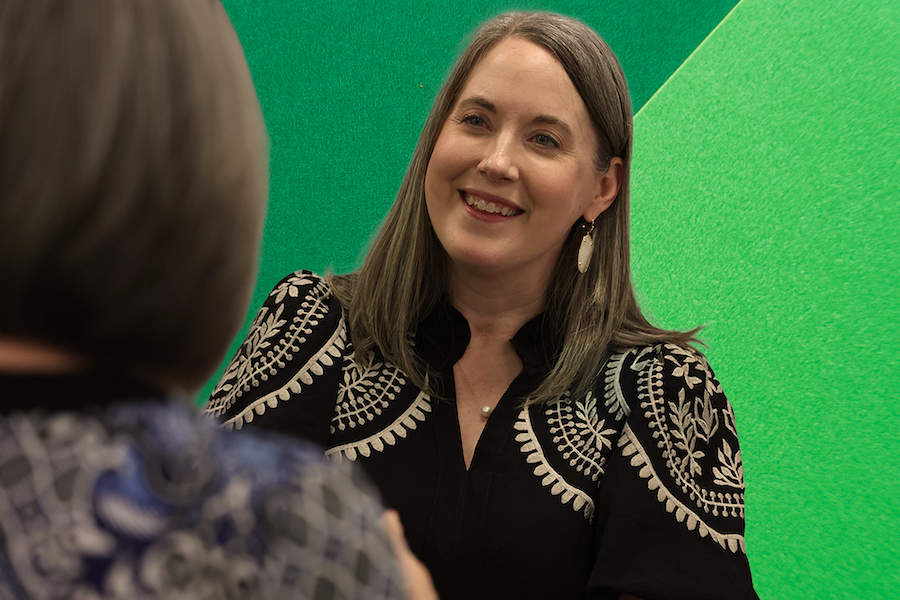
What does it take for students to flourish academically and holistically during their college years? Carroll Crowson, Director of Academic Support Programs at Baylor’s Paul L. Foster Success Center, shares how Baylor provides personalized resources—from tutoring and supplemental instruction to academic mentoring and resiliency training—that empower students to succeed in the classroom and beyond. Families have made a significant investment in their student’s years at Baylor, and the University has built a culture of care that helps those students reach their full potential.
Show Notes
What does it take for students to flourish academically and holistically during their college years? Carroll Crowson, Director of Academic Support Programs at Baylor’s Paul L. Foster Success Center, shares how Baylor provides personalized resources—from tutoring and supplemental instruction to academic mentoring and resiliency training—that empower students to succeed in the classroom and beyond. Families have made a significant investment in their student’s time at Baylor, and the University has built a culture of care that helps those students reach their full potential.
The conversation highlights:
- Holistic Academic Support: How Baylor equips students with strategies for time management, study skills, and personalized academic planning.
- Resources for Every Student: From high-achievers to those overcoming challenges, why academic support benefits all students.
- Learning Lab and Tutoring: Drop-in help, individualized sessions, and supplemental instruction to deepen understanding.
- Academic Mentoring: Graduate student mentors provide weekly accountability and customized care.
- Technology and Student Success: Award-winning platforms like EAB Navigate help identify students who need support and streamline processes for staff.
- Student Flourishing: What it means to help students discover their strengths, build resilience, and thrive during their Baylor journey.
- Collaboration Across Campus: Connecting students to career services, mental health resources, and specialized programs for veterans, first-generation students, and transfers.
- Connecting with Academic Support Programs: The Paul L. Foster Success Center website is the starting point for students to connect with the outstanding resources available to them.
Transcript
Derek Smith:
Welcome you into Baylor Connections. Today we're discussing student flourishing, particularly on the academic side. So many great things taking place across campus in that regard and much of it going on at Baylor's Paul L. Foster Success Center where our guest today, Carol Crowson, serves as director of academic support programs, of which there are many here at Baylor. And Carol, a lot of exciting things, as we said, taking place at the Success Center, and really great to have you on the program today.
Carroll Crowson:
Thank you so much. I'm delighted to be here.
Derek Smith:
You know, it's funny when we talk about things like this, we can get here at Baylor, like a lot of universities, we can start talking about different divisions or units or titles or names. We're going to try to back out from that just a little bit here so that I know you'll do a great job painting that picture of the kinds of holistic resources available to students. So let me start by asking you where. Where are a few places doing what that we might find you and your team, your colleagues serving students at Baylor?
Carroll Crowson:
Yes. Well, we like to think that we are supporting students in all phases of their journey. So we have some different strategic academic supports that we offer to students. A lot of times we'll think content specific immediately. So we think of tutoring, we think of supplemental instruction, but there's also some personalized academic assistance that we offer. And so I would say from the very beginning, students can utilize our resources to help them get a plan, to create a schedule. Something that is so different from... Especially at the beginning of their Baylor journey from wherever they have arrived, we see that students maybe haven't been used to a block schedule or haven't been used to the freedom that they have with the schedule. And so sometimes just helping students take ownership of their time, recognizing that they can decide when they're going to do what, and if they will create a strategy, they will be able to have time to do things besides studying and have that full Baylor experience, creating valuable friendships, relationships, being connected in organizations.
And so one of the ways we facilitate that is through our Learning Lab, which is hosted physically in the Sid Richardson building on the first floor. It's actually inside their tutoring center. And so students can drop in. It's a great entry point, get a plan, but also get assistance with any strategies for how they're going to study for their classes because that's another area students may realize, oh wow, this strategy I used in high school or this strategy I used last semester in these other classes, it's just not quite working as well as I would like for it to. Is there something we can do better? And that's where they can get support for how to be efficient and effective with their time.
But certainly we also support students with content specific needs. So they're in a class, they kind of have a gap in their understanding. I remember many times taking notes and literally drawing a circle knowing, okay, I didn't quite get all of this. I need somebody to fill in these gaps. And so with tutoring, we offer support for a wide variety of courses and they can get that help that they need to fill the gaps to complete their learning. And tutoring can be done individually, in a group or drop in. So that's also on the first floor of Sid Rich.
And then, but we also offer support to deepen understanding. So supplemental instruction is where that comes into play. And those are sessions led twice a week by a student who has taken the course, been successful, and then they provide engaged group learning activities and sessions to help deepen the student's understanding of the course content because a huge difference between high school and college is how the faculty are assessing their knowledge and understanding. And we've just seen historical data that students who go to SI just really perform better than students who don't. So we try to meet students where they are.
We also receive feedback from faculty, from staff, from students themselves who might be raising their hands saying, "Hey, I need some support." And then we do strategic outreach for those students as well.
Derek Smith:
You paint a great picture of the resources and maybe I think the answer to this question is obvious because you say, well, students. But who uses these programs that you're talking about?
Carroll Crowson:
That's a great question because I think sometimes it's easy to have a picture of the type of student who might use some of these resources, but really we are engaging with students from all spectrums. From that student who has that 4.0 and really wants to keep it, they can find value in engaging with our resources. To a student who maybe has had some bumps along the road and needs some support in thinking through how can they rebound? Or how can they improve their grade or improve their understanding of this content? Maybe their GPA wasn't what they wanted it to be last semester and they want to come and improve. But it's for all students and then certainly all students in between because I think when we tap into the resources, that's where we see that true flourishing being able to happen is when we get the support.
I like to think about people that as a culture, as a society, we would think oh, they are at the top of their game. Well, I haven't heard of one yet who got there literally all by themselves. They all have people who are helping them, training them, coaching them, whatever it is. And so we want to be that for our Baylor students because they are here. They have what it takes. They wouldn't be here otherwise, right? And so we want just to help them tap into their internal resources that they're bringing with them, the gifts that they have been given and help them expand those as much as possible.
Derek Smith:
As a sports fan, I feel like there's a coaching analogy, right?
Carroll Crowson:
Yes.
Derek Smith:
Whether you're all American or whether you're a walk on trying to keep your spot on the team, everyone needs coaching to get better and to reach their full potential.
Carroll Crowson:
Yes. Yes, exactly. Exactly.
Derek Smith:
You think about the investment families are making to come here in terms of time financially.
Carroll Crowson:
Yes.
Derek Smith:
What does it mean to you and your team to really help them make the most? I don't think it's just a simple input to they're putting in a lot of time and money. We want this good output because it's so much deeper than that in the way you care for students. But what does it mean to help families and students make the most of what they're sacrificing in the four years or so they're here?
Carroll Crowson:
Yes. And we are so aware of that investment that the students and the faculty are making. Sometimes I like to call Baylor, in some ways it's a little bit of an all-inclusive resort. So I would say that our services, they are all prepaid or free to students. So really, to make the most out of it, we encourage them to utilize all of the resources that we offer.
I mentioned the Learning Lab before, but we also have something called academic mentoring, which our academic mentors are graduate students who have been trained in study strategies, time management, all sorts of things just to help with executive functioning and helping our students be the best students they can be. And they meet weekly for 30 minutes with these students to provide that accountability, but not just accountability, but really to provide that custom care.
I think that's something that gets me so excited about working at Baylor is how intentionally we care about the student, we see them as individual and we see the unique gifts and the unique definitions they might have for success and where they want to go. And we have the capacity to really lean into that and support them so that they can reach that milestone that they're looking for. So it's really exciting because our student body is so varied and broad. So we can really customize the support that we're providing for each student.
Derek Smith:
You mentioned customized, that was going to be one of my questions. To what extent is it ... You have these offerings and there's practices that you use, but to what extent is it tailored as you get to know the individual student?
Carroll Crowson:
Yes. Well, a lot of our work is individual. So whether they're coming into Learning Lab, they're going to be meeting with our academic mentor who's staffing that, and there may be other students who are present, but that mentor is going to work directly to listen to that student and hear what exactly would be the most helpful for them, what their benefits would be, tutoring the same way. There's a lot of individual support.
And I think something that is just part of the ethos of our area is that we do see our students as unique individuals and even in our messaging and responsiveness, we may be able to create some automations just to help us scale things, but we want to respond specific to what the student has requested and make sure they feel like their particular need is getting met. And if that's not happening, that's something we want to take a look at and retool to make sure that they can feel like they're being uniquely supported in what that they need.
Derek Smith:
Well, you look at some of the metrics Baylor uses I think we've seen. We've seen greater student retention, really just greater student satisfaction in what they're doing. And that's part of what it is you're trying to do. But that idea of flourishing, that's something that we talked about a little bit off-air. What does it mean to you and your team and academic support programs to contribute and promote the idea of student flourishing?
Carroll Crowson:
I think it really helps us meet our call from Baylor's mission and really a beautiful gift of the process of higher education is for a student to learn more deeply who they are and then be able to reach the potential that they each have. And so I think when we think about flourishing, one of the things I've been able to be involved with over the past few semesters is a resiliency course that we teach. And this course really focuses on strengths, really helping students identify what are the things you already have. So when you come from a strengths-based perspective, that really changes the game, I think, when you're working with students and helping them to flourish and find those opportunities. So you're not always looking at the gaps, but sometimes the gaps do help teach us things that we need to know about ourselves and things we can do.
But I think also really it's important to focus on what the student already is strong in so that then they can use those strengths maybe to help them in the areas that they want to improve in or want to expand. And so I think that's something that's really special about my team and the people I get to work with is we do see our work as a calling and something that we are just led to do from our passion for students and wanting them to be the most successful. And so it's really exciting to engage every day with a team that has this shared value of support in trying to figure out what are the ways we can best help our students flourish at Baylor.
Derek Smith:
You think about that idea of flourishing holistically too. I think the analogy, Paul's analogy of the body, there's different strengths. You all work in academic support. We have great health and mental health resources.
Carroll Crowson:
Yes.
Derek Smith:
We've got a fantastic career center. What does it look like when students talk to you and maybe they have some questions that make you think, "You know what? I want to plug them into the career center or something else." What do those partnerships look like?
Carroll Crowson:
Yes. Oh, that's great, Derek. Yeah, we definitely are constantly referring students to different teams and a lot of times we are walking them down the hall, walking them where they need to go. In the Success Center, we have a wide spectrum of supports for students from our Office of Access and Learning Accommodation that serves students who have disabilities, to our major exploration and success advising, who serve students who are trying to decide what major they want to pursue, to our students who want to move into law, so our pre-law area.
But also we have incredible supports for some of our student populations. So our student veterans, our first generation college students, our transfer students, there's programming for those students to create incredible belonging and connection and support so that they can know about the different resources, but also stay connected with each other and feel like they have a strong base from which to flourish, right?
Derek Smith:
Yeah. Well, like you said, that all-inclusive resort analogy allows students, there's all these different resources and you can help them learn what's there, what's available to them.
Carroll Crowson:
Yes. Yes.
Derek Smith:
Yeah. I want to ask you, we got to celebrate an award that you received this fall, Excellence in Technology Administration. You were there to receive this award for yourself and on behalf of academic support programs. Tell us a little bit about what this award represents, particularly as it relates to the way you serve our students.
Carroll Crowson:
Well, thanks, Derek. It was very exciting. Definitely a career highlight moment. I think there's several pieces to this journey. I certainly didn't begin my career trajectory in technology. I'm a licensed counselor by training, but what I noticed was that actually something that I loved about counseling translated to what I love about technology administration. And I really get a lot of energy around solving problems and helping people create solutions to things that are happening that maybe are gaps or barriers that they're experiencing, pain points.
So when I moved into this work with technology, specifically EAB's Navigate platform, something that I had as a huge gift was 12 years of working at Baylor as a professional. So that meant I had already some great connections across campus. And when I took on this role, what was really important to me was to understand the needs of the people that would be utilizing the system and constantly be listening as we had updates and things of the technology. How could something new connect and help that person work through, find a solution to something that was causing them a problem?
And so being able to facilitate those solutions for people, I think really did make a difference. And so I certainly did not receive the award on my own because it depended on... Because technology is great, but technology that doesn't work for the people using it can't really help us, right? And so I depended and continued to depend on the faculty and staff across campus to trust me and to let me know what they need, how they need it, when they need it. And then I love getting to brainstorm and be creative and come up with those solutions.
And fortunately, my team has been able to grow and now we have two other people who are supporting the university in this platform as well. And so with this team, we're really able to move quickly and resolve things. But how this connects and helps support students is when technology works correctly, provides efficiency, provides effectiveness, then we can all focus on the student. And so that is what is exciting to me is, you know, if I can create systems that limit manual processes or things that are going to take up a lot of time and that person can just really focus on the student, what the student needs and let the technology do its thing, that's the goal. That's the dream. And so I get excited to think about how we can do that.
Another piece of the technology that I'm really passionate about is how it helps us identify the students who need support but may not recognize it yet. So we can get to them in time so they have time to maybe make some adjustments, make some changes. Kind of like your sports analogy. If that play's not working, maybe, okay, let's rework it, get back out there, and then we see a totally different team on the court, right? So how can we help the student maybe retool some of the ways they're approaching their classes and their academics and help them to flourish? So again, student flourishing, it all kind of connects to that.
Derek Smith:
Well, and that's a great picture you paint because you think about it recognizing students that may need some help early. There might be a big difference in their ability to adjust in between say early February and a couple weeks later depending on that.
Carroll Crowson:
Yes. Yes, yes.
Derek Smith:
So that's exciting to see. And by the way, congratulations to you on that award.
Carroll Crowson:
Oh, thank you.
Derek Smith:
Got to put on a different hat there on the technology side. That's great. As we wind down here, I want to ask you... We're going to talk about how people can get connected in just a moment, but first for you and your team, the student success stories. We're talking about student success here. What are the student success stories that you love to witness, play a role in and share the most?
Carroll Crowson:
I think the student success stories that I get so excited about are the students who utilized the resources that they needed. They recognized where their own gaps were, acknowledged that, and then used great help seeking behaviors to get to the next level. Students who took the initiative to really understand what all was available and took advantage of that the most.
I think when I think of a specific student that I've had the joy of hearing his story and he talks about how his sense of belonging was impacted by the groups he found and how he was able to connect with different resources in the Success Center. I mean, not even just the ones I mentioned, but we also have the store and financial wellness. So we really do provide this holistic support in addition to some incredible programs that help students who go on to graduate school and research and many other things in between.
But I think that when I hear that students were able to find what they needed, it was presented in a way that was accessible to them, and then that piece is what helped them launch into the flourishing, that's what I get really excited about. Because it tells me that what we do day in and day out is working and it's making a difference for students. And when I hear of things that maybe it didn't work, we're constantly trying to think, how can we retool? How can we translate this differently for our students so they will understand how we want to connect and engage with them?
Derek Smith:
That's great. And when you picture real people, the students that we were back in the day or students we walk alongside now, it's exciting to imagine what that means in their lives and what that means for their families as well.
Well, Carol, if people want to learn more, we're going to put the contact information in the show notes at baylor.edu/connections, but what would you tell people about connecting with you all broadly?
Carroll Crowson:
Oh, I would say go to our website. The Success Center website has tons of information. We really worked hard on it this summer to make it easy to see all the programs that we offer and all the resources. So you can look at that, click on those links and find out more information, but also you'll find the specific contact person for whatever that specific thing is and that person will be ready and willing to help. But I'm also happy to be emailed or called and happy to follow up with anybody to get them connected or to provide the information if it's something that I can help with.
Derek Smith:
Well, Carol, thanks so much for taking the time to share. Thanks for the work that you and your colleagues do. It's exciting to see. I think we see the fruits of that in the way students are engaged here at Baylor. Retention continues to grow and really just more than that, you like seeing students who are doing well in class thriving and happy and enjoying all that this campus has to offer. So thanks for the work you're doing for joining us today.
Carroll Crowson:
You're welcome. Thanks, Derek.
Derek Smith:
Thank you. Carol Crowson, our guest today on Baylor Connections, and as we mentioned, you can find information about how to connect with the Paul L. Foster Success Center and academic support programs here in our show notes, baylor.edu/connections. And your reminder, you can also see this in other programs at our Baylor University YouTube channel. Happy new year, and thanks so much for joining us here on Baylor Connections.