

Dennis Tucker
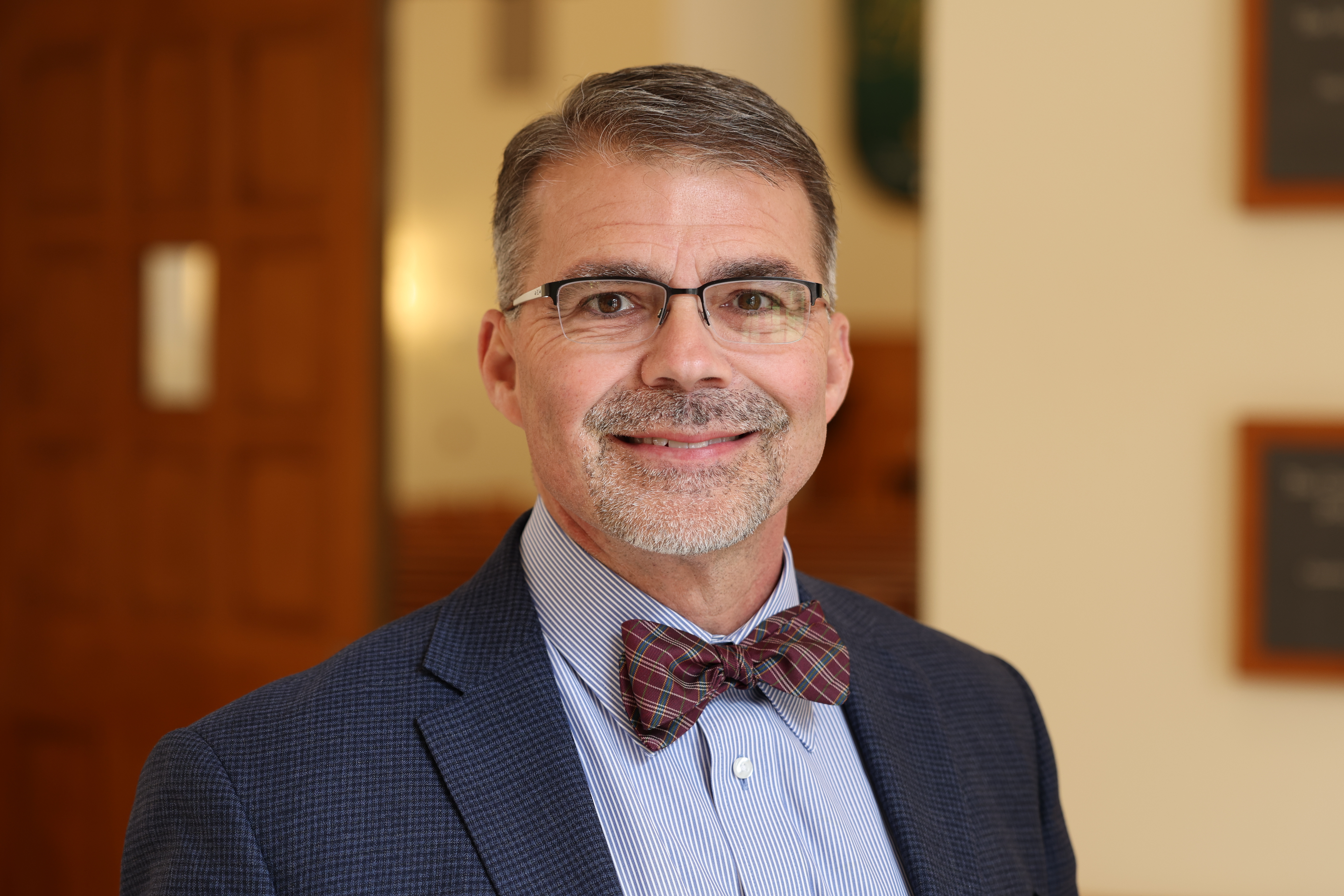
What does it mean to readers that the Psalms are a book of poetry? What can the topics embedded within the 150 chapters of the Psalms tell us about God’s relationship to man? Truett Seminary’s Dennis Tucker, PhD., is a researcher and expert on the Psalms. He shares how we can better consider the Psalms through approaches both practical and scholarly, and shares readings to consider for the New Year.
Transcript
Derek Smith:
Hello and welcome to Baylor Connection. It's a conversation series with the people shaping our future. Each week we go in depth with Baylor leaders, professors, and more discussing important topics in higher education, research and student life. I'm Derek Smith. And today as we approach the end of a year and the start of a new one, we're going to focus in on the Psalms with Dennis Tucker. Dr. Tucker serves as professor of Christian scriptures in Baylor's George W. Truett Theological Seminary, a researcher and scholar on the book of Psalms. He's written extensively on the Psalms and serves as series editor for the Baylor Handbook on the Hebrew Bible. In addition to teaching, he continues to preach in local congregations and has previously served congregations across the country. He's taught at Baylor since 2002, and he's with us today on the program. Dennis, thanks so much for joining us. Happy holidays, merry Christmas, happy New Year, and thanks for being with us.
Dennis Tucker:
Yeah, thank you, Derek, for the invitation. Really honored to be here with you today.
Derek Smith:
Your work in the Psalms is always meaningful, but I think as people we're kind of in that natural time when people are thinking about what's ahead or looking back at the past year. And I know the Psalms has a lot of wisdom that we can apply or think about in our lives. So I'm excited to dive into this with you today.
Dennis Tucker:
Me as well. Thank you.
Derek Smith:
Well, I gave a very brief summary at the top of the work you do, but practically for you researching and teaching deeply from the Psalms, what does that look like for you in your work?
Dennis Tucker:
Yeah, thank you. I've spent most of my career working on the Psalms, so it's taken several different forms. So maybe I'll just mention one today. The Psalms are poetry, and so as anyone studying poetry might do, you're going to look at a number of items, things like the structure or the syntax, the way in which the language works together. Oftentimes I'll sit down in front of a Psalm and begin to work through the Psalm looking at those kinds of elements of the Psalms, how the Psalm moves and flows. But what's really captivated my attention over the years are the images and the metaphors in the Psalms and how they operate. And when you think about poetry, it's evocative. It's meant to evoke something out of us, memories or images or ideas or feelings. And so, one of the things that interests me most in the Psalms in addition to the other poetic features, is what were the Psalms trying to evoke in the first person who wrote these?
And then over the centuries, what were these Psalms evoking out of the communities of faith that read them? And then lastly, maybe what are the Psalms evoking out of me as I sit before them and think about them?
Derek Smith:
There's really no shortage of approaches, you can take to them from a literary and faith perspective.
Dennis Tucker:
Yeah, precisely.
Derek Smith:
The Psalms there for Christians, they are certainly ubiquitous and really recognized very often by non-Christians alike in a lot of ways. So curious, no matter what we know about them, people bring different levels of understanding and knowledge. And no matter where we come into this, what are some helpful ways to think about the book and to consider the nature of the book more deeply?
Dennis Tucker:
Yeah, you're right. The Psalms are ubiquitous and they're plentiful. We have 150 Psalms, and my guess is most people have heard whether they're persons of faith or not, they've heard some of the Psalms, most have heard the Lord is my shepherd, Psalm 23. They may not have remembered what's Psalms it was from, but they certainly have heard it. Or maybe have heard the statement like make a joyful noise into the Lord. Maybe if they were in a community of faith somewhere worshiping, they might've heard Psalm 100 read. Or maybe in certain congregations or places of faith you would've sung As the Deer Pants for Water. And there's a couple of courses that utilize that language. But what I've learned over the years working with students is just because you've heard them, it doesn't mean you necessarily know what to do with them. You might know what a psalm is or a link of a line that links you back to a Psalm.
So one of the things I've talked about with our students is they are ubiquitous, they are everywhere, but the Psalms are really unique in the canon. And what I mean by that being unique is it's really the only book in the canon where really like all of scripture, we read it as God's word to us as persons of faith. But then also these are the same words we might pray back to God if we're a person of faith as our prayers or our complaints or our words that we would want to utter to God. And so I suspect that's one of the reasons Psalms have held such a special place, both among persons of faith and even beyond, but especially among persons of faith because of this sort of dual aspect of the Psalms. We read them to hear and to listen to the God that we worship, but then also we find that they sometimes then become the words that we need to offer in prayer.
Derek Smith:
A lot of it feels. Like about every aspect of human longing or striving or emotion is found in some ways probably all of us can see ourselves in them in different places at different times.
Dennis Tucker:
Right. I know. And yeah, John Calvin who was the great reformer, he made a comment once where he talked about the Psalms being the anatomy of all parts of the soul. And I do think as we read the Psalms, we find joy in those Psalms, we find grief sometimes in the Psalms, we find fear, we find hope. I mean all the emotions that seem to surge and run through us. And as we think about the Psalms and how they react with our emotions and how our emotions react with the Psalms, I'm always reminded that the Psalms are not just about introspection though. They're not just about helping me think about myself or helping me think about my emotions. I tend to think about Psalm one offering us an invitation of a pathway to how we're to live in the world in which we live.
Pope Francis has this great quote where he talks about praying the Psalms, he says, allows us to contemplate reality, contemplate the world with God's eyes. And so from Psalm one forward, it's really an invitation to a particular journey is what we get. That all this mix of emotions that we have, it invites us to look at the world, to look at ourselves, to look at God differently, and I think it resonates with who we are.
Derek Smith:
We are visiting with Dr. Dennis Tucker, professor of Christian scriptures at Baylor. And as we dive into this, you've talked about talking to your students. I'm excited that I think we have a chance almost to eavesdrop on a small part of your class here through this program today. I want to ask you, you mentioned poetry and style, they're important in the Psalms. Why are they, and what should that mean to me as a reader?
Dennis Tucker:
Great. And I think I could say a couple of things related to this. One is we need to recognize they are poetry. They are a particular style when we're talking about the Psalms. And honestly, I think we have to acknowledge sometimes the Psalms are difficult for us to read because they are poetry. I think it's because our brains are wired in a very particular way these days. We skim emails, we rush through text, we scroll through our social media, we spend seconds just glancing at tidbits of knowledge, and we move on. And we're looking for that one single piece of information before we scroll on or move on or delete the email. And as a result, I think most of us, we probably read the Psalms the same way. We are scanning it, we're looking for information, and we're trying to glean that information and then move on as quickly as possible.
What I've found is most people, maybe I'm misreading our audience here, but I think for most people we don't read a lot of modern poetry or poetry in general for the most part. And for me, I found one of the ways I started to read the Psalms better was to read more poetry, because reading poetry it teaches me to slow down. It teaches me to not race through a text because you just can't race through poetry. It causes me to tend to the images, to explore the images that are in that writers in their poetic text that they have. It asks me to kind of live with the poem for a little while. And so I try to use those skills when I encourage my students to think about reading the Psalms, and that is we're reading them as poetry. We're slowing down. We're not simply reading for information, we're reading for formation. And that means we have to live with the text for a little while.
Derek Smith:
Stylistically, it stands in contrast to different verses of different books of the Bible that don't use that. Are there other ways that we see the Psalms compliment the other books of the Bible when you think of the role they play as part of the broader narrative?
Dennis Tucker:
Yes. In fact, Martin Luther, another reformer, so in Germany mentioned in his preface to the Psalms, he famously called the Book of Psalms [inaudible 00:09:05], a little Bible. And he said, "Really, all of scripture is encapsulated in the book of Psalms." Now, that may be a little bit of an overstatement, and Luther was always given to overstatements, but he's not really incorrect. And if we could think about an image, maybe like a wagon wheel, we have a large hub with all these spokes that are coming off of it. I really think in some ways the Psalms is that hub and it's making connections to all of scripture. Even though you're right, this is poetry, we still have connections to narrative text. We have connections to creation in Genesis one and two. We see that in Psalm 104, the whole narrative of Israel's history is retold in Psalm 78 and 105 and 106 and 135, 136.
They rehearse all of these main events in Israel's history. Psalms 46 and 48, they remind us of the centrality of Jerusalem and Zion for the people. So we see all these connections that are being made. But I think the one thing that stands at the center of that hub, it's really right in the center of the book of Psalms. Psalms 93, and then 95 through 99, where the kingship of God is announced. That's really most people argue the central theological theme in the Book of Psalms. And if the Psalms could make one claim clear, and I think they do make this claim clear, it's that God reigns in the world even when it doesn't feel like it. And because there's lots of language in the Psalms about oppression and dealing with injustice and dealing with unrighteousness and the wicked are mentioned and so forth. But the kingship of God is this overriding theme in the Psalms.
And so in some ways I think that at the hub of it all is really reaching out across all of scripture, this God who reigns, this king's mission of the Psalms. We see that language showing up all throughout the Old Testament, but also in the New Testament. Oftentimes when we're reading Psalms in class with my students, they'll say something like, "I remember hearing this some other place." And we'll find it over in the New Testament. In fact, the Psalms are quoted more than any other Old Testament book in the New Testament, 68 times. And so in some ways, the language and the prayers of the Psalms, it became the language of the early Christian community as they tried to write and tell their story and understand what was happening in their world.
Derek Smith:
This is Baylor Connections, we are visiting with Dennis Tucker, professor of Christian scriptures in Baylor's George W. Truett Theological Seminary. We're discussing the Psalms today. And you blend in your class, I guess you would say, both the scholarly and the practical as you're training those who will minister now and certainly beyond. So you talked about reading the Psalms as poetry more carefully. I'm curious if you could take us inside a little more how you do that with your students, maybe by even taking us inside a chapter or a segment that you think might be helpful for us to just kind of approach it along with you and your students.
Dennis Tucker:
Great. I'd be happy to do that. Yeah, as I mentioned, I think the Psalms because they are poetry, they do have this evocative language. Most of us don't tend to evocative language when we're reading through things. And so when I work with my students, I try to ask them as I said before, to have this habit of slow and intentional reading with attention to the images and to talk about what senses they're evoking out of those. And so just maybe as an example, I won't use the whole Psalm but maybe I could read a few verses of Psalm 69 and just listen to some of the language that's in this Psalm.
The Psalmist writes, "Save me, oh God, for the waters have come up to my neck. I sink in the miry depths where there's no foothold. I've come into the deep waters, the flood engulfs me. I'm worn out calling for help. My throat is parched, my eyes fail looking for my God. Rescue me from the mire. Do not let me sink. Do not let the floodwaters engulf me or the depths swallow me up or the pit close its mouth over me. Answer me, oh Lord, out of the goodness of your love and your great mercy turn to me and come near and rescue me." Now, if I'm writing just a tweet, I could simply write, "Lord, help me." That's the same message in effect, but these images open up sort of a theological imaginations for us. They invite us to pause and to ask what's being said, what should we hear more here in this text?
And you see this piling up of images, miry depths, the deep waters. We get floods and floodwaters. The waters coming up just to the very neck of the individual. And even the image of a pit, which in ancient Israel and in the ancient near East that was often an image for Sheol. And so all of these are just piling up and piling up and piling up in the Psalms, and they paint this picture. And they paint a picture of the dark waters that are about to wash over this psalmist as he stands on the brink of life, because when you're standing near the pit, the only place to go from there is to Sheol and into death.
As he stands on the brink of life, we can almost feel it. We can almost resonate, and that's what all good poetry does for us. And then just one other thing, the other image here is the psalmist calls out for God to come near to deliver them. And this is the point we try to look at in the Psalms is, where are these juxtapositions of images? One is the psalmist going down and the other is calling for this God to come near. And so in some ways we sit in front these two images of the psalmist about to lose his life and the prayer for this God to deliver him. And what it seems like to me is if you're from a faith tradition that uses icons, often icons are used not as the object of our worship. We don't pray to an icon, but the icon points us to the object of our worship, to God. They point us to God.
And so I think these Psalms when they paint these beautiful images we could say, we really don't need all this flowery language. It's too much, but they're a bit like an icon. They point us to something deeper. They point us and direct us to God. They cause us to pause, to reflect, and then to let sort of these images and words point us in the direction to the object of our worship.
Derek Smith:
Curious for people who are going through a hard time, what should we take away from the fact? Obviously this person's crying out to God, but if you're just reading it can almost be like a rant of sorts, just coming deep from their raw feelings. What does it mean that the Bible shares that with us as part of these sacred texts, that that human longing is in there?
Dennis Tucker:
Yeah. And I think sometimes we don't want it to be in there. We want, I think our scripture and our text and our lives to be all about happy things and good things. It's worth noting, we talk about worry and lament and the role they play in the Psalms. It's worth noting that of the 150 Psalms, only 15 Psalms are praise Psalms. Only another 17 Psalms are Thanksgiving Psalms. So 32 Psalms might be what we might refer to as praise Psalms or quote, "happy Psalms." What's always striking to me and it's always striking when I'm working in churches with people as we work through the Psalms, is that they're nearly twice as many lament Psalms. So 60 Psalms that are laments and the salt. And I think most churches, most people of faith, they do pretty well with praise Psalms. They know what to do with those.
We just don't know what to do with lament Psalms. We don't know how they fit into our lives. And so what most churches do, most persons of faith do for that matter, is we oftentimes we shelve them and we just don't talk about these Psalms. And we pretend as though maybe that is not really our life or doesn't really describe us. We pretend like they're not there. But in my own experience working with congregations, with students, just with human beings, that's actually where most people are. Most of us in some ways we're anxious about things, we worry about things, things are broken sometimes in our lives. We feel like we've lost our voice. We don't have a voice. We feel powerless. These are all the feelings that we find in the lament Psalms. And I think what these texts do for us, and the fact that we have so many of these texts, is they invite us to claim that as part of what it means to be human. That human is not just about praising and being happy.
Human is also acknowledging that this journey that we take includes difficult seasons, and the difficult seasons don't have to be shelved. They're simply part of our life. In the previous institution where I taught, the church I attended, they had asked me to do a Sunday school session on the Psalms. We had been in it in several weeks, and one Sunday I was asked to do the lament Psalms. And so I began to talk, and here I'm young, fresh out of graduate school and I'm telling them all this stuff they really don't care to hear about. And I notice no one is paying attention to me while I'm talking about lament Psalms. They keep looking at the mother to the right of me. And so I kind of double down and start talking about more technical stuff and no one's watching. And I start noticing the mother next to me wiping the tears from her face.
And so finally I turned to our friend and I asked her, I said, "Anything you want to share about the Psalms?" And she reminded us that a couple of years ago, well, she said, "Well, a couple of years ago when all of our children were in the three-year-old Sunday school class, y'all would all run downstairs, pick up your children. They would all run to you, say how much they loved you and they would've colored you something." And her child was on the spectrum, and she said, "I would go to the Sunday school class and my child would never run to me and would never say she loved me." That she never responded that way. She said one Sunday she told her husband, "We're going home. I'm packing up everything that's religious and I'm done with God. I'm done with religion. This cannot be what life is about."
She told our class, she said, for two years they never went to church. She never thought much about faith. And then one day she opened a Bible and it was the Psalm 13, "Oh Lord, how long will you forget me? Will you forget me forever? How long will you hide your face from me? How long must I bear this pain in my soul and have sorrow in my heart all day long?" And she said, "I did not know I could say those words in my faith." She said, "I did not know it was possible to pray those until I happened to find this Bible and open it up and see it there."
Derek Smith:
Wow. That's powerful. Visiting with Dennis Tucker here on Baylor Connections. And as we head into the final few moments, we are on the cusp of one year turning to the next, 2024 into 2025, which sounded vaguely futuristic not too long ago and here it is. I'm curious, are there any verses or chapters that you think might be particularly meaningful for people to take a look at as they orient themselves to a year ahead as we close?
Dennis Tucker:
Yeah, I think I might mention one word and then maybe just close with a text if I could. One of the words that appears frequently in the book of Psalms is the word hope. That occurs quite a bit. For those of us who celebrate Advent in the season, we have a Sunday of hope as well. But in the Hebrew the word for hope it means to wait, but it also could be translated as to hope, as we might say. And so I think interestingly in the Psalms, it's all about hopeful waiting or waiting in anticipation. And so I think what I would say as we're moving our way into the coming year, as we're looking for what is to come, I think it may be part of this waiting anticipation, this hopeful anticipation of what God may do in our lives and in the lives of our families and perhaps even those around us.
So as I was trying to think about that word hope and how it connects really with sort of the thrust of the Book of Psalms... Of course there are, as I said, 150 Psalms, so you're making me choose from one of my children. But I was thinking about Psalm 25 where the Psalmist offers this prayer. He says, "Make me to know your ways, oh Lord. Teach me your paths. Lead me in your truth and teach me for you are the God of my salvation. And for you, I wait all day long." But we can translate that last line, for you, I hope all day long.
Derek Smith:
That's wonderful. Good word as we head into 2025. Well, Dr. Tucker, thank you so much for taking the time to share with us, pointing us towards a deeper understanding of the Psalms as you do for your students. And it's an encouragement to me and will be to others as well. So thank you very much.
Dennis Tucker:
Thank you. It's been wonderful to be with you today, Derek.
Derek Smith:
Awesome. A happy new year to you. I hope Christmas break affords you a little bit of time to rest and relax as you get ready for the new semester ahead, you and your family.
Dennis Tucker:
You as well.
Derek Smith:
Thank you very much. Dennis Tucker, professor of Christian scriptures in Baylor's George W. Truett Theological Seminary is our guest today on Baylor Connections. I'm Derek Smith. Reminder, you can hear this and other programs online @baylor.edu/ connections, and you can subscribe to the program on iTunes. Thanks for joining us here on Baylor Connections.