

Sub-Zero: Baylor Research at the Edge of Human Performance
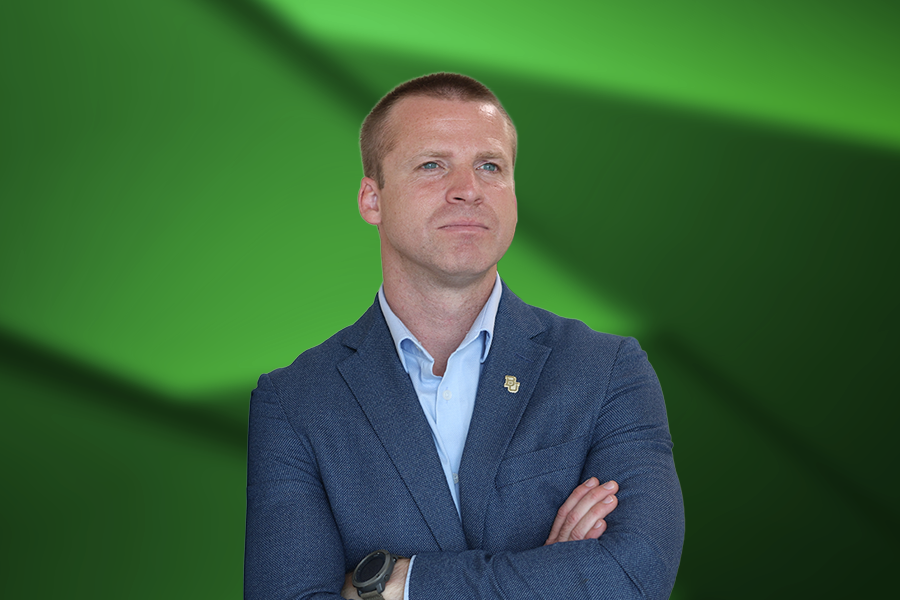
Why would Baylor University build an Arctic research lab in the heart of Texas? At Baylor's ARKTOS Research Center, researchers uncover new insights into how people think, perform, and make decisions in some of the world's most demanding environments. Dr. Cory Smith, director of ARKTOS, takes listeners inside this one-of-a-kind research center, which includes an environmental chamber where temperatures can be sustained at 30 degrees below zero Celsius and altitudes can be simulated up to 30,000 feet.
Smith shares how Baylor researchers are helping military personnel, first responders, medical professionals, and others prepare for extreme conditions where performance matters most. From military readiness and emergency medicine to natural resources, transportation, and emerging technologies, the conversation explores how research taking place in Waco helps people survive and thrive in conditions far different from our own.
Show Notes
Why would Baylor University build an Arctic research lab in the heart of Texas? At Baylor's ARKTOS Research Center, researchers uncover new insights into how people think, perform, and make decisions in some of the world's most demanding environments. Dr. Cory Smith, director of ARKTOS, takes listeners inside this one-of-a-kind research center, which includes an environmental chamber where temperatures can be sustained at 30 degrees below zero Celsius and altitudes can be simulated up to 30,000 feet.
Smith shares how Baylor researchers are helping military personnel, first responders, medical professionals, and others prepare for extreme conditions where performance matters most. From military readiness and emergency medicine to natural resources, transportation, and emerging technologies, the conversation explores how research taking place in Waco helps people survive and thrive in conditions far different from our own.
THE CONVERSATION INCLUDES:
- a look inside ARKTOS and Baylor's custom-built environmental chamber capable of simulating extreme cold and high-altitude environments
- why researchers are conducting Arctic and cold-weather studies in the heart of Texas
- how military personnel, first responders, and other professionals benefit from ARKTOS research
- what extreme cold can do to decision-making, performance, and cognitive function
- the difference between helping people survive difficult environments and helping them thrive within them
- how Baylor researchers monitor physiological and neurological responses to extreme conditions
- the experiences that led Cory Smith from emergency medicine and search-and-rescue work to Arctic research
- why Baylor's longstanding military partnerships make it a natural home for ARKTOS
- how industry partners can test new technologies and equipment before deploying them in harsh environments
- why the Arctic matters to Texans through national security, natural resources, global trade, and everyday supply chains
Transcript
Derek Smith:
Welcome into Baylor Connections. We're on location today. We're here in the ARKTOS Lab in the Baylor Research and Innovation Collaborative, better known as the BRIC. What is ARKTOS? Well, we're going to find out over our time here with Cory Smith, but we could say right off the top, it's the closest thing to the Arctic here in central Texas. It's a unique lab. It's really a lab unlike any other that we have here at Baylor. And we're going to dive into what ARKTOS is with Cory Smith from Baylor's Department of Health, Human Performance and Recreation. He leads the ARKTOS lab. And Cory, appreciate the time here. Glad we can visit. And thanks so much for welcoming us into your lab here.
Cory Smith:
Yeah, of course. Thank you for coming. We love to show what we do here.
Derek Smith:
It's pretty unique. So we're here in the lab. People can obviously see that just by watching, but something pretty unique right over both of our shoulders here. What is that? What's right behind you?
Cory Smith:
Yeah. So if you look over the shoulders, you can see control panels, different computers, and then a massive wall. Within there is a custom-built environmental chamber. What it does, it allows us to go down to extremely cold temperatures. And so we can hold negative 30 for a very long time and we can go really high in altitude. So we can go up to 30,000 feet in simulated altitude. And we do that by actually reducing the oxygen content in that room. And so it's a completely custom system. There's nothing like this that exists. And so within that system, we also have the ability to do cutting edge physiological monitoring so we can see how the body's responding, what's going on with it acutely and over multiple days. We have everything from sleep studies to neuroimaging, to performance, to tactical and medical training all withinside our chamber.
Derek Smith:
Now you were just kind enough to walk me and our team into the chamber. About how cold was it in there when we walked in there?
Cory Smith:
We were at negative 26 degrees Celsius, so it was a little warm.
Derek Smith:
Okay. A little warm. That's the first time I've heard that in conjunction with that.
Cory Smith:
Yes.
Derek Smith:
It felt pretty cold to us in there and maybe an obvious question. Why? Why this chamber? Why this lab? Why is it here in Texas?
Cory Smith:
Yeah. So that's a multi-pronged response, right? And so we'll start with why in Texas. With Texas, it's ironic. Everyone looks at me and goes, "Why are you doing arctic research in Texas? Shouldn't you be doing heat research?" And the thing is that makes sense logically, but when you start stepping back and looking at it from a research point of view, who is at the most risk of injuries or making errors in cold weather environments? It's going to be the people that are heat acclimatized. And so as a result, we want to get people that are not traditionally exposed to high altitudes and not exposed to cold conditions, i.e. Central Texas. And we want to put them in the chamber and start to understand what physiologically is going on with those that are at actually the highest risk of getting cold weather injuries, reduced performance, and then how can we optimize them and how can we accelerate their acclimatization?
And so with that, it's really important for us because we have down at Fort Hood and multiple other bases and out in San Diego and a few others that they all have units tasked to do training and operations within the Arctic. And they're based in Texas. They could be slam shifted from 115 degrees all the way up to Alaska and to negative 40, and we need to train them and prepare them for that.
Derek Smith:
Well, you just touched on, I was going to ask you the who. Who all's really interested in this kind of research?
Cory Smith:
Yes. So with it, there's a lot of parties that are interested. Our primary individuals that we work with are military. We work with a lot of militaries. Our goal and our primary fundamentals is to optimize war fighter performance and war fighter health. And so what we say is we don't want our war fighters just to survive. We want them to thrive in these extreme weather environments. And so we work with all the major branches of the military. So we've worked with the Navy, we work with the Army extensively. They're our closest partner. And so we work with Walter Reed, Army Institute of Research, for instance. We work with the environmental medicine group of the Army as well. And the Institute of Surgical Research are some of our key partners. With that, we also work with the Marines and anyone that we can really serve. And so our research acts very differently. We're more service based than we are what my research is.
We do that research, but ultimately we have these subject matter experts, myself and the rest of the team, and we offer ourselves and our capabilities to the military and it reduced the costs on them. It also improves their access because we are very good at getting studies running and we're very good at doing what we do. And it means they don't have to have those expertise. And so they can come to us with their problems and we can provide those solutions.
Beyond the military, we do quite a bit as well. And so when you start thinking about law enforcement and emergency medical services, which is my background, they operate in these environments as well and they operate in extreme cold. Even in Texas, it gets really cold. Imagine going and having to provide care or respond to a call as a police officer when it was the freezing ice temperatures a few years back. That's something that they're not trained for, but if we can help optimize and improve them or educate on how to be safe, that's something that we do.
And another thing that's real popular in Texas is oil. Oil and minerals and mining is huge in Texas. And a lot of the large companies and some small companies here in Texas, they all have sites up in Alaska. And so we are able to take our knowledge products we create here and improve the safety of everyone from a war fighter to a miner to a geologist that's going up and exploring.
Derek Smith:
Cory, probably like a lot of people, as you describe all this, so many questions come to mind. Let me ask you first, just briefly, we can dive into this a little bit more. You said you want individuals who benefit from this, whether it's our soldiers, whether it's first responders to not just survive but thrive. What are a few of the kind of high level areas you're checking out within the chamber that lead to them thriving and what they're trying to do in these kinds of environments?
Cory Smith:
Yeah, that's a great question. So up until recently, the vast majority of cold weather research, whether military or civilian, has been focused on just surviving the cold. How do we keep someone from getting hypothermia? How do we keep someone from going down what we call the lethal triad, for instance, if they're injured? All of that is what we've done a lot of research on, but the issue is I don't just want someone to survive. I want them to thrive in that.
And so we end up doing a lot of tactical proficiencies, medical proficiency training and understanding of how well can you provide medical care and tactical performance in the cold. And we do that through looking at different things like thermal imaging of the hand temperatures, neural imaging of the brain in real time, eye tracking, kind of heart rate and some other measures that we look at. And all of those, we use to inform the war fighter about their state in that cold and then start to teach them how to optimize and be safe. That way that they aren't just surviving, they are up there and they're performing at the highest level possible.
Derek Smith:
In life and death or certainly just challenging situations, they have to make optimal decisions in the moment. And even in normal conditions, that can be hard for us sometimes.
Cory Smith:
It does. Yeah. And I mean, everyone can relate to being cold, right? And so the example I use all the time is you've been in a shower and all of a sudden you run out of hot water and the water goes really cold really quick, what do we do? We gasp, we get upset, we slam the water off and then we're kind of just sitting there and we-
Cory Smith:
... we slammed the water off and then we're kind of just sitting there. And that's a really great example to step back and think that's dysregulation in the brain. Your discomfort, your brain's dysregulated. And so one of the things when it comes to the decision making and medical decision pathways, tactical decision making that we do here, it's to really understand that exact mechanism is when you're dysregulated, what we have is this thing called cognitive reserve and so your cognitive reserve is how much capacity that you have at that moment to add on to what you're already processing. And with the cold, the issue is what our research has been the first to find is that your cognitive reserve is truncated as a result. It's reduced significantly. And meaning that when you're doing really complex tasks, you're at a higher risk of making a poor decision you otherwise would not.
And we've seen that recently with some study, we had brought up some individuals from Fort Hood and they were highly trained medical providers. They knew what they were doing. They had real world experience. And when we put them through what we call our thermo neutral or our normal condition, like we did it right here, and they were flawless. We put them in the cold and they were making rookie mistakes again because they didn't have that cognitive load and that cognitive capacity. And we saw a direct relationship between those that could regulate, they performed very well. Those that were dysregulated in their front of their brain and their prefrontal cortex, they were the ones that had the most decrements and the worst decisions.
Derek Smith:
So as you measure these things, Cory, they're in the chamber. I see of all these computers here in the lab. We're surrounded by computers you use to measure. You're equipping them with data saying this is what it does to the body. You're testing them in these conditions to see how they respond. Do they then take that information and is that what they use for training, for planning? I mean, you equip them with data and a better understanding and then do they in turn take that into their own sphere of understanding and then apply that to their workers or their team when they're in the field?
Cory Smith:
Yeah, that's a really great way to describe it. And so I'll give you some examples of something that we did just recently here. So up on one of our TVs that we have up here to monitor, we actually put an image of the brain, a 3D image of the brain. And as the brain activates, it gets more red and it goes from a green to a red, just like a typical color spectrum. And everyone understands that, right? Without telling you anything about it, red's bad, right? Red is highly activated. Red is overstimulated. Green, good. And so with that, we result in this instant interpretability of the individuals that come here.
And so some of the things that we have been doing the past couple years are looking at medical decisions in the field because there's some statistics that the Defense Health Agency has released. One of them is that 8 of every 12 preventable casualties in the global war on terror could have been prevented with proper medical care at the point of injury and the field hospitals, or what we call role of care one.
And so with that, that's a lot of loss of life. And when you pull these war fighters away, they all passed all the testing, they knew all the scenarios and what we're starting to find out is that it's that they don't know how to operate when their cognitive reserve is gone, when they're in those high stress moments and they make poor decisions or they're what we call resource limited, right? You only have so much supplies and you have multiple patients. What do you do? And so with that, we are trying to truncate that by what we do here. And so the idea is can we train those war fighters? Can we optimize them for whatever that they need to do so that they can not make those decisions and ultimately save lives?
Derek Smith:
Obviously you paint a picture of so many different ways this can be used. We're going to continue to talk about this, but I want to zoom out a little bit here. You've been here at Baylor now. This is your fourth year at Baylor. This lab celebrated its grand opening a few months ago, spring of 2026. A lot has grown since you got here at Baylor. I want to ask you about that, but first just curious, how did you get into this area? So I think a lot of times when we think of human performance research, we think of strength, diet, conditioning, things of that nature, you take it a completely different way. So take us on the path to what spurred your interest in this and how did you get here?
Cory Smith:
Yeah. So we'll go way back. Prior career, before I went into academia and research, even before I got a bachelor's degree, I was a paramedic for years and I served on a lot of different capacities to do that. And when I was working on that, I worked from everything from a level one trauma center on a trauma team, responding to patients that we would fly in, flight for helicopters, doing different things like that, as well as disaster management and response and search and rescue teams. And so as we were doing all of that, the issue that I had is I would bring in patients and we kind of in a textbook understood that, "Oh, it was cold outside, so this is not good for the patient, this is..." But there's no standard operating procedures to care for them. You have to just wing it. And I wasn't okay with that. I was like, "Well, I want to learn more. I want to dig into it more."
And so I had numerous patients that had cold weather injuries or exposed to the cold and it started from that of wanting to help my patients. And so as I started doing that, I was looking for research labs that did what we do here and I couldn't find any. And so then I was like, I know what I'm going to do. So I found another lab that would teach me the skills that I needed. And then when I graduated and about six, almost seven years ago now for my PhD, I started doing environmental physiology research on tactical populations and we've been doing that ever since.
Derek Smith:
Well, and sometime after that you came to Baylor and started this. Why was Baylor the right place for you to stand this lab up and get it going?
Cory Smith:
Baylor was the perfect place to do this, honestly. So Baylor has a very rich history with the US military. Our RTC program is very, it's been around a long time. It's very old. We also have the Army-Baylor program, the Army-Baylor program. We train the vast majority of all branches of the military's medical professionals, everything from registered dieticians to we help train the nurse anesthetists, everything in between. We help train them. Most all the professors but physicians. We do not train their physicians, but we do train everybody else. And that's a big thing where we're already embedded, we're already serving them and the alignment of Baylor and our core beliefs are really aligned with saving lives, doing what's right and caring for others. And that's ultimately what we're doing here.
Derek Smith:
Is that something you envision? This isn't just a place that can test, but where you can develop, again, new products that take what you're doing outside of the lab long term?
Cory Smith:
Yes, 100%, that's the ultimate goal. We never want anything to stay siloed within this lab. It's also why we're eager and industry is interested in working in the facility like this, right? Because now we can come in here, whether it's our idea, whether it's their product and idea, and we can put it through those paces.
And so, one of the phrases they like to do is, "You want to fail fast," right? If you're going to fail, you're going to fail fast and when you're inventing things, it's infamous for failing. That's just part of what it is until you constantly tweak, until you figure out what works. The issue is, is if you try and put all your time and effort into something but you don't actually put it in the environments that it's going to be used in, it's going to fail.
And a really good example of that is, for instance, we love touchscreens now, right? Touchscreens are the best thing. I love touchscreens. Hate touchscreens when we go to the Arctic because the crystals freeze, the touch capacitors don't work, and then the screens go out and you can't see anything. And so now, all of our current monitors for patients, your cell phone, communication devices that are all touchscreen, no longer work. And so here we can show those pitfalls, work with industry partners on medical equipment so they don't break.
There's a story that happened where a few pallets of medical equipment got shipped up to Alaska in the winter and they got left outside for a couple cycles of cold to warm, what they call warm, we would still call cold. And so it cycled, and then they distributed all that equipment because we didn't know that it can't handle those temperatures even when not operating. And once it was distributed, found out that every piece of equipment was not functional. And now, that has a larger impact than just resources. And so the idea is, we can do that here, we can identify those faults here at a research lab, quality, granular level, and provide guidance for how to harden that equipment or how to harden the individuals.
Derek Smith:
Cory, as we head to the final few minutes of this show, I got a couple more questions for you. One that I hope is kind of a fun one that I imagine people wonder and then we'll kind of summarize at the end. But I think one of the fun ones I have that's just an aside, I got to think studying extreme climates and extreme circumstances, you've had to travel some interesting places. You mentioned you've traveled all over the world. Is there a story that you tell? Is there a moment that stands out to you as, wow, I can't believe my work took me here or this is something that I'll tell people about when we're all just sitting around telling stories?
Cory Smith:
Absolutely. So there's a few. I'll give two different ones, one recent and one back when I was a paramedic. So when we're a paramedic, we're doing search and rescue and we were doing some work up on Mount Whitney, very tall, very cold in the winter. And we got dropped out there and we were not prepared correctly for everything we do because you don't know what you don't know. And we were working to start different IV lines. We were looking to do this and that's when we discovered that IV lines don't work in the extreme cold. They fracture, break, and leak. And so we're having to get really creative with what we're doing.
And so it's one of those where it's that story of trying to come up with creative ways to solve problems. So instead, we were just putting medicine into syringes and fluid into syringes and then slowly pushing within a patient until we could get them safely evaced off of that mountain. And as we evac them off that mountain, we bring them down and then we put them in one of our helicopters and we take them over to a care facility and an end care facility to rehabilitate them and get them back to health. And even that, you're talking, it's kind of cold in the back of a helicopter during the winter.
And you're dealing with these issues of cold hands and the cold hands and the issue is imagine mittens. We all have our gloves. You have a hard time getting your phone out, getting your keys out, opening doors with the gloves on, those basic things. Imagine trying to provide medical care, trying to put an IV in, trying to palpate and field breathings or field wounds and injuries. You can't do it. And so what do you do? You rip your gloves off.
And so that leads into the other one which recently happened was up in Alaska. We were up there and we were doing exercises and training and doing research as well. And one of the things that we saw is that the medical providers were always ripping their gloves off. And as a result, they started to kind of get frost injuries. And so now that's just telling us, oh, we need these solutions to go through it. And so with those, it's one of those where you see them in real life and it's just reaffirming that what we're doing is the need and that it's one of those where you don't ever read about this type of patients or these type of scenarios until you've lived them because it's generally not well looked at is the cold. You don't hear about it every day.
Derek Smith:
Well, as you paint that picture, obviously you've served in the situations that the people you're now serving in different ways. And I was thinking our first responders and soldiers, they're thinking about the mission. They're thinking about the mission. And so I would imagine the mission, when you talk about that cognitive function, can overtake everything and you've got to really implement some of these, I guess, best practices you might say about how to treat in the cold, how to do these things. And that paints a really good picture, I think, of why it's important.
Cory Smith:
Yeah, that's a great way to put it.
Derek Smith:
Yeah. Last question for you is, you've shared with us who's interested, who uses it, and I think we can all understand why that's important, that we want to serve the people who are serving us in these extreme conditions. But the Arctic, we're here in Texas, it can seem so remote, especially this time of year when it's so hot here. Why is the Arctic so important to so many of the constituents you serve?
Cory Smith:
Yeah. So the Arctic's important for every state in our nation. It's important for the world. It's one of the most contested regions right now actually. And it's multifold. One, it has resources that we need. We like our electric cars. We like our batteries. We like quantum computing. Where are all those minerals and all those resources that we need to develop those? They're in the Arctic. As there's permafrost reducing, we're also increasing trade routes. And so now there's trade routes where we can save a lot of money. We can be better on the world for having more effective trade routes.
There's also food supply. As things are changing now, we have food security issues associated with the Arctic. That's where we're going for a lot of our fishing now and where they're getting a lot of the food from other nations. And we need to be able to be there and be responsive to that. And so with that, we have the mining, we have food security, and we have transport are the primary drivers of why we care about the Arctic. And there's a few other military strategic ones, but those are the ones that really hit everyone in the world that they don't think about.
We go to the grocery store, we go to H-E-B, and we get our salmon or we get our food and we just think, oh, they went out and they fished for it. But the thing is when you start going up to Alaska, that's where they're getting a lot of the fish, right? They do the huge salmon runs. As things are changing and routes are changing, where they go is changing as well. And we need to be there and we need to be responsive to that so that we're providing the resources and protecting the resources for the United States.
Derek Smith:
So that supply chain, a lot of the work that can inform it taking place right here in this lab.
Cory Smith:
Yes, sir.
Derek Smith:
It's exciting. Well, Cory, really appreciate you taking the time to share. It's amazing to think of how what takes place in this lab is impacting the Arctic and really how that in turn impacts us. So thanks for the work you do. Thanks for letting us in here to take a look around and appreciate your time today.
Cory Smith:
Thank you. Appreciate you being here.
Derek Smith:
Cory Smith from the ARKTOS Lab, our guest today on Baylor Connections. I'm Derek Smith, reminder, you can find this and other episodes online. You can see it on the Baylor University YouTube channel and get the audio version online on iTunes and you can find each episode archived at baylor.edu/connections. Thanks for joining us today on Baylor Connections.